


 Posts
Posts


Welcome to 9-11 Movies
-
The idea behind this site is to present the most rudimentary, simplified,
common-sense information about the anomalies that fuel our doubts about the
offic...
Showing posts with label Human Rights Watch. Show all posts
Showing posts with label Human Rights Watch. Show all posts
Thursday, November 22, 2012
Wednesday, October 17, 2012
Great Paper. Great Propaganda Organ.
ZCommunications
Edward S. Herman

On October 11, 2011, Paul Krugman asserted on his blog that he had the privilege of writing two columns a week for “the world’s greatest newspaper,” the New York Times (NYT). The NYT is surely an outstanding paper, with exceptionally wide scope, many good journalists on board and publishing many interesting and enlightening articles. But if the standard by which we judge greatness is the quality of its service to the public interest, to the 99 percent who don’t own or advertise in newspapers or TV networks, or control or benefit directly and heavily from other corporate and financial entities, and/or exercise substantial influence on governments, the paper’s greatness is debatable.
In fact, a case can be made that the NYT is the world’s greatest—or at least most important—organ of state propaganda. Because of its great prestige, its being pegged as a “liberal” newspaper, and the paper’s allowing just enough dissent to give the appearance of balance and to make its most serious apologetics seem credible, the general public is not aware of how often and how effectively the paper serves the imperial state, normalizing U.S. imperial ventures and putting them in a favorable light—and providing systematic apologetics for abuses by it favored clients. The editors even belatedly admitted their war-supportive bias in the run-up to the UN Charter-violating and lie-based Iraq war. They are clearly doing the same in the case of Iran, where the paper has had almost daily accounts of Iran’s alleged moves toward nuclear weapons capability, while working on the premise that Israel’s (and the U.S.’s) actual nuclear weapons, and almost daily and credible threats, are perfectly acceptable and understandable and don’t even constitute essential context in discussing the Iran menace.
The paper has preserved its high reputation even as it has been repeatedly guilty of serious failures in its basic newspaper function, at huge social cost. The classic illustration is provided in their own editorial “The Lie That Wasn’t Shot Down” (ed., June 18, 1988), which acknowledged that their earlier furious news-editorial-propaganda barrage of 1983 claiming a deliberate and knowing Soviet destruction of the civilian Korean airliner 007 was based on a lie. Significantly, the counter-evidence cited in the five-years-late editorial was not uncovered by the paper’s own staff, but by a congressperson’s inquiry. So they swallowed an official lie that served the official party-line and the ongoing process of demonization of the “evil empire,” but despite all their resources never got around to examining whether it was valid.

When this great newspaper is in a propaganda mode, which is often, and especially where foreign policy and “national security” matters are at issue, their biases are frequently blatant and even amusing. This can often be read in their word usage and headline policy which discloses their bias at a glance. For example, their party-line hostility to Hugo Chavez has been steadfast, and even led them to editorialize in favor of the soon to be aborted 2002 coup d’etat, with the editors claiming that “Venezuelan democracy is no longer threatened by a would-be dictator. Mr. Chavez, a ruinous demagogue, [who] stepped down after the military intervened and handed power to a respected business leader, Pedro Carmona” (ed., “Hugo Chavez Departs,” April 13, 2002).
The editors quickly changed their minds as the coup was reversed and the editors were subjected to sharp criticism for unprincipled behavior, acknowledging that Chavez’s “forced departure last week drew applause at home and in Washington…which we shared, [but] overlooked the undemocratic manner in which he was removed. Forcibly unseating a democratically elected leader, no matter how badly he has performed, is never something to cheer” (ed., “Venezuela’s Political Turbulence,” April 16, 2002). But the editors had cheered it, and had misrepresented the facts: the “ruinous demagogue” didn’t “step down,” his performance had not been “ruinous” as had been, for example, Yeltsin’s in Russia, lauded by the editors, and ending democracy does not terminate a threat to democracy, either in Venezuela in 2002 or Chile on 9/11/73.
The incident revealed that the establishment party-line bias of NYT editors runs deeper than their commitment to democracy. More recently, William Neuman’s “Chavez, After Treatment for Cancer, Gets His Bluster Back and Flaunts It” (January 22, 2012) is a simple and easily replicable illustration of the institutionalized presence of an anti-Chavez bias. “Bluster” and “flaunts” are snarl words that the paper wouldn’t use for high-level U.S. or UK politicians, but are standard for Chavez.
Wednesday, October 10, 2012
Was it worth it? Afghanistan 11 years later
Global Research
Tanya Carlina Hsu
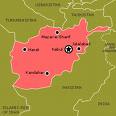 October 7 marked the eleventh anniversary of the US war in Afghanistan. More than 2,000 American soldiers have now been killed, and as the US presidential candidates debate each other to lead the most dominant power on Earth, perhaps it is time for someone to ask them: Was it worth it?
On September 11th 2001, 2,977 people were killed. Almost 700 people in one firm alone (Cantor-Fitzgerald) died; 343 fire fighters and paramedics were killed, as were 60 police officers. Only 291 bodies were ever found ‘intact’. Over half of the families who lost loved ones that day received not a single piece of remains. Within three months 300 fire-fighters went on leave due to respiratory problems, almost half a million New Yorkers are being treated for post-traumatic stress disorders, and 1,000 first responders have since died from acute illnesses related to clean-up activities.
Wall Street shut down for 6 days, and as a direct result of 9/11 more than 146,100 people lost their jobs. Within the first month New York City alone exceeded $105 billion in economic losses.
Was it worth it?
America then went to war. But not just Iraq and Afghanistan: Pakistan, Yemen and Somalia have also been attacked. So have the citizens of the United States: freedoms, privacy and civil rights once taken for granted are gone, in the name of ‘national security’.
Operation Iraqi Freedom officially lasted for eight years and eight months. By December 2011, 4,486 US and 318 non-US troops had been killed fighting in Iraq, more than 1,800 more than who died on September 11th. However, according to the New York Times, a year after operations ceased US Special Operations units have quietly begun re-entering Iraq at the behest of the Iraqi government.
In Afghanistan, the war that began on October 7th 2002 still marches on. Operation Enduring Freedom is not due to end until 2014, an exact century after the onset of World War One. So far Afghanistan has taken the lives of 3,196 soldiers: 2,130 American, 433 British, and 158 Canadian. Forces killed in Afghanistan also amount to more than all the lives lost on 9/11.
Thus 8,000 troops have been killed for the 2,977 lost on September 11th 2001.
Was it worth it?
It gets worse. Once soldiers return from the theatre of operations the numbers keep climbing. For every single death in Afghanistan or Iraq, twenty-five soldiers commit suicide. During the first six months of 2012 there were 187 Army suicides, 55 Air Force, 32 Marine Corps, 39 Navy and 5 Coast Guard. The cumulative effect of multiple deployments and post-traumatic stress disorders et alia suggest, however, tens of thousands of additional deaths.
Each year, 6,500 veteran suicides are documented at a rate of one every 80 minutes. Only the Army releases figures and it is unclear if this includes active duty personnel or veterans of other wars. Although only 1% of Americans have served in Iraq or Afghanistan, they account for a massive 20% of the total annual rate. The Department of Veterans Affairs claim 18 veteran suicides per day, and for every successful suicide 20 are attempted yet fail. Rates of death were far higher in both World Wars: permanent disabilities now affect veterans today who otherwise would have died on the field. In World War One, an average of 57% of all soldiers mobilised were killed; in World War Two, more than 55 million soldiers and civilians died. In other words, the wounded from the Iraq and Afghanistan wars are a testimony to modern medicine saving lives that in the past would certainly have been lost, but can lead to tragic results nevertheless.
If the lowest suicide rate to assume is one per day by active duty or Iraq/Afghanistan vets, more than 4,000 must be added to the numbers killed above. And if we assume only half of the 6,500 veterans suicides per year are as a result of wars in Iraq and Afghanistan, an additional 36,000 deaths could be included to the totals. Whether suicides account for a further 4,000 or 40,000 deaths, they bring the ratio to between 4:1 to 16:1 deaths in payback for the 2,977 victims of 9/11.
These are just coalition losses of course. The official number of victims in Iraq has been stuck on 100,000 since 2004, not revised upwards since. But, in 2007 the British Opinion Research Businesssurvey calculated that up to 1.5 million Iraqis had been killed in the war. This confirmed an earlier British survey by the Lancet that calculated 655,000 to 1 million Iraqis had died in just three years, from 2003-2006. Although the war continued for a further five years the studies have not been repeated nor revised to account for additional Iraqi casualties, arguably due to intense American criticism.
There are almost no figures for Afghanistan casualties, but Human Rights Watch recorded 1,000 civilian deaths in 2006 and the UN estimates 12,000 deaths since 2007. There are no statistics for the first five years of the war.
Was it worth it?
Let us not omit the secret wars in Pakistan, Yemen and Somalia. Considering the drone programme is covert the numbers are almost certainly low. We do know however, that in Yemen drones have killed up to 1,026 men, women and children (at least 34) since 2002. Somalia is not on most Americans’ radar-screens but it is on the drones’: since 2007, 170 Somalis are dead from these Unmanned Aerial Vehicle strikes. In Pakistan drones have killed a reported 3,341 (at least 176 children) and wounded a minimum of 1,366 people. The ratio of wounded-to-killed indicates how deadly drone are, in part confirming their ‘precision’. They are surgically precise in that they do not wound: they intentionally tear to pieces anyone nearby.
How about the cost of capture, torture and rendition? Housing a single prisoner at Guantánamo Bay in Cuba costs the US taxpayer $800,000 per year. More than 100,000 men were detained in Iraq, many at the notorious Abu Ghraib; thousands more were held at Bagram Airfield or the infamous (CIA funded) ‘Salt Pit’ torture chamber north of Kabul, Afghanistan. Officers forced scores of detainees to physical, psychological and sexual abuse before shipping them off to even worse prisons around the world.
The non-fiscal cost of the consequences of tortures and imprisonment-without-trial cannot be calculated. For every single death or incarceration there is a father, brother, son, nephew, friend or neighbour who will never forget what these wars have wrought. Revenge lives long—generation-to-generation. We already see the first signs of what the wars have bought, exhibited in riots, uprisings, increased anti-American hostilities, destruction of US sovereign life and property, coups, and civil wars.
Was it worth it?
What about the economic cost? In 2003, George W. Bush estimated that the wars would cost $50 to $60 billion. Yet a 2011 study by Brown University’s Watson Institute for International Studiesestimated the final cost of the wars to be $4.4 trillion, not including medical costs for injured veterans or rebuilding aid to Afghanistan. Economist Joseph Stiglitz estimated the war in Iraq alone would cost $2.2 trillion. And all of the costs are funded upon borrowed money, demonstrated by the US debt skyrocketing from $6.4 trillion in March 2003 to over $16 trillion as of October 1st, 2012.
During the Vietnam war, Undersecretary of State George Ball wrote, “[I]n terms of US prestige…we would gain more through enlarging the war.” National Security Advisor McGeorge Bundy opined, “[E]ven if it fails, the policy will be worth it” because of US “prestige”.
If the American public—22.5 million now actually (not officially) unemployed—understood the economic price they would have to pay, would they have agreed to so eagerly support the wars? If the US Congress could have foreseen that a bare-minimum of four times as many soldiers as those who died on 9/11would die, would it have been worth it? If the consequences of anger, revenge, blowback—and stratospheric loss of prestige—were considered, would the US have still gone to war?
Was it worth it?
Sunday, September 30, 2012
Myanmar’s Ethno-Sectarian Clashes: Containing China?
Global Research
Nile Bowie
 The sectarian violence in Myanmar’s western state of Arakan began in June 2012, and the plight of the persecuted Rohingya ethnic group has since created an international uproar. Displays of solidarity with the predominantly Muslim Rohingya people have been most potent throughout the Islamic world, with a broad spectrum of support ranging from moderate political leaders to extremist groups.
While rights advocacy groups robustly condemn Myanmar’s government for its role in the conflict, evidence suggests that the overwhelming majority of violence was attributed to rioting civilians from both the ethnic Rakhine Buddhist community and the ethnic Rohingya Muslim community. The initial violence broke out on May 28th after reports circulated that a Buddhist Rakhine woman was raped and killed by three Muslim men in the town of Ramri. Buddhist communities throughout the state responded by circulating an incendiary pamphlet containing details of the crime. This only served to enflame the already tense situation in Arakan, precipitating a series of events that would draw the attention and condemnation of much of the world.
On June 3rd, a large group of Rakhine villagers in Toungop stopped a bus and brutally killed 10 Muslims on board. In response to this contemptible act of brutality, several thousand Rohingya rioted in the town of Maungdaw on June 8th, destroying Rahkine property and killing an unknown number of predominately Buddhist villagers. These events prompted large-scale, sectarian violence that quickly swept through the Arakan State capital of Sittwe and surrounding localities. Mobs from both communities stormed unsuspecting villages, killing residents and destroying homes, businesses, and places of worship. Given the extreme poverty and sparse government security presence in the region, residents armed themselves with machetes, sticks, sharpened bamboo spears and other basic weapons in order to defend themselves. Vast stretches of homes, businesses, and property from both communities were completely destroyed, leaving thousands of residents displaced.
These events elicited an international outcry, with much of the world showing sympathy for the Rohingya communities who have long suffered systematic discrimination under Myanmar’s military junta that continues today under the newly elected civilian government. During the British colonial occupation, the lack of political borders between Arakan and Bengal (presently referred to as Bangladesh) caused the Muslim population to surge prior to Myanmar’s independence. It is precisely this migration that Burmans interpret to be evidence of the community’s illegal status. [1] Since 1982, a citizenship law passed by the former military government has excluded the Rohingya from citizenship, effectively rendering them stateless. Although records of Rohingya settlements in Arakan date back to the late 7th century, successive governments have asserted that the Rohingya are foreigners with no right to live in Myanmar, a view shared by much of the Arakan population and much of the dominant Burman ethnic group throughout the country.
The communal violence in Arakan has created a refugee crisis for neighboring Bangladesh – a nation of extreme poverty and high rates of population growth – which is not well prepared to cope with an influx of refugees. According to the United Nations Human Rights Agency (UNHCR), Bangladesh is currently host to some 29,000 recognized refugees who are housed in camps and receive international aid, as well as several thousand undocumented Rohingya living in makeshift communities. [2] Additionally, rights advocacy group Human Rights Watch (HRW) issued a report on the violence in Arakan state titled, “The Government Could Have Stopped This,” which alleges that Myanmar’s security forces initially stood by without intervening during the early stages of the unrest, before joining in with Rakhine mobs to target Rohingya communities. While it must be noted that the credibility of HRW’’s reports have come under scrutiny even from founder Robert Bernstein, who accuses the organization of using poor research methods and politicizing their testimony, the content published by HRW examining the violence in Arakan gives a general indication of what occurred. [3]
HRW’s report acknowledges the difficulty of verifying credible information and is based on 57 interviews with eyewitnesses and affected individuals, all of whom remain anonymous. Contrary to the popular perception of Rohingyas being victimized by unprovoked violence, the report concedes that members of the Muslim community indeed used brutal tactics of violence:
A 31-year-old Arakan mother of five told Human Rights Watch how a large group of Rohingya entered her village outside Sittwe around June 12 and killed her husband. She said the government had provided no security. “They killed him right there in the village,” she said. “His arm was cut off and his head was nearly cut off. He was 35 years old.” A 40-year-old Arakan man in Sittwe said, “The government didn’t help us. We had no food, no shelter, and no security [when we fled], but we protected ourselves using sticks and knives.” [4]
The report further details how local law enforcement, military personnel, and border patrol officers targeted Rohingya groups in the ensuing riots; a quite plausible scenario. This is followed in the report by hysterical accusations of systematic rape against Rohingyas carried out by security forces, a likely exaggerated claim. In the Libyan conflict 2011, HRW played a vital role in publishing accusations that Muammar Gaddafi’s forces took part in campaigns of mass rape. [5] Advocacy groups later questioned these allegations, leading some to accuse NGOs of knowingly publishing false claims. [6] The dominant theme throughout the report of unrest in Myanmar is the absence of security forces and their general inactivity. HRW also reports the prevalence of anti-Muslim sentiment being disseminated by Myanmar’s Buddhist monks:
Some Rohingya in displacement camps told Human Rights Watch that some Burmese soldiers had shown great compassion and gone to the market on their behalf to purchase rice and other necessities, but that their willingness to do so has since stopped. The soldiers’ refusal to informally help Rohingya buy food correlates with a local campaign by Arakan Buddhist monks—the most revered members of local Arakan society—who have distributed pamphlets advocating for separation of the communities and imploring the Arakan people to exclude Muslims in every way. “They are eating our rice and staying near our houses,” the author of one pamphlet told Human Rights Watch. “So we will separate. We need to protect the Arakan people.... We don’t want any connection to the Muslim people at all.” [7]
Myanmar’s President Thein Sein, whose administration instituted the most substantial economic and social reforms in decades, shocked many by telling the United Nations refugee agency that the Rohingya were not welcome, stating, “We will take responsibility for our ethnic people but it is impossible to accept the illegally entered Rohingyas, who are not our ethnicity. We will send them away if any third country would accept them, this is what we are thinking is the solution to the issue.” [8] Democracy icon Aung San Suu Kyi, whose movement has long received diplomatic and financial support from Britain and the United States, has disenchanted many international sympathizers by remaining willfully silent on the issue. It is essential to understand that the immigration policies of the Burman-dominated national political system remain consistent within both the ruling national government and Suu Kyi’s opposition party, the National League for Democracy (NLD), especially when dealing with the issue of the Rohingya:
“The Rohingya are not our citizens.” - Nyan Win, National League for Democracy Spokesperson
“There is no ethnic group named Rohingya in our country.” - Khin Yi, Immigration Minister [9]
Popular Ethno-Sectarian Nationalism & Democracy Promotion
Decades of international isolation under the rule of a paranoid and superstitious military elite have perpetuated the chauvinistic and xenophobic traits of the Theravada Buddhist culture practiced in Myanmar. In attempts to prevent political fragmentation, official mythology has long encouraged a sense of racial and moral superiority among the majority Burman Buddhists – who comprise 60 percent of the population – to the detriment of the nation’s many diverse ethnic and religious minority groups. Built on the foundations of Myanmar’s contemporary culture of national pride and militarism, the former regime perpetuated propaganda warning against multiculturalism, alleging that the health and purity of a uniquely Burman form of Buddhism were at risk from external contamination. Dr. Maung Zarni, an exiled dissident and research fellow at the London School of Economics, writes:
Burmese society as a whole remains illiberal and potently ethno-nationalist. The dominant Burmese worldview continues to rest on an enervating combination of pre-colonial feudalism, religious mysticism, belief in racial purity and statist militarism. This is a potent and poisonous combination. [10]
Zarni also highlights how the politics of Buddhist nationalism greatly restrict Suu Kyi’s options as she pursues reform, especially when dealing with the issue of Rohingya persecution. Zarni writes, “Politically, Aung San Suu Kyi has absolutely nothing to gain from opening her mouth on this, she is no longer a political dissident trying to stick to her principles. She’s a politician and her eyes are fixed on the prize, which is the 2015 majority Buddhist vote.” [11] Since being elected to parliament, Suu Kyi’s focus has been in the realm encouraging foreign investment; it is unlikely that she will use her platform to encourage racial tolerance. As she writes in her 1985 book Burma and India, for the Burman “racial psyche,” Buddhism “represents the perfected philosophy. It therefore follows that there [is] no need to either to develop it further or to consider other philosophies.” [12] Despite the liberal reforms undertaken by the civilian government, popular ethno-nationalist sentiment is pervasive, especially among communities of Buddhist monks.
In Myanmar, the revered status of monks prompted religious leaders to trigger a failed uprising against the former military junta during the 2007 Saffron Revolution, a policy directive funded and supported by the United States and British governments. A report issued in 2006 by Burma Campaign UK entitled “Failing the People of Burma?” offers valuable insight into the “democracy promotion” efforts of Western governments. The report cites a statement issued by the US Bureau of East Asian and Pacific Affairs on October 30, 2003:
“The restoration of democracy in Burma is a priority U.S. policy objective in Southeast Asia. To achieve this objective, the United States has consistently supported democracy activists and their efforts both inside and outside Burma...Addressing these needs requires flexibility and creativity. Despite the challenges that have arisen, United States Embassies Rangoon and Bangkok as well as Consulate General Chiang Mai are fully engaged in pro-democracy efforts. The United States also supports organizations, such as the National Endowment for Democracy, the Open Society Institute and Internews, working inside and outside the region on a broad range of democracy promotion activities. U.S.-based broadcasters supply news and information to the Burmese people, who lack a free press. U.S. programs also fund scholarships for Burmese who represent the future of Burma. The United States is committed to working for a democratic Burma and will continue to employ a variety of tools to assist democracy activists.” [13]
Nile Bowie

While rights advocacy groups robustly condemn Myanmar’s government for its role in the conflict, evidence suggests that the overwhelming majority of violence was attributed to rioting civilians from both the ethnic Rakhine Buddhist community and the ethnic Rohingya Muslim community. The initial violence broke out on May 28th after reports circulated that a Buddhist Rakhine woman was raped and killed by three Muslim men in the town of Ramri. Buddhist communities throughout the state responded by circulating an incendiary pamphlet containing details of the crime. This only served to enflame the already tense situation in Arakan, precipitating a series of events that would draw the attention and condemnation of much of the world.
On June 3rd, a large group of Rakhine villagers in Toungop stopped a bus and brutally killed 10 Muslims on board. In response to this contemptible act of brutality, several thousand Rohingya rioted in the town of Maungdaw on June 8th, destroying Rahkine property and killing an unknown number of predominately Buddhist villagers. These events prompted large-scale, sectarian violence that quickly swept through the Arakan State capital of Sittwe and surrounding localities. Mobs from both communities stormed unsuspecting villages, killing residents and destroying homes, businesses, and places of worship. Given the extreme poverty and sparse government security presence in the region, residents armed themselves with machetes, sticks, sharpened bamboo spears and other basic weapons in order to defend themselves. Vast stretches of homes, businesses, and property from both communities were completely destroyed, leaving thousands of residents displaced.
These events elicited an international outcry, with much of the world showing sympathy for the Rohingya communities who have long suffered systematic discrimination under Myanmar’s military junta that continues today under the newly elected civilian government. During the British colonial occupation, the lack of political borders between Arakan and Bengal (presently referred to as Bangladesh) caused the Muslim population to surge prior to Myanmar’s independence. It is precisely this migration that Burmans interpret to be evidence of the community’s illegal status. [1] Since 1982, a citizenship law passed by the former military government has excluded the Rohingya from citizenship, effectively rendering them stateless. Although records of Rohingya settlements in Arakan date back to the late 7th century, successive governments have asserted that the Rohingya are foreigners with no right to live in Myanmar, a view shared by much of the Arakan population and much of the dominant Burman ethnic group throughout the country.
The communal violence in Arakan has created a refugee crisis for neighboring Bangladesh – a nation of extreme poverty and high rates of population growth – which is not well prepared to cope with an influx of refugees. According to the United Nations Human Rights Agency (UNHCR), Bangladesh is currently host to some 29,000 recognized refugees who are housed in camps and receive international aid, as well as several thousand undocumented Rohingya living in makeshift communities. [2] Additionally, rights advocacy group Human Rights Watch (HRW) issued a report on the violence in Arakan state titled, “The Government Could Have Stopped This,” which alleges that Myanmar’s security forces initially stood by without intervening during the early stages of the unrest, before joining in with Rakhine mobs to target Rohingya communities. While it must be noted that the credibility of HRW’’s reports have come under scrutiny even from founder Robert Bernstein, who accuses the organization of using poor research methods and politicizing their testimony, the content published by HRW examining the violence in Arakan gives a general indication of what occurred. [3]
HRW’s report acknowledges the difficulty of verifying credible information and is based on 57 interviews with eyewitnesses and affected individuals, all of whom remain anonymous. Contrary to the popular perception of Rohingyas being victimized by unprovoked violence, the report concedes that members of the Muslim community indeed used brutal tactics of violence:
A 31-year-old Arakan mother of five told Human Rights Watch how a large group of Rohingya entered her village outside Sittwe around June 12 and killed her husband. She said the government had provided no security. “They killed him right there in the village,” she said. “His arm was cut off and his head was nearly cut off. He was 35 years old.” A 40-year-old Arakan man in Sittwe said, “The government didn’t help us. We had no food, no shelter, and no security [when we fled], but we protected ourselves using sticks and knives.” [4]
The report further details how local law enforcement, military personnel, and border patrol officers targeted Rohingya groups in the ensuing riots; a quite plausible scenario. This is followed in the report by hysterical accusations of systematic rape against Rohingyas carried out by security forces, a likely exaggerated claim. In the Libyan conflict 2011, HRW played a vital role in publishing accusations that Muammar Gaddafi’s forces took part in campaigns of mass rape. [5] Advocacy groups later questioned these allegations, leading some to accuse NGOs of knowingly publishing false claims. [6] The dominant theme throughout the report of unrest in Myanmar is the absence of security forces and their general inactivity. HRW also reports the prevalence of anti-Muslim sentiment being disseminated by Myanmar’s Buddhist monks:
Some Rohingya in displacement camps told Human Rights Watch that some Burmese soldiers had shown great compassion and gone to the market on their behalf to purchase rice and other necessities, but that their willingness to do so has since stopped. The soldiers’ refusal to informally help Rohingya buy food correlates with a local campaign by Arakan Buddhist monks—the most revered members of local Arakan society—who have distributed pamphlets advocating for separation of the communities and imploring the Arakan people to exclude Muslims in every way. “They are eating our rice and staying near our houses,” the author of one pamphlet told Human Rights Watch. “So we will separate. We need to protect the Arakan people.... We don’t want any connection to the Muslim people at all.” [7]
Myanmar’s President Thein Sein, whose administration instituted the most substantial economic and social reforms in decades, shocked many by telling the United Nations refugee agency that the Rohingya were not welcome, stating, “We will take responsibility for our ethnic people but it is impossible to accept the illegally entered Rohingyas, who are not our ethnicity. We will send them away if any third country would accept them, this is what we are thinking is the solution to the issue.” [8] Democracy icon Aung San Suu Kyi, whose movement has long received diplomatic and financial support from Britain and the United States, has disenchanted many international sympathizers by remaining willfully silent on the issue. It is essential to understand that the immigration policies of the Burman-dominated national political system remain consistent within both the ruling national government and Suu Kyi’s opposition party, the National League for Democracy (NLD), especially when dealing with the issue of the Rohingya:
“The Rohingya are not our citizens.” - Nyan Win, National League for Democracy Spokesperson
“There is no ethnic group named Rohingya in our country.” - Khin Yi, Immigration Minister [9]
Popular Ethno-Sectarian Nationalism & Democracy Promotion
Decades of international isolation under the rule of a paranoid and superstitious military elite have perpetuated the chauvinistic and xenophobic traits of the Theravada Buddhist culture practiced in Myanmar. In attempts to prevent political fragmentation, official mythology has long encouraged a sense of racial and moral superiority among the majority Burman Buddhists – who comprise 60 percent of the population – to the detriment of the nation’s many diverse ethnic and religious minority groups. Built on the foundations of Myanmar’s contemporary culture of national pride and militarism, the former regime perpetuated propaganda warning against multiculturalism, alleging that the health and purity of a uniquely Burman form of Buddhism were at risk from external contamination. Dr. Maung Zarni, an exiled dissident and research fellow at the London School of Economics, writes:
Burmese society as a whole remains illiberal and potently ethno-nationalist. The dominant Burmese worldview continues to rest on an enervating combination of pre-colonial feudalism, religious mysticism, belief in racial purity and statist militarism. This is a potent and poisonous combination. [10]
Zarni also highlights how the politics of Buddhist nationalism greatly restrict Suu Kyi’s options as she pursues reform, especially when dealing with the issue of Rohingya persecution. Zarni writes, “Politically, Aung San Suu Kyi has absolutely nothing to gain from opening her mouth on this, she is no longer a political dissident trying to stick to her principles. She’s a politician and her eyes are fixed on the prize, which is the 2015 majority Buddhist vote.” [11] Since being elected to parliament, Suu Kyi’s focus has been in the realm encouraging foreign investment; it is unlikely that she will use her platform to encourage racial tolerance. As she writes in her 1985 book Burma and India, for the Burman “racial psyche,” Buddhism “represents the perfected philosophy. It therefore follows that there [is] no need to either to develop it further or to consider other philosophies.” [12] Despite the liberal reforms undertaken by the civilian government, popular ethno-nationalist sentiment is pervasive, especially among communities of Buddhist monks.
In Myanmar, the revered status of monks prompted religious leaders to trigger a failed uprising against the former military junta during the 2007 Saffron Revolution, a policy directive funded and supported by the United States and British governments. A report issued in 2006 by Burma Campaign UK entitled “Failing the People of Burma?” offers valuable insight into the “democracy promotion” efforts of Western governments. The report cites a statement issued by the US Bureau of East Asian and Pacific Affairs on October 30, 2003:
“The restoration of democracy in Burma is a priority U.S. policy objective in Southeast Asia. To achieve this objective, the United States has consistently supported democracy activists and their efforts both inside and outside Burma...Addressing these needs requires flexibility and creativity. Despite the challenges that have arisen, United States Embassies Rangoon and Bangkok as well as Consulate General Chiang Mai are fully engaged in pro-democracy efforts. The United States also supports organizations, such as the National Endowment for Democracy, the Open Society Institute and Internews, working inside and outside the region on a broad range of democracy promotion activities. U.S.-based broadcasters supply news and information to the Burmese people, who lack a free press. U.S. programs also fund scholarships for Burmese who represent the future of Burma. The United States is committed to working for a democratic Burma and will continue to employ a variety of tools to assist democracy activists.” [13]
Wednesday, September 26, 2012
Wall Street, Pro-Israel Groups Support Malaysian Opposition
Land Destroyer
Tony Cartalucci
Editor's Note: Nile Bowie had written this piece exposing the Malaysian opposition's foreign funding and the duplicitous implications involved, in the midst of what is an increasing public awareness of the role foreign-funded NGOs play in destabilizing and destroying the sovereignty of a nation targeted by Wall Street and London corporate-financier interests.
In response to this increasing awareness, these very Wall Street-funded NGOs have published a ridiculous rebuttal featured in the image below.

Image: An absurd demand for an "apology" aimed at Malaysian journalists simply exercising the "freedom of speech" foreign funded NGOs like Bersih and the Centre for Independent Journalism have claimed to be fighting for. In reality the facade that these NGOs are "humanitarians" is collapsing, exposing the fact that they instead work subversively for the corporate financier interests of Walll Street and London toward the recolonization of Malaysia and the installation of a Western client regime headed by Anwar Ibrahim or one of his associates.
....
It should be noted that Bersih at the top of the signatory list, is funded by the US State Department and convicted criminal George Soros' Open Society. Each subsequent signatory is also funded either directly or by NGOs that are directly funded by Wall Street, the US State Department, and George Soros' Open Society.
Regardless of the rhetoric put out by these NGOs on a daily basis, the common thread that unites them is a concerted effort to both undermine the current Malaysian government, while promoting opposition groups led by IMF, Wall Street, and US State Department proxy, Anwar Ibrahim. These affiliations have been explored at great length in "Wall Street Fills Malaysian Streets With Unrest."
....
Nile Bowie
NileBowie.blogspot.com
September 26, 2012
As Malaysia approaches its highly anticipated 13th General Elections set to take place at some point before late June 2013, a tense political climate and a sense of unpredictability looms over the nation. The significance of these upcoming elections cannot be understated. During Malaysia’s 2008 General Elections, the ruling Barisan Nasional coalition, which held power continuously since the nation’s independence, experienced its worst result in decades, while the opposition Pakatan Rakyat coalition won 82 parliamentary seats. For the first time, the ruling party was deprived of its two-thirds parliamentary majority, which is required to pass amendments to Malaysia’s Federal Constitution. As the United States continues to militarily increase its presence in the Pacific region inline with its strategic policy shift to East Asia, Washington’s leaders would like to see compliant heads of state who will act to further American interests in the ASEAN region.
The outcome of the approaching elections could have significant ramifications for Malaysia’s foreign policy, economy, and trade relations. While allegations of corruption and economic mismanagement hinder the credibility of ruling Prime Minister Najib Razak, foreign organizations affiliated with the American Israel Public Affairs Committee (AIPAC) and funded by the United States government, have contributed support toward bolstering the influence and status of the Malaysia’s opposition groups, in addition to the controversial Bersih coalition for electoral reform, led by Ambiga Sreenevasan. Opponents of this information may dismiss these claims as the “propaganda” of Barisan Nasional, however the validity of these accusations have been highly documented, and constitute an attempt by foreign governments to undermine Malaysia’s independent political process. On June 27th, 2011, Bersih coalition leader Ambiga Sreenevasan conceded that her organization received financial assistance from two private American organizations:
Ambiga admitted to Bersih receiving some money from two US organisations — the National Democratic Institute (NDI) and Open Society Institute (OSI) — for other projects, which she stressed were unrelated to the July 9 march. [1]
However innocuous such contributions may seem, a more critical review of these organizations and their affiliations is necessary. Hungarian-American philanthropist and financier George Soros founded the Open Society Institute in 1993, whose principle aim sought to “strengthen open society principles and practices against authoritarian regimes and the negative consequences of globalization,” with an emphasis on countries in transition from communism after the fall of the Soviet Union. [2] Although OSI has emphasized its commitment to "human rights" and "transparency" byheavily sponsoring organizations such as Amnesty International and Human Rights Watch, Soros was convicted of insider trading in 2002 regarding French bank Société Générale and was ironically denied an appeal by the "European Court of Human Rights." [3][4][5] Although Soros has appeared to be publicly critical of capitalism, he has disingenuously profited from predatory trading in many instances, most prominently in 1992 when he earned an estimated $1.1 billion by short selling sterling while the British government was reluctant to adjust its interest rates prior to devaluing the pound.

Image: NDI's website in 2011 before taking down any mention to Malaysia's Bersih movement. (click image to enlarge)
....
Former US Secretary of State Madeline Albright chairs the National Democratic Institute, an organization that supplies electoral observers and promotes governance reform, widely seen as an attempt to foster foreign political systems compatible with American interests by assisting civil society groups in mounting pressure on national governments. NDI President Kenneth Wollack served as the legislative director of the American Israel Public Affairs Committee, widely considered to be Israel’s most prominent lobbyist organization, one that influences American legislation to exert aggressive Israeli policy and viewpoints. [6] The National Democratic Institute is one of four organizations funded by the National Endowment for Democracy (NED), in addition to theInternational Republican Institute (IRI), the Chamber of Commerce's Center for Private Enterprise (CIPE) and the American Center for International Labor Solidarity.
Alan Weinstein, one of the founders of the National Endowment for Democracy was notably quoted in 1991 as saying, “A lot of what we (NED) do was done 25 years ago covertly by the CIA.” [7] TheNational Endowment for Democracy receives its funding entirely through an annual allocation of funds from the United States Congress within the budget of the development assistance agency USAID, a branch of the US State Department. [8] Although the NED receives public funding from the US taxpayer, the activities of its four satellite institutes are not reported to Congress, making funding trails and their final recipients difficult to identify. Although the organization boasts of “promoting democracy” and “fortifying civil society” around the world, history had proven that these tired euphemisms have been used in numerous countries to mask funding to various political forces opposed to their national governments and aligned with American interests. American historian and former employee of the US State Department William Blum writes:
NED's Statement of Principles and Objectives, adopted in 1984, asserts that "No Endowment funds may be used to finance the campaigns of candidates for public office." But the ways to circumvent the spirit of such a prohibition are not difficult to come up with; as with American elections, there's "hard money" and there's "soft money". As described in the "Elections" and "Interventions" chapters, NED successfully manipulated elections in Nicaragua in 1990 and Mongolia in 1996; helped to overthrow democratically elected governments in Bulgaria in 1990 and Albania in 1991 and 1992; and worked to defeat the candidate for prime minister of Slovakia in 2002 who was out of favor in Washington. And from 1999 to 2004, NED heavily funded members of the opposition to President Hugo Chavez in Venezuela to subvert his rule and to support a referendum to unseat him. [9]
NED President Carl Gershman was formerly a member of the Governing Council of the American Jewish Congress and Vice-Chairman of the Young People's Socialist League, and in 1968, he was employed in the research department of the Anti-Defamation League of B’nai B’rith, considered the most prominent Jewish service organization in the world, committed to the security and continuity the State of Israel. [10] The Anti-Defamation League is a US-based human rights group committed to the “security of Israel and Jews worldwide," and was implicated in 1993 by the District of Attorney of San Francisco for overseeing a vast surveillance operation monitoring American citizens who were opposed to Israel’s policies in the occupied West Bank and Gaza, prior to passing their personal information to the Israeli government in Tel Aviv. [11]

Image: NED is anything but a "promoter of democracy and freedom." Representing some of the largest corporate-financier interests spanning Wall Street and London, it merely couches global, neo-imperial hegemonic ambitions within the guise of "freedom" and "human rights." For Malaysian NGOs, it is indefensible to take money and support from NED.
....
In addition to providing funding to the Bersih coalition through the National Democratic Institute, the National Endowment for Democracy’s Malaysian operation provides $100,000 (RM 317,260) for political news website Malaysiakini, considered to be the nation’s most pro-opposition news outlet.[12] Premesh Chandran, Malaysiakini CEO, is a grantee of George Soros’ Open Society Foundations and launched the news organization with a $100,000 grant from the Bangkok-based Southeast Asian Press Alliance (SEAPA), a recipient of funds from the Open Society Institute, the NED, and Freedom House, an organization reliant on US federal government grants for a significant percentage of its funding. [13][14] NED also provides $90,000 (RM 285,516) to SUARAM, an organization promoting human rights. [15]
Sunday, September 23, 2012
Dozens of Saudi judges resign in protest at regime pressure
PressTV
 |
| Saudi protesters hold portraits of
political prisoners during an anti-regime demonstration in the Qatif region of Eastern Province, Saudi Arabia. |
At least 50 Saudi
judges have resigned in protest at the pressure exerted on them by the
Riyadh regime to sentence political activists, Press TV reports.
The judges said in a statement that they made the decision in protest at the regime pressure.
According to Human Rights Watch, the Saudi regime “routinely represses expression critical of the government."The Arabic Network for Human Rights Information has called on regional and international organizations to take action against Saudi Arabia’s crackdown on rights activists.
Since February 2011, protesters have held demonstrations on an almost regular basis in Saudi Arabia, mainly in Qatif and Awamiyah in Eastern Province, primarily calling for the release of all political prisoners, freedom of expression and assembly, as well as an end to widespread discrimination.
However, the demonstrations have turned into protests against the repressive Al Saud regime, especially since November 2011, when Saudi security forces killed five protesters and injured many others in the province.
Thursday, September 6, 2012
Libyan Man Describes Horrific Experience Of Being Waterboarded By US Troops
Business Insider
Joshua Berlinger
Earlier today, Human Rights Watch released a report in which it charges the CIA and UK security forces of serious human rights violations.

Joshua Berlinger
Earlier today, Human Rights Watch released a report in which it charges the CIA and UK security forces of serious human rights violations.

The 154-page report, Delivered Into Enemy Hands: U.S.-Led Abuse and Rendition of Opponents to Qaddafi’s Libya, was based on recently uncovered and declassified documents from the CIA and Qaddafi's security forces and interviews with 14 former detainees — most of whom had some relationship to the Libyan Islamic Fighting Group (LIFG), which worked to overthrow Gaddafi for about two decades.
And some of what HRW uncovered is shocking:
Mohammed Shoroeiya was one of the 14 subjects interviewed. He was arrested in Peshawar, Pakistan, in April 2003 by Pakistani and U.S. personnel, and eventually transferred to a U.S.-run detention facility in Afghanistan.
The report states that Shoroeiya was periodically tortured by, "all of whom he believed to be American." in a manner similar to waterboarding:
Shoroeiya said the board was made of wood and could turn around 360 degrees. Sometimes they would strap him onto the board and spin him around while wearing a hood that covered his nose and mouth. This would completely disorient him. While he was strapped to the board with his head lower than his feet, they would pour buckets of extremely cold water over his nose and mouth to the point that he felt he was going to suffocate. After the hood was put over his face, he said, “then there is the water pouring…. They start to pour water to the point where you feel like you are suffocating.” When asked how many times this was done to him, he said “a lot …a lot … it happened many times …. They pour buckets of water all over you.”
The report did not mention why Shoroeiya was arrested, nor did it highlight a particular reason that he was tortured in the specific detention facility referred to above.
The CIA have refused to comment on the specific details of the case, though told Business Insider that it has been on the record about three cases where "detainees were subjected to the waterboarding technique".
Wednesday, September 5, 2012
CIA faces new waterboarding claims from Libya
The Telegraph
Alex Spillius

Alex Spillius

New claims of waterboarding by the CIA have emerged, contradicting claims by the US authorities that only three people were submitted to a practice widely regarded as torture.
The assertions were made by Libyan opposition figures arrested by the Americans and handed over to Col Muammar Gaddafi in the middle of the last decade when Washington was seeking rapprochement with the late Libyan dictator.
They are contained in a report by Human Rights Watch, which interviewed 14 former prisoners after the fall of Col Gaddafi. Most belonged to the Libyan Islamic Fighting Group that had worked to overthrow him for 20 years.
Two out of the men interviewed said they were submitted to interrogation tactics that match previous instances of waterboarding.
After his arrest in Peshawar, Pakistan in 2003, Mohammed al-Shoroeiya said he was flown for half an hour to a location he later came to believe was in Afghanistan.
He said he was placed on a board that could rotate through 360 degrees. After a hood was put over his face, he said, “They start to pour water to the point where you feel like you are suffocating.”
When asked how many times this was done to him, he said: “A lot …a lot … it happened many times …. They pour buckets of water all over you.”
Khalid al-Sharif, who was arrested along with al-Shoroeiya, said: They gave me a different type of torture every day. Sometimes they used water, sometimes not.… Sometimes they stripped me naked and sometimes they left me clothed.”
Now head of the Libyan National Guard, Mr Sharif claimed he was held for two years in two different US-run detention centres believed to be operated by the CIA in Afghanistan.
Both men have always disavowed al-Qaeda and were never accused of sympathising with the global terror group by the Americans.
Laura Pitter, counterterrorism advisor at Human Rights Watch and author of the report, said: “Not only did the US deliver Gaddafi his enemies on a silver platter but it seems the CIA tortured many of them first,” said “The scope of Bush administration abuse appears far broader than previously acknowledged and underscores the importance of opening up a full-scale inquiry into what happened.”
Human Rights Watch said the report demonstrated that Britain and numerous other countries were complicit in helping hand over Col Gaddafi’s opponents.
Intelligence documents discovered in Tripoli supported similar claims by Abdul Hakim Belhadj, leader of the LIFG who was a key figure in the overthrow of Col Gaddafi, and a deputy Sami Mostafa al-Saadi.
The US government has stated that only three senior al-Qaeda figures were submitted to waterboarding.
When he came into office in January 2009 President Barack Obama banned the practice and ordered an investigation into all so called harsh interrogation techniques. It recently concluded that CIA officials should be charged.
Last week Eric Holder, the US attorney general, announced that no one would be prosecuted for the deaths of a prisoner in Afghanistan in 2002 and another in Iraq in 2003.
The assertions were made by Libyan opposition figures arrested by the Americans and handed over to Col Muammar Gaddafi in the middle of the last decade when Washington was seeking rapprochement with the late Libyan dictator.
They are contained in a report by Human Rights Watch, which interviewed 14 former prisoners after the fall of Col Gaddafi. Most belonged to the Libyan Islamic Fighting Group that had worked to overthrow him for 20 years.
Two out of the men interviewed said they were submitted to interrogation tactics that match previous instances of waterboarding.
After his arrest in Peshawar, Pakistan in 2003, Mohammed al-Shoroeiya said he was flown for half an hour to a location he later came to believe was in Afghanistan.
He said he was placed on a board that could rotate through 360 degrees. After a hood was put over his face, he said, “They start to pour water to the point where you feel like you are suffocating.”
When asked how many times this was done to him, he said: “A lot …a lot … it happened many times …. They pour buckets of water all over you.”
Khalid al-Sharif, who was arrested along with al-Shoroeiya, said: They gave me a different type of torture every day. Sometimes they used water, sometimes not.… Sometimes they stripped me naked and sometimes they left me clothed.”
Now head of the Libyan National Guard, Mr Sharif claimed he was held for two years in two different US-run detention centres believed to be operated by the CIA in Afghanistan.
Both men have always disavowed al-Qaeda and were never accused of sympathising with the global terror group by the Americans.
Laura Pitter, counterterrorism advisor at Human Rights Watch and author of the report, said: “Not only did the US deliver Gaddafi his enemies on a silver platter but it seems the CIA tortured many of them first,” said “The scope of Bush administration abuse appears far broader than previously acknowledged and underscores the importance of opening up a full-scale inquiry into what happened.”
Human Rights Watch said the report demonstrated that Britain and numerous other countries were complicit in helping hand over Col Gaddafi’s opponents.
Intelligence documents discovered in Tripoli supported similar claims by Abdul Hakim Belhadj, leader of the LIFG who was a key figure in the overthrow of Col Gaddafi, and a deputy Sami Mostafa al-Saadi.
The US government has stated that only three senior al-Qaeda figures were submitted to waterboarding.
When he came into office in January 2009 President Barack Obama banned the practice and ordered an investigation into all so called harsh interrogation techniques. It recently concluded that CIA officials should be charged.
Last week Eric Holder, the US attorney general, announced that no one would be prosecuted for the deaths of a prisoner in Afghanistan in 2002 and another in Iraq in 2003.
Wednesday, August 22, 2012
Amnesty International is US State Department Propaganda
InfoWars
Tony Cartalucci


Tony Cartalucci
 |
| From Amnesty International USA’s website, “Free Pussy Riot.” “Help Amnesty International send a truckload of balaclavas to Putin.” This childish stunt smacks of US State Department-funded Gene Sharp antics – and meshes directly with the US State Department’s goal of undermining the Russian government via its troupe of US-funded “opposition activists” including “Pussy Riot.” That Amnesty is supporting the US State Department’s agenda should be no surprise, it is run literally by the US State Department’s Deputy Assistant Secretary for International Organizations, Suzanne Nossel. |
Mistakenly considered by many as the final word on human rights worldwide, it might surprise people to know that Amnesty International is in fact one of the greatest obstacles to real human rights advocacy on Earth. In its most recent 2012 annual report (page 4, .pdf), Amnesty reiterates one of the biggest lies it routinely tells:
“Amnesty International is funded mainly by its membership and public donations. No funds are sought or accepted from governments for investigating and campaigning against human rights abuses. Amnesty International is independent of any government, political ideology, economic interest or religion.”
This is categorically false. Amnesty international is indeed funded and run by not only governments, but also immense corporate-financier interests, and is not only absolutely entwined with political ideology and economic interests, it is an essential tool used for perpetuating just such interests.
Amnesty International’s Funding
Finding financial information on Amnesty International’s website is made purposefully difficult – specifically to protect the myth that the organization is “independent.” Like any organized criminal operation, Amnesty separates compromising financial ties through a series of legal maneuvers and shell organizations. Upon Amnesty’s website it states:
“The work carried out through Amnesty International’s International Secretariat is organised into two legal entities, in compliance with United Kingdom law. These are Amnesty International Limited (“AIL”) and Amnesty International Charity Limited (“AICL”). Amnesty International Limited undertakes charitable activities on behalf of Amnesty International Charity Limited, a registered charity.”
And it is there, at Amnesty International Limited, where ties to both governments and corporate-financier interests are kept. On page 11 of Amnesty International Limited’s 2011 Report and Financial Statement (.pdf) it states (emphasis added):
“The Directors are pleased to acknowledge the support of the John D. and Catherine T. MacArthur Foundation, the Oak Foundation, Open Society Georgia Foundation, the Vanguard Charitable Endowment Programme, Mauro Tunes and American Jewish World Service. The UK Department for International Development(Governance and Transparency Fund) continued to fund a four year human rights education project in Africa. The European Commission (EuropeAid) generously awarded a multi-year grant towards Amnesty International’s human rights education work in Europe.”
Clearly then, Amnesty does take money from both governments and corporate-financier interests, one of the most notorious of which, Open Society, is headed by convicted financial criminal George Soros. In March, 2012, it was reported that a Bloomberg’s report, “Soros Loses Case Against French Insider-Trading Conviction,” indicated that an appeal based on a “human rights” violation against Wall Street speculator George Soros had been rejected by the “European Court of Human Rights.”
Soros, whose Open Society also funds Human Rights Watch and a myriad of other “human rights” advocates, literally attempted to use the West’s human rights racket to defend himself against charges of financial fraud in perhaps the most transparent illustration of just how this racket operates.
Soros, who was convicted and fined for insider trading in 2002 regarding French bank Société Générale shares he bought in 1988, has built an empire out of obfuscating global criminal activity with the cause of “human rights.” His support, as well as that of the British and European governments, of Amnesty International aims solely at expanding this obfuscating.
Amnesty International’s Leadership
Amnesty’s leadership is also telling of its true agenda. Suzanne Nossel, Executive Director of Amnesty International USA, for instance was drawn directly from the US State Department – again, utterly contradicting Amnesty’s claims of being “independent” of governments and corporate interests. Nossel continued promoting US foreign policy, but simply behind a podium with a new logo, Amnesty International’s logo, attached to it. Amnesty International’s website specifically mentions Nossel’s role behind US State Department-backed UN resolutions regarding Iran, Syria, Libya, and Cote d’Ivoire.
Image: Same lies, different podium. Suzanne Nossel previously of the US State Department, is now executive director of Amnesty International USA. Her primary function of dressing up aspirations of corporate-financier global hegemony as “human rights advocacy” has not changed.
….
It has been documented at great length how these issues revolve around a decades long plan devised by corporate-financier interests to divide, destroy and despoil these nations who are seen as obstacles to US global hegemony. In the case of Syria specifically, it was revealed that the current “human rights” catastrophe stems back to a malicious 2007 conspiracy documented by “New Yorker” journalist Seymour Hersh, between the US, Israel, and Saudi Arabia which sought to purposefully fund, arm, and deploy sectarian extremists to undermine and overthrow the Syrian government – this knowing full well the human tragedy that would unfold.
Nossel’s “contributions” then are simply to dress up naked military aggression and the pursuit of global corporate-financier hegemony with the pretense of “human rights” advocacy.
A glance at AmnestyUSA.org reveals that each and every front the US State Department is currently working on and has prioritized is also coincidentally prioritized by Amnesty International. This includes rallies and campaigns to support US State Department-funded Russian opposition groups(currently fixated on “Pussy Riot“), undermining the Syrian government, toppling the government of Belarus, and supporting the Wall Street-London created Aung San Suu Kyi of Myanmar (still called by its British Imperial nomenclature of “Burma” by Suu Kyi herself).
Amnesty International Betrays Real Human Rights Advocacy
Amnesty does indeed cover issues that are critical of US foreign policy, toward the bottom of their websites and at the back of their reports. Likewise, the corporate-media selectively reports issues that coincide with their interests while other issues are either under-reported or not reported at all. And it is precisely because Amnesty covers all issues, but selectively emphasizes those that are conducive to the interests of immense corporate-financiers that makes Amnesty one of the greatest impediments to genuine human rights advocacy on Earth.
Images: Manufacturing Dissent. “Free Pussy Riot” (above). Ironically, FIDH is directly funded by the US State Department via the Neo-Con lined US National Endowment for Democracy (NED) as well as George Soros’ Open Society. “Russia: Stop Arms Transfer to Syria!” (below). If the US State Department wants it, be sure that US State Department-run Amnesty International will stage a demonstration for it – and regardless of size or legitimacy of the demonstration, expect the corporate-media to make it headline news.
….
Ordinary people are given the false impression that “someone is watching out” for human rights abuses, when in reality, all Amnesty and other organizations like it are doing, is managing public perception selectively of global human rights abuses, fabricating and/or manipulating many cases specifically to suit the agenda of large corporate-financier interests. This can be seen when entire reports out of Amnesty or Human Rights Watch consist solely of “witness reports” compiled from accounts of US-backed opposition groups.
In the rare instance that a report includes references to actual photographic, video, or documented evidence, such as Human Rights Watch’s 2011 “Descent into Chaos” (.pdf) report, deceptive language is intentionally included along with throwaway passages to enable selective reporting and spinning by not only the Western corporate media, but by a myriad of faux-NGOs funded and run by Amnesty International and Human Rights Watch’s sponsors and affiliates. The Descent into Chaos report, regarding Thailand, was promply and amply spun and manipulated by US State Department-funded faux-NGO and “rights advocate” Prachatai.
When people erroneously believe that credible organizations are handling “rights advocacy” they will not only become complacent, they will become negligent of their own responsibilities to objectively examine potential abuses and speak out against them. Wall Street and London’s corporate-financier interests have filled a void - that should be occupied by their greatest opponents – instead with a large advocacy racket of their own creation. Not only are they given a free pass to abuse human rights globally, they’ve actually used their controlled opposition to attack their opponents.
It is clear that Amnesty International is by no means an “advocate” of human rights, but rather an affront to human rights advocacy. It goes without saying that it should be boycotted out of existence and at the very least, identified as illegitimate and fraudulent – from its funding to its compromised leadership.
Additionally, we the people must tackle real violations of each others rights at the grassroots – because it is absolute folly to believe that global spanning organizations, funded by corporate-financiers, echoing the agenda of governments driven by special interests has our best interests and rights in mind.
Subscribe to:
Posts (Atom)


