Showing posts with label Afghanistan. Show all posts

Tuesday, December 18, 2012

'Did We Just Kill A Kid?' — Six Words That Ended A US Drone Pilot's Career


Business Insider
Robert Johnson

Drone Operator

The New Mexico desert gets blistering hot, but inside the small windowless container where Brandon Bryant worked as a drone operator for the U.S. Air Force it stays a cool 63 degrees all year long.

Nicola Abé at der Spiegel spoke with Bryant, no longer in the Air Force, who relays a disturbing and tragic scene from his time inside that isolated container in the American desert.

Sixty-three finger numbing degrees and Bryant describes sitting with a group of other pilots looking at more than a dozen computer monitors. The crew are directing drones over Afghanistan 6,250 miles away and the screens jump with a two to five second delay, as infrared video sent from the UAVs whips through the air to New Mexico.

When the order to fire on a target arrives, Bryant paints the roof of a hut with the laser that will guide in a Hellfire missile released by the pilot beside him.

"These moments are like in slow motion," he says to Abé.

No doubt, because on this occasion Bryant says a child walked from behind the building at the last second. Too late for him to do anything else but ask the other pilot, "Did we just kill a kid?"

From der Spiegel:

"Yeah, I guess that was a kid," the pilot replied.

"Was that a kid?" they wrote into a chat window on the monitor.

Then, someone they didn't know answered, someone sitting in a military command center somewhere in the world who had observed their attack. "No. That was a dog," the person wrote.

They reviewed the scene on video. A dog on two legs?

The article follows another widely publicized story from the Marine Times about children killed by Americans on Afghan soil published just weeks ago. While obviously a tragedy for the victims and their families, Bryant describes the incredible toll taken on U.S. troops required to obey orders producing such dire results.

From his mother's couch in Missoula, Montana Bryant talks of his 6,000 Air Force flight hours and says he used to dream in infrared. "I saw men, women and children die during that time," he says. "I never thought I would kill that many people. In fact, I thought I couldn't kill anyone at all."

The three part article digs deeply into the life of a troubled former servicemember and the war-fighting policies that don't look to be changing anytime soon.


Monday, December 10, 2012

Beware the Anti-Anti-War Left: Why “Humanitarian Interventionism” is a Dead End


Global Research

Jean Bricmont

Jean Bricmont : Guerre en Syrie ? « On va vers une espèce de folie » (Vidéos)Ever since the 1990s, and especially since the Kosovo war in 1999, anyone who opposes armed interventions by Western powers and NATO has to confront what may be called an anti-anti-war left (including its far left segment). In Europe, and notably in France, this anti-anti-war left is made up of the mainstream of social democracy, the Green parties and most of the radical left. The anti-anti-war left does not come out openly in favor of Western military interventions and even criticizes them at times (but usually only for their tactics or alleged motivations – the West is supporting a just cause, but clumsily and for oil or for geo-strategic reasons).

But most of its energy is spent issuing “warnings” against the supposed dangerous drift of that part of the left that remains firmly opposed to such interventions. It calls upon us to show solidarity with the “victims” against “dictators who kill their own people”, and not to give in to knee-jerk anti-imperialism, anti-Americanism, or anti-Zionism, and above all not to end up on the same side as the far right. After the Kosovo Albanians in 1999, we have been told that “we” must protect Afghan women, Iraqi Kurds and more recently the people of Libya and of Syria.

It cannot be denied that the anti-anti-war left has been extremely effective. The Iraq war, which was sold to the public as a fight against an imaginary threat, did indeed arouse a fleeting opposition, but there has been very little opposition on the left to interventions presented as “humanitarian”, such as the bombing of Yugoslavia to detach the province of Kosovo, the bombing of Libya to get rid of Gaddafi, or the current intervention in Syria. Any objections to the revival of imperialism or in favor of peaceful means of dealing with such conflicts have simply been brushed aside by invocations of “R2P”, the right or responsibility to protect, or the duty to come to the aid of a people in danger.

The fundamental ambiguity of the anti-anti-war left lies in the question as to who are the “we” who are supposed to intervene and protect. One might ask the Western left, social movements or human rights organizations the same question Stalin addressed to the Vatican, “How many divisions do you have?” As a matter of fact, all the conflicts in which “we” are supposed to intervene are armed conflicts. Intervening means intervening militarily and for that, one needs the appropriate military means. It is perfectly obvious that the Western left does not possess those means. It could call on European armies to intervene, instead of the United States, but they have never done so without massive support from the United States. So in reality the actual message of the anti-anti-war left is: “Please, oh Americans, make war not love!” Better still, inasmuch as since their debacle in Afghanistan and in Iraq, the Americans are leery of sending in ground troops, the message amounts to nothing other than asking the U.S. Air Force to go bomb countries where human rights violations are reported to be taking place.

Of course, anyone is free to claim that human rights should henceforth be entrusted to the good will of the U.S. government, its bombers, its missile launchers and its drones. But it is important to realize that that is the concrete meaning of all those appeals for “solidarity” and “support” to rebel or secessionist movements involved in armed struggles. Those movements have no need of slogans shouted during “demonstrations of solidarity” in Brussels or in Paris, and that is not what they are asking for. They want to get heavy weapons and see their enemies bombed.

The anti-anti-war left, if it were honest, should be frank about this choice, and openly call on the United States to go bomb wherever human rights are violated; but then it should accept the consequences. In fact, the political and military class that is supposed to save the populations “massacred by their dictators” is the same one that waged the Vietnam war, that imposed sanctions and wars on Iraq, that imposes arbitrary sanctions on Cuba, Iran and any other country that meets with their disfavor, that provides massive unquestioning support to Israel, which uses every means including coups d’état to oppose social reformers in Latin America, from Arbenz to Chavez by way of Allende, Goulart and others, and which shamelessly exploits workers and resources the world over. One must be quite starry-eyed to see in that political and military class the instrument of salvation of “victims”, but that is in practice exactly what the anti-anti-war left is advocating, because, given the relationship of forces in the world, there is no other military force able to impose its will.

Of course, the U.S. government is scarcely aware of the existence of the anti-anti-war left. The United States decides whether or not to wage war according to the chances of succeeding and to their own assessment of their strategic, political and economic interests. And once a war is begun, they want to win at all costs. It makes no sense to ask them to carry out only good interventions, against genuine villains, using gentle methods that spare civilians and innocent bystanders.

For example, those who call for “saving Afghan women” are in fact calling on the United States to intervene and, among other things, bomb Afghan civilians and shoot drones at Pakistan. It makes no sense to ask them to protect but not to bomb, because armies function by shooting and bombing.[1]

A favorite theme of the anti-anti-war left is to accuse those who reject military intervention of “supporting the dictator”, meaning the leader of the currently targeted country. The problem is that every war is justified by a massive propaganda effort which is based on demonizing the enemy, especially the enemy leader. Effectively opposing that propaganda requires contextualizing the crimes attributed to the enemy and comparing them to those of the side we are supposed to support. That task is necessary but risky; the slightest mistake will be endlessly used against us, whereas all the lies of the pro-war propaganda are soon forgotten.

Saturday, December 1, 2012

FBI uses Facebook "likes" and "shares" to build terrorism case


Refreshing News
Earlier this month, the FBI’s Los Angeles field office revealed it had charged four men over alleged involvement in an al-Qaeda inspired terror cell based in and around California. Since 2010, the men had, according to the feds, been plotting ways to help provide “material support” to terrorists in order to kill American targets in Afghanistan. The FBI’s complaint against the group was under seal until it was released a few days ago, and it has since attracted attention from activists because of some of the shadowy law enforcement techniques it reveals.
The document shows that aside from using the traditional method of paying a “confidential source,” the FBI was also trying to infiltrate the group electronically. Using an “online covert employee,” the feds posed as terrorism sympathisers in order to gauge the potential threat posed by certain individuals. In one case, they say they got a 21-year-old Mexico-born man to admit he was keen to pursue jihad in order to “stop the oppressors.” Other sections of the complaint detail how the FBI was somehow able to obtain audio and video recordings of Skype conversations in which their confidential informant participated. Given that it remains unclear whether it is technically possible to wiretap Skype due to its encryption, it’s possible that the FBI had installed some sort of spyware directly onto the terrorists’ computer in order to bypass any eavesdropping barriers.
But perhaps most interesting is how the feds monitored social networks. One part of the complaint, headed “DEFENDANTS' SOCIAL MEDIA,” lists Islamist content the men had “liked”, “shared”, commented on or posted on their Facebook pages. The FBI details how Sohiel Omar Kabir, a U.S. citizen who appears to be the alleged ringleader of the group, posted “photographs of himself, non-extremist content, radical Islamist content, and items reflecting a mistrust of mainstream media, abuses by the government, conspiracy theories, abuses by law enforcement, and the war in Afghanistan.” It adds, in reference to two of the other suspects, “Kabir has ‘shared’ several postings with Santana and/or Deleon, both of whom have ‘liked’ or commented on several other postings by Kabir.”
This illustrates how important social media behavior is becoming for law enforcement agencies as they try to build cases against individuals. But it will also raise concerns about how social network monitoring could have a chilling effect on free speech, especially if “liking” or sharing any controversial content on Facebook becomes viewed by authorities as inherently suspicious or criminal. Other countries have already had to face up to controversy over how their law enforcement agencies monitor and penalize social network users. Earlier this month, for instance, two women were arrested in India: one for posting an “offensive” comment on Facebook about a recently deceased political leader, the other for “liking” it. The women have since been released on bail and, the New York Times reports, a police investigation into why they were arrested in the first place has been ordered.

Niloufer Bhagwat presents to the 9/11 Revisited conference in Kuala Lumpur


Corbett Report


 Niloufer Bhagwat, Professor of Comparative Constitutional Law at University of Mumbai, presents to the “9/11 Revisted: Seeking the Truth” conference in Kuala Lumpur on November 19, 2012.


Tuesday, November 27, 2012

Ben Swann: "No Country Would Tolerate Missiles From Outside


The Osama bin Laden Myth


Daily Bell


Paul Craig Roberts

The interview below with Osama bin Laden was conducted by the Karachi, Pakistan, daily newspaper, Ummat, and published on September 28, 2001, 17 days after the alleged, but unsubstantiated, al Qaeda attack of September 11, 2001, on the World Trade Center twin towers and Pentagon. The interview was sensational. The alleged "mastermind" of 9/11 said that he and al Qaeda had nothing to do with the 9/11 attack. The British Broadcasting Corporation's World Monitoring Service had the interview translated into English and made public on September 29, 2001.

Osama bin Laden's sensational denial was not reported by the US print and TV media. It was not investigated by the executive branch. No one in the US Congress called attention to bin Laden's refusal of responsibility for the greatest humiliation ever inflicted on a superpower.

To check my memory of the lack of coverage, I googled "Osama bin Laden's interview denying responsibility for 9/11." Some Internet sites reproduced the interview, but the only mainstream news source that I found was a 1 minute YouTube video from CNN in which the anchor, after quoting an al Jazeera report of bin Laden's denial, concludes that "we can all weigh that in the scale of credibility and come to our own conclusions." In other words, bin Laden had already been demonized, and his denial was not credible.
The sensational news was unfit for US citizens and was withheld from them by the american "free press," a press free to lie for the government but not to tell the truth.

Obviously, if bin Laden had outwitted not only the National Security Agency, the CIA, the Defense Intelligence Agency and the FBI but also all 16 US intelligence agencies, all intelligence agencies of Washington's NATO puppet states, Israel's Mossad and in addition the National Security Council, NORAD, US air traffic control and airport security four times on the same morning, it would be the greatest feat in world history, a movement-building feat that would have made al Qaeda the most successful anti-imperialist organization in human history, an extraordinary victory over "the great satan" that would have brought millions of new recruits into al Qaeda's ranks. Yet the alleged "mastermind" denied all responsibility.

I remember decades ago when a terrorist attack occurred in Europe, whether real or an Operation Gladio false-flag attack, innumerable organizations would claim credit. Perhaps this was the CIA's way of diverting attention from itself but it illustrates that every intelligence service understands the value to an organization of claiming credit for a successful attack. Although bin Laden denied responsibility, in 2011 some al Qaeda leaders, realizing the prestige value of the 9/11 attack, claimed credit for the attack and criticized Iranian President Ahmadinejad for questioning the official US story.

Although only a few Americans are aware of the September 28, 2001 interview in which bin Laden states his non-involvement with the 9/11 attacks, many Americans have seen post-2001 videos in which a person alleged to be bin Laden takes credit for the attacks. There are two problems with these videos. Experts have examined them and found them to be fakes, and all of the videos appeared after bin Laden was reported by the Pakistan Observer, the Egyptian press and Fox News to have died in mid-December, 2001, from lung disease.

Bin Laden also suffered from kidney disease. According to a CBS news report on January 28, 2002, Osama bin Laden was hospitalized for dialysis treatment in the Pakistani military hospital in Rawalpindi on September 10, 2001, the day before 9/11


Obviously, a man suffering from terminal lung and kidney disease did not survive for another decade to be murdered by a US Navy SEAL team in Abbottabad. A Pakistani TV interview with the neighbor of the alleged "bin Laden compound" exposed the assassination hoax. This sensational interview also went unreported by america's "free press." I had the interview translated, and it is available here. See also this video from the BBC.

Shortly after the alleged assassination 30 members of the SEAL unit died in a mysterious helicopter crash in Afghanistan, and now we learn that not a single one of the thousands of sailors on the aircraft carrier, the USS Carl Vinson, witnessed bin Laden's alleged burial at sea from that ship. The press reports with a straight face that for unexplained reasons it was kept secret from the ship's sailors. This is supposed to be the explanation of the sailors' emails reporting to family and friends that they witnessed no burial at sea. Some speculate that the SEALs were bumped off before their questions to one another, "Were you on that raid?", reached outside the unit. Apparently, it doesn't strike the media or the public as strange that the US government captured and killed the terror mastermind without interrogating him and without keeping any evidence or presenting any witnesses to support the assassination claim.

Adolf Hitler claimed that communists burned down the Reichstag and that Polish troops had crossed the frontier and attacked Germany. With 9/11, Americans experienced Washington's version of these grand lies. An omniscient bin Laden dying from terminal illnesses in distant Afghanistan defeated the American National Security State and drove his attack through the walls of the Pentagon itself, requiring for our defense a "war on terror" that destroyed US civil liberties and financially ruined the country in order to prevent the triumph of a man who died of natural causes in December 2001.

On May 9, 2011, Professor Michel Chossudovsky republished the September 28, 2001, Osama bin Laden interview in Global Research.


Interview with Osama bin Laden. Osama Denies his Involvement in 9/11

Saturday, November 17, 2012

September 11, 2001: The Crimes of War Committed “In the Name of 9/11″


Global Research
Professor Michel Chossudovsky

Initiating a Legal Procedure against the Perpetrators of 9/11

911TRUTH3

September 11, 2001: The Crimes of War

Committed “in the Name of 9/11″

Initiating a Legal Procedure
against the Perpetrators of 9/11
 Michel  Chossudovsky
*    *    *
International Conference on “9/11 Revisited – Seeking the Truth”
Perdana Global Peace Foundation (PGPF)
Kuala Lumpur, November 2012
Introduction
The tragic events of September 11, 2001 constitute a fundamental landmark in American history,  a decisive watershed, a breaking point. 

Millions of people have been misled regarding the causes and consequences of 9/11. 

September 11 2001 opens up an era of crisis, upheaval and militarization of American society. The post September 11, 2001 era is marked by the outright criminalization of the US State, including its judicial, foreign policy, national security and intelligence apparatus. 

9/11 marks the onslaught of the “Global War on Terrorism” (GWOT), used as a pretext and a justification by the US and its NATO allies to carry out a “war without borders”, a global war of conquest.  

A far-reaching overhaul of US military doctrine was launched in the wake of 9/11.
9/11 was also a stepping stone towards the relentless repeal of civil liberties, the militarization of law enforcement and the inauguration of “Police State USA”. 

In assessing the crimes associated with 9/11 in the context of a legal procedure, we must distinguish between those associated with the actual event, namely the loss of life and the destruction of property on 9/11,  from the crimes committed in the aftermath of September 11, 2001 “in the name of 9/11″.
 
The latter build  upon the former. We are dealing with two related dimensions of criminality. The crimes committed “in the name of  9/11″ involving acts of war are far-reaching, resulting in the deaths of millions of people as well as the destruction of entire countries. 

The 9/11 event in itself– which becomes symbolic– is used to justify the onslaught of the post 9/11 US-NATO military agenda, under the banner of the “Global War on Terrorism” (GWOT), not to mention the ushering in of the Homeland police state and the repeal of civil liberties. 

The crimes committed in the name of 9/11 broadly consist in two intimately related processes:
1. The launching of the “Global War on Terrorism” (GWOT), used as a pretext and a justification to Wage a War of Conquest. This GWOT mandate was used to justify the 2001 and 2003 invasions of Afghanistan and Iraq. The GWOT mandate has since extended its grip to a large number of countries in Africa, the Middle East and Southeast Asia, where the US and its NATO allies are intervening selectively under a counterterrorism mandate.
2. The derogation of civil liberties and the instatement of an Orwellian police state apparatus within Western countries. In the US, the introduction of the PATRIOT legislation and the establishment of the Department of Homeland Security in the immediate wake of the 9/11 attacks set the stage for the subsequent restructuring of the judicial and law enforcement apparatus, culminating in the legalization of extrajudicial assassinations under an alleged  counter-terrorism mandate.  
The 9/11 attacks constitute what is referred to in intelligence parlance as a “massive casualty producing event” conducive to the deaths of civilians. 

The dramatic loss of life on the morning of 9/11 resulting from an initial criminal act is used as a pretext and a justification to wage an all out war of retribution, in the name of 9/11 against the alleged perpetrators of 9/11, namely the “state sponsors of terrorism”, including Afghanistan, Iraq as well as Iran. 

We are dealing with a diabolical and criminal project. The civilian deaths resulting from the 911 attacks are an instrument of war propaganda, applied to build a consensus in favor of an outright  war of global domination.   

The perpetrators of war propaganda are complicit in the conduct of extensive war crimes, in that they readily justify acts of war as counter-terrorism and/or humanitarian operations (R2P) launched to protect civilians. The “Just War” (Jus ad Bellum) concept prevails: The killing of civilians in Afghanistan and Iraq are “rightfully” undertaken in retribution for the deaths incurred on 9/11.

Evidence is fabricated to the effect that the “state sponsors of terrorism” had committed, on the morning of 9/11, an outright act of war against the United States.
Realities are turned upside down.  The US and its allies are the victims of foreign aggression. America’s crimes of war in Afghanistan and Iraq are committed in the name of 9/11 under a counter terrorism mandate.  

The 9/11 attacks are used to  harness public opinion into supporting a war without borders. Endless wars of aggression under the humanitarian cloak of “counter-terrorism” are set in motion. 

Chronology of Events

Friday, November 2, 2012

What happens when you can’t trust the state

Le Monde Diplomatic
Serge Halimi


There would seem to be no chance that a man who made a fortune out of financial speculation might reach the White House just four years after private banks caused a crisis and had to be bailed out by taxpayers. The uncertainty to the very last minute about the outcome of the US election was probably due to worsening distrust of the state, and everything it does.

The problem of public debt is now at the very heart of US political life, thanks to the dramatic increase in budget deficits caused by the cost of two simultaneous wars (Afghanistan and Iraq), the bank bailouts and new enormous tax cuts (1). Some people claim that “we would love to help but we can no longer afford it.” Others also look to the incestuous links between government and private enterprise, the dubious process that transforms former heads of government into lobbyists or highly paid public speakers (see Blair Inc). The old fear of bureaucratic waste, parasitic middlemen and huge projects that come to nothing, is increasingly exacerbated by suspicions of venality.

The justification that “it costs too much and it won’t work” was already a powerful deterrent against any social action by the state. But perhaps there is now also a conviction that elected representatives have become too remote, too corrupt and too closely associated with the interests of an oligarchy to serve the common good. The right, claiming to be liberal, takes advantage of this lack of confidence and suggests (as with Mitt Romney) that if you want to run a country you might as well first prove yourself by managing a company or a hedge fund.

Yet fraud and waste are rife in the private sector, too. Unknown numbers of engineers, accountants and sociologists, trained at public expense, squander their talents on perfecting the lines of a car bonnet, a new packaging material or a cigarette filter, or on designing outlandish insurance contracts and tax-free investment schemes. Financial success is almost always more important to a company than the social value of its products.
A scandal may occasionally damage or destroy the head of a corporation; it generally does so without questioning the structures on which their activities and power are based. But prevarication by a mayor or a minister, supposed government capitulation to a lobby, or doubts about the funding of an election campaign have immediate repercussions for the state. They undermine its right to raise taxes, organise the country and mobilise the nation.

Almost everywhere people are eager for change. But without the proper instruments to achieve their aims, new or old, all they can do is feel their way, mark time, and sometimes — against all their hopes — go into reverse.

Iran vs the Empire: Fighting dollarization


PressTV
Eric Walberg


The West's attempts to destroy the Iranian economy through heightened sanctions-including most imports, oil exports and use of banks for trade operations-is having its affect. According to Johns Hopkins University Professor Steve Hanke, Iran is facing hyperinflation, with a monthly inflation rate of nearly 70% per month and its national currency, the rial, plummeting in value against western currencies. Iran is the latest casualty to be placed on his Hanke-Krus Hyperinflation Index, which includes France (1795), Germany (1922), Chile (1973), Nicaragua (1986), Argentina (1990), Russia (1992), Ecuador (1999) and Zimbabwe (2007), countries which experienced price-level increases of at least 50% per month.

Hanke, relishing his role as the world’s expert on this nightmarish phenomenon, has "played a significant role in stopping more hyperinflations than any living economist, including 10 of the 57 episodes" on his Index. He writes that Iran has three options: spontaneous dollarization (people unloading rials on the black-market for dollars, as happened in Zimbabwe), official dollarization (the government withdrawing the currency in favor of dollars, as in Ecuador), or a currency board issuing a new domestic currency backed 100% by-you guessed it-dollars. Hanke insists that the foreign currency does not have to be US dollars. Pitcairn Island, for instance, uses New Zealand dollars.

The inflation doctor admits vaguely that there are "foreign factors," without a hint of criticism of not only the sanctions, but the active subversion of Iran through everything from support of Iranian terrorists, assassinations of leading scientists, right up to war (the US encouraged Iraq to invade Iran in 1980). He emphasizes "Iran's complex system of subsidies, capital controls, and multiple exchange rates," but most of all "massive overprinting of money," though he complains that "the Central Bank of The Islamic Republic of Iran has not reported any such statistics for some time." As if a country living through a state of emergency is likely to divulge such sensitive information.

He coolly dismisses consumers' expectations influencing prices, since "fear surrounding military tensions is nothing new for Iranians". Indeed, the US has been targeting Iran for destruction ever since it threw off its colonial chains in 1979-a dangerous example for other, especially Muslim countries. It is miraculous that Iran has done so well economically since the revolution, given the unremitting victimization it has experienced. One can only marvel at the stubborn courage it has shown to build an Islamic society in the teeth of opposition by the world empire and even by other Muslim nations allied to the empire.

We indeed may ask why Iran's inflation rate has jumped so dramatically precisely in recent times. Of course, it is because of the sanctions. And why the sanctions? Is it really fears that Iran will develop a nuclear bomb, despite professions to the contrary and membership in the IAEA? No. Besides Iran’s role in inspiring the current 'Islamic Reawakening' in the Middle East, there is another very important reason, one which flies in the face of Hanke's 'three options' for Iran.

Those ‘options’ all amount to one: accept US-dollar dictatorship. Iran has been trying to trade oil in non-US dollar currencies since 2008, when it opened its Oil Bourse. Iraq did this in 2000, and the US reaction was invasion-dollarization at gunpoint. The point of the sanctions today is a last-ditch attempt by the US to force Iran to comply with the US world order, as epitomized by continued acceptance of the US dollar as the world’s reserve currency.

Hanke insists it is not necessary for Iran to use US dollars as its substitute currency, which in any case would be ridiculous under the circumstances. However, the alternative of using, say, New Zealand dollars finesses the reality that all currencies are tied to the US dollar, as the de facto international reserve currency. This has been the case in reality since the 1930s, when the world abandoned the gold standard. Acknowledging this fact, over 20 countries call their legal tender 'dollars'.

Whether the government moves quickly to raise the white flag, as in Ecuador, or belatedly, as in Zimbabwe, or insists on printing pretty new paper scrip tied 100% to the US dollar through an exchange board, as did Argentina, merely confirms the obvious. In past cases, such as Chile, Nicaragua and Zimbabwe, the message was, ‘your socialist policies are unacceptable.’ In Iran's case, the message is, ‘take dollars for your oil.’

Hanke's monetarist credo-printing money causes inflation-ignores the underlying causes of inflation. As he admits, Iranians have faced war fears for over three decades. The exchange controls and subsidies, "government monopolies, price controls, and Soviet-style economic planning," which Hanke calls "wrong-headed," are not the cause of inflation, but a way for the government to keep it under control. However, at a certain point, the "foreign factors" become so egregious that even such measures fail. That is what has happened now, as sanctions have created extreme pain for the average Iranian. Bare shelves and panic in the face of invasion threats means that the currency will devalue, however many rials the government prints.

This is what happened in Germany in 1922, when it was forced to export everything to buy the gold to pay the extortionate reparations. It ended by resorting to Hanke’s currency board and marks issued against gold, but the underlying cause-the extortion practiced by Britain and France-only ended when Hitler took power and canceled the reparations. The devastation cause by "foreign factors" led in that instance to the rise of fascism.

Friday, October 26, 2012

UN to investigate civilian deaths from US drone strikes


Guardian
Owen Bowcott

Special rapporteur on counter-terror operations condemns Barack Obama's failure to establish effective monitoring process

US Predator drone
Ben Emmerson QC called for effective investigations into US drone attacks.

The United Nations is to set up a dedicated investigations unit in Geneva early next year to examine the legality of drone attacks in cases where civilians are killed in so-called "targeted" counter-terrorism operations.

The announcement was made by Ben Emmerson QC, a UN special rapporteur, in a speech to Harvard law school in which he condemned secret rendition and waterboarding as crimes under international law. His forthright comments, directed at both US presidential candidates, will be seen as an explicit challenge to the prevailing US ideology of the global war on terror.

Earlier this summer, Emmerson, who monitors counter-terrorism for the UN, called for effective investigations into drone attacks. Some US drone strikes in Pakistan may amount to war crimes, Emmerson warned.

In his Harvard speech, he said: "If the relevant states are not willing to establish effective independent monitoring mechanisms … then it may in the last resort be necessary for the UN to act.

"Together with my colleague Christof Heyns, [the UN special rapporteur on extra-judicial killings], I will be launching an investigation unit within the special procedures of the [UN] Human Rights Council to inquire into individual drone attacks."

The investigation unit will also look at "other forms of targeted killing conducted in counter-terrorism operations, in which it is alleged that civilian casualties have been inflicted". Emmerson maintained that the US stance that it can conduct counter-terrorism operations against al-Qaida or other groups anywhere in the world because it is deemed to be an international conflict was indefensible.

"The global war paradigm has done immense damage to a previously shared international consensus on the legal framework underlying both international human rights law and international humanitarian law," he said. "It has also given a spurious justification to a range of serious human rights and humanitarian law violations.

"The [global] war paradigm was always based on the flimsiest of reasoning, and was not supported even by close allies of the US. The first-term Obama administration initially retreated from this approach, but over the past 18 months it has begun to rear its head once again, in briefings by administration officials seeking to provide a legal justification for the drone programme of targeted killing in Pakistan, Yemen and Somalia …

"[It is] alleged that since President Obama took office at least 50 civilians were killed in follow-up strikes when they had gone to help victims and more than 20 civilians have also been attacked in deliberate strikes on funerals and mourners. Christof Heyns … has described such attacks, if they prove to have happened, as war crimes. I would endorse that view."

Emmerson singled out both President Obama and the Republican challenger Mitt Romney for criticism. "It is perhaps surprising that the position of the two candidates on this issue has not even featured during their presidential elections campaigns, and got no mention at all in Monday night's foreign policy debate.

"We now know that the two candidates are in agreement on the use of drones. But the issue of so-called enhanced interrogation techniques is an one which, according to the record, continues to divide them.

"I should make it absolutely clear that my mandate does not see to eye to eye with the Obama administration on a range of issues – not least the lack of transparency over the drone programme. But on this issue the president has been clear since he took office that water-boarding is torture that it is contrary to American values and that it would stop.

"... But Governor Romney has said that he does not believe that waterboarding is torture. He has said that he would allow enhanced interrogation techniques that go beyond those now permitted by the army field manual, and his security advisers have recommended that he rescind the existing restrictions."

The Cambodian dictator Pol Pot, he pointed out, used the technique. "Anyone who is in doubt about whether waterboarding is torture should visit Tuol Sleng, the infamous S-21 detention facility operated by the Khymer Rouge in Phnom Penh.

"Over a period of four years 14,000 people were systematically tortured and killed there. It is now a genocide museum. And right there, in the middle of the central torturing room, is the apparatus used by Pol Pot's security officials for waterboarding."

The Afghan War: Just the Facts


Daily Bell


Afghanistan mosque suicide bomb attack kills at least 41 ... A suicide bomber targeted worshippers who had gathered at a mosque in north Afghanistan for prayers to mark Eid al-Adha, killing at least 41 people. More than 50 people were wounded in the attack, which happened as people were leaving the Eid Gah mosque in Maymana, capital of Faryab province. Senior provincial government and police officials attended the prayers, but appeared to escape serious injury. The victims were mainly police officers and civilians. This attack in Maymana, the provincial capital of Faryab, exposes a number of serious concerns about the security situation there. There is a widespread perception that Faryab is a very peaceful province, but recent developments are telling. There have been a number of assassinations of tribal elders recently in Maymana. Nato forces have also conducted frequent night raids targeting the Taliban and the Islamic Movement of Uzbekistan militant group (IMU). – BBC

Dominant Social Theme: The war is being won.

Free-Market Analysis: The deaths in Afghanistan, after more than a decade of war, keep climbing. Our paradigm proves itself out daily.

The West is not in Afghanistan to help its women. The West is not in Afghanistan because of its mineral wealth. The West is not in Afghanistan to create peaceful democracy.

The West is there to eradicate one of the last pockets of resistance to globalism. The Pashtuns and the Punjabis are ancient, independent tribes. This war is between the bankers and the tribes.

The stakes are high. And the West, it seems, has already lost. It is impossible to pacify 250 million people who want nothing to do with your culture, who are willing to die and who can fight from mountain caves.

We follow the war because we know you don't want to. NATO has introduced guns that shoot around corners. It sends out helicopters and soldiers in "armor." US Marines regularly conduct night raids now, rousting and killing innocents.

The Taliban is drawn from Pashtuns and trained by Punjabis. The Pashtuns and Punjabis hate each other. But they dislike invaders even more. Both cultures are true to their roots. The Punjabis are sly and non-confrontational. The Pashtuns are overt warriors. Both tribes have been there for about 2,000 years or more, apparently. Neither tribe is going anywhere.

There about 40 million Pashtuns and 190 million Punjabis. They live in Afghanistan and Pakistan, in mountainous country that provides plenty of cover. These are big countries and it is impossible to track everyone down, even if you wanted to invade mountain ranges, which is an impossibility.

These are stiff-necked tribes. They have been in one place for a long time. The resistance has little if anything to do with Islam directly. The Pashtuns are not overly Islamic, in any case. But they resist invaders.

The Pashtuns resisted the British last time they invaded ... 100 years ago. They fought the British to a draw. They have done it again, this time with the help of the Punjabis.

The power elite behind these wars is winning most of them. But not this one. The elites buggered Muammer Gaddafiand then broadcast it. They caused Hosni Mubarak to appear prone in a cage in court. They are now attacking Syria and targeting Iran and even Jordan.

All the bloody, erstwhile allies are being deposed. A new chapter is being created – resurgent Islam utilizing the CIA-controlled Muslim Brotherhood as a proxy.

There is no Great Game. There is no women's liberation. There is no democratization to be had. It is only a group of banking families, apparently ... lashing out that they cannot control the last patch of land that they need to dominate in order to impose global governance. So long as there is somewhere to run and resist the ongoing internationalization, the global elites will not feel safe.

And so we fight ...

We fight to ensure our own slavery. We fight to feel the boot on our collective necks. We fight for the privilege of having that boot smash down on our face over and over again – as George Orwell once wrote.

Those who are fighting are poisoning themselves with the depleted uranium of their own armaments. They are further poisoned by vaccines supposed to bolster their "health." Often these soldiers come home with grave wounds and missing limbs. More soldiers have killed themselves than have been killed in war.

They say only a few thousand US soldiers have died. The statistics lie. They undercount fatalities by defining soldiers in a certain way. And they don't count all the hideous wounded.

But the elites are running out of time and good will of their own subject populations. Bombs keep going off in Afghanistan. Infiltrators are rendering the Afghan "army" and "police" unworkable. The regime of Hamid Karzai is only strong so long as US and NATO soldiers provide him protection. When they go, so does he.

Eventually, he will go. The war is not infinitely sustainable. And when the US and NATO goes, they will leave behind a civil war between the Pashtuns, Punjabis and the other ethnicities in the area.

This will be the legacy of the war in Afghanistan. A further, bloody civil war. It will come courtesy of power elite hubris. The Pashtun farmers and their families will be the ones to suffer, as always.

Conclusion: This is the truth of the war. It has been fought to expand empire. It is failing for the same reason.


Monday, October 22, 2012

US forces blow up Afghan civilian dead bodies: protesters


PressTV

Anti-US protesters in southern Afghanistan say US-led forces have blown up the dead bodies of three civilians, who were recently arrested and killed by the foreign forces in the country.


Hundreds of angry protesters blocked the Kandahar-Kabul highway in the city of Qalat on Monday, in response to the killings.

Foreign forces have reportedly refused to return the bodies of the victims to their families.

Protesters say the victims were all civilians and they had no connections with the Taliban militants.

This is while over Sunday and Monday, at least eight people were killed in US-led airstrikes in the Wardak and Kandahar provinces respectively situated in central and southern Afghanistan.

The loss of civilian lives at the hands of US-led foreign forces is a highly sensitive issue in Afghanistan, which has dramatically increased anti-American sentiment and triggered anti-US protests across the war-torn country.

The issue is also a major source of friction between Kabul and Washington.

The United States invaded Afghanistan in 2001 under the pretext of combating terrorism.

The offensive removed the Taliban from power, but insecurity continues to rise across Afghanistan, despite the presence of thousands of US-led troopers in the violence-scarred country.


Wednesday, October 17, 2012

State Department official: Negotiations to extend U.S. troop presence in Afghanistan starting soon


Foreign Policy
Josh Rogan

Despite statements by Vice President Joe Biden, the State Department is about to begin formal negotiations over the extension of U.S. troops past 2014, a top State Department official said Tuesday.

Last week, U.S. and Afghan negotiators met in Kabul to talk about the Bilateral Security Agreement that will govern the extension of U.S. troops past 2014, when President Barack Obama said the combat mission in Afghanistan will end and the U.S. will complete the transition of the entire country to Afghan government control.

Also last week, Biden told Americans during his Oct. 11 debate with Republican vice-presidential nominee Paul Ryan that U.S. troops were leaving Afghanistan by 2014.

"We are leaving in 2014, period, and in the process, we're going to be saving over the next 10 years another $800 billion," Biden said. "We've been in this war for over a decade. The primary objective is almost completed. Now all we're doing is putting the Kabul government in a position to be able to maintain their own security. It's their responsibility, not America's."

Marc Grossman, the State Department's special representative for Afghanistan and Pakistan, explained today that's not the whole story.

Grossman said Tuesday that the point of the upcoming negotiations is to agree on an extension of the U.S. troop presence well past 2014, for the purposes of conducting counterterrorism operations and training and advising the Afghan security forces.

In May, Obama and Afghan President Hamid Karzai signed a Strategic Partnership Agreement that promised an ongoing U.S. commitment to Afghanistan through 2024. Secretary of State Hillary Clinton announced Oct. 3 that Grossman's deputy, James Warlick, will be the lead U.S. negotiator for the Bilateral Security Agreement that will follow. Karzai's Ambassador to Washington Eklil Hakimi will lead the negotiations for the Afghan side.

Grossman said that while meetings on "how we will manage our forces going forward in Afghanistan," have already taken place, formal negotiations have not yet begun. Once the negotiations formally start, the Bilateral Security Agreement must be completed within one year, according to the Strategic Partnership agreement, Grossman explained.

Some U.S. military officials have said the plan is to keep 25,000 American troops in Afghanistan past 2014, but Grossman insisted that there is no number yet and the 25,000 figure quoted in reports is speculative. NATO announced Monday that it will also keep international troops in Afghanistan past 2014 alongside U.S. troops, not for combat but strictly for the mission of training and advising the Afghans.

Grossman was speaking on a panel at the annual summit of the International Stability Operations Association in Washington. Also on the panel was Under Secretary of State for Management Patrick Kennedy, who said that the State Department would need U.S. military troops in Afghanistan to protect them and help them well past 2014.

"Rather than developing our own capabilities, we will be depending on DOD support for functions such as a quick reaction force, personnel recovery, fuel support, explosive ordinance disposal, and medical assistance, by 2015," Kennedy said.

The Cable also asked Kennedy why he testified in a hearing last week that he was "inclined" to support the requests for more security in Libya before the Sept. 11 attack in Benghazi that killed Amb. Chris Stevens and three other Americans. Kennedy declined to comment.

Tuesday, October 16, 2012

Obama’s War Record


Global Research
Jack A. Smith


obamadoublespeakWhen Sen. Barack Obama ran for the presidency in 2008 many wishful-thinking Democratic voters viewed him as a peace candidate because he opposed the Iraq war (but voted yes on the war budgets while in the Senate). Some others assumed his foreign/military policy would be along the lines of Presidents George H. W. Bush (whom Obama admires) or Bill Clinton. Some who identified as progressives actually thought his foreign/military policy might tilt to the left.

Instead, center rightist that he is, Obama’s foreign/military policy amounted to a virtual continuation of George W. Bush’s Global War on Terrorism under a different name. He extended Bush’s wars to Pakistan, Yemen, Somalia, Libya and elsewhere while greatly expanding the war in Afghanistan, hiking the military budget, encouraging the growth of militarism in U.S. society by repeatedly heaping excessive praise on the armed forces, and tightening the military encirclement of China.

Summing up some of his military accomplishments a few months ago, Obama declared: “We’ve succeeded in defending our nation, taking the fight to our enemies, reducing the number of Americans in harm’s way, and we’ve restored America’s global leadership. That makes us safer and it makes us stronger. And that’s an achievement that every American — especially those Americans who are proud to wear the uniform of the United States Armed Forces — should take great pride in.”

Obama actually has little to show for his war policy after nearly four years. Most importantly, Afghanistan — the war he supported with enthusiasm — is predictably blowing up in his face. A symbol of the Bush-Obama 11-year Afghan folly is the recent 2,000th death of an American soldier, not at the hands of the Taliban but a U.S.-trained Afghan police officer, our supposed ally. The truth is that public opinion in Afghanistan has always overwhelmingly opposed the invasion, and rightly so.

Obama hopes to avoid the embarrassment of a takeover by the Taliban or another violent Afghan civil war (as happened in the 1990s) after the bulk of U.S. troops pull out at the end of 2014. He’s made a deal with the Kabul government that allows Washington to keep thousands of American troops — Army, CIA agents with their drones, elite Special Operations forces and pilots — until 2024. There are two reasons for this. One is to keep a U.S.-controlled government in Kabul as long as possible. The other is to station American combatants near Afghanistan’s borders with Iran to the west and China to the east for another 10 years, a verdict hardly appreciated in Tehran and Beijing.

The Middle East is in turmoil. Israel’s still threatening to attack Iran, an act that would transform turmoil into catastrophe. The Syrian regime refuses to fall, much to Washington’s chagrin. Egypt’s new government has just declared partial independence from Washington’s longstanding domination. The plight of the Palestinians has worsened during Obama’s presidency. Relations with China and Russia have declined.

Very few of Obama’s 2008 foreign/military election promises have come to fruition. He said he would initiate a “new beginning” in relations with the international Muslim community which had reached a low point under Bush. America’s popularity jumped after the president’s promising Cairo speech in 2009. But now, after repeatedly attacking Muslim countries with drone assassins, the rating is only 15% positive, lower than when Bush was in command.

Obama had promised to improve relations with Latin America, get diplomatically closer to Iran and Cuba, settle the Israel-Palestine dispute and close Guantanámo prison, among a number of unrealized intentions.

All the foreign developments the Democrats could really brag about at their convention were ending the war in Iraq “with heads held high” as our legions departed an eight-year stalemated conflict that cost Uncle Sam $4 trillion, and assassinating al-Qaeda leader Osama bin-Laden (which drew the most enthusiastic of those jingoist “USA! USA! USA!” chants from Democratic delegates).

Actually, Bush ended the Iraq war by signing an agreement with the Baghdad regime — before the new president took office — to pull out all U.S. troops at the end of 2011. Obama supported the treaty but tried unsuccessfully until the last minute to coerce the Iraqis to keep many thousands of American troops in the country indefinitely. (Antiwar.com reported Oct. 2 that up to 300 U.S. soldiers and security personnel have been training elite Iraqi security forces for months.)

Obama as warrior president discombobulated the Republicans who in past elections always benefited from portraying the Democrats as “weak on defense.” Efforts to do so this year have fallen flat after the president in effect melted down his undeserved Nobel Peace Prize to make more bullets. Obama also obtained a second dividend. He wasn’t besieged by antiwar protests as was his predecessor, because most anti-Bush “peace” Democrats would not publicly oppose Obama’s militarist policies. (This essentially destroyed the mass U.S. antiwar movement, which has been kept going on a much smaller scale by the left and the pacifists.)

Throughout Obama’s election declarations he occasionally speaks of, and exaggerates, increasing threats and hazards confronting the American people that only he can manage. He told the convention that the “new threats and challenges” are facing the country. Romney does the same thing, in spades. Overstating the threats confronting the U.S. is a perennial practice for Democratic and Republican presidents and candidates. George W. Bush brought this dishonest practice to an apogee, at times sounding as though he was reciting a Halloween ghost story to gullible children — but this year’s candidates are no slackers.

Historian and academic Andrew J. Bacevich, an Army colonel in the Vietnam War and now strongly opposed to America’s wars, mentioned fear-mongering in an article published in the January-February issue of The Atlantic magazine. He writes: “This national-security state derived its raison d’être from — and vigorously promoted a belief in — the existence of looming national peril…. What worked during the Cold War [fear of the 'Communist menace' and nuclear war] still works today: to get Americans on board with your military policy, scare the hell out of them.”

The main purpose of this practice today is to frighten the public into uncomplainingly investing its tax money into the largest military/national security budget in the world — about $1.4 trillion this year (up to $700 billion for the Pentagon and an equal amount for national security).

This accomplishes two objectives for that elite ruling class that actually determines the course of empire: First, it sustains the most powerful military apparatus in history, without which the U.S. could hardly function as world leader (yes it has the biggest economy, but look at the shape it’s in). Second, it constitutes a huge annual infusion of government cash — a stimulus? — into the economy via the military-industrial complex without the “stigma” of being considered a welfare-like plan to create jobs or benefit the people. (This is wrongly called Military Keynesianism, a notion that was repudiated by the great liberal economist John Maynard Keynes, who helped pull the U.S. out of the Great Depression with his plan to increase government spending to end the crisis.)

The White House and Congress talk about reductions in military spending, and there may be some cuts by eliminating obsolete defense systems — but over the decade the budget will continue to expand. Obama said to the convention, and Romney will pledge the same if elected — “As long as I am Commander-in-Chief we will sustain the strongest military in the world.”
This has been a sine qua non for election to the presidency for decades. It is so familiar and so justified by official scare stories that most Americans don’t think twice about paying an annual national fortune to maintain the most powerful military machine in the world to deal with a few thousand opponents with relatively primitive weapons many thousands of miles away. The U.S. military, of course, has an entirely different purpose: at a time of gradual U.S. decline and the rise several other countries such as Brazil, India and China, among others — Washington’s military power is intended to keep the United States in charge of the world.

Monday, October 15, 2012

UK may speed troop pullout in 2013 over Marines shooting scandal

Russia Today
A British soldier (C) of the 1st batallion of the Royal Welsh patrols jointly with French soldiers of the 21st RIMA in the streets of Showal in Nad-e-Ali district, Southern Afghanistan, in Helmand Province.(AFP Photo / Thomas Coex)
A British soldier (C) of the 1st batallion of the Royal Welsh
patrols jointly with French soldiers of the 21st RIMA in the streets of
Showal in Nad-e-Ali district, Southern Afghanistan,
in Helmand Province.
The UK plans to pull troops out of Afghanistan in 2013 following the arrest of 9 Marines for the suspected murder of an unarmed militant. Britain is also under pressure to quit the costly war as the economic downturn has drained military coffers.

British Defense Secretary Philip Hammond told the BBC on Sunday that he expected the 2013 withdrawal to be“significant, which means thousands, not hundreds.” He did “not expect it to be the majority,” however.
This would result in a withdrawal of around 4,500 military personnel out of the 9,500 currently stationed in Afghanistan; 500 troops are scheduled to leave the country by the end of this year.
All UK personnel are officially due to leave Afghanistan alongside the 2014 US troop pullout, but growing financial problems in Britain and rising tensions between alliance forces and their Afghan counterparts may speed up the withdrawal process.
Hammond’s announcement came shortly after the arrest of nine Royal Marines in connection with the murder of a wounded insurgent in 2011. The Ministry of Defense said on Sunday that it had charged five of the soldiers with murder.
Seven of the nine Marines were arrested on Friday after a colleague came forward claiming that a disarmed insurgent had been killed in a manner that broke the UK military’s strict rules of engagement in Afghanistan.
The Ministry of Defense confirmed the arrests, and stressed that no civilians were involved in the 2011 incident: "The RMP has referred the cases of the remaining five Royal Marines to the independent Service Prosecuting Authority… these Marines have now been charged with murder.”
The Afghanistan issue has come to the forefront of UK politics over the last month following Chancellor George Osborne’s appeal to the National Security Council to immediately bring British troops home. British PM David Cameron later criticized the Chancellor, dismissing them as “provocative.”
Osborne voiced concern over financing continued UK troop deployments in Afghanistan, given that military operations in the country have already added some 17 billion pounds ($27 billion) to defense expenditures.
The eurozone crisis has forced London to scale down its military budget in order to fund new tax cuts.
< style="font-family: Georgia, 'Times New Roman', Times, serif; font-size: 20px; font-weight: normal; line-height: normal; margin-bottom: 0px; margin-left: 0px; margin-right: 0px; margin-top: 20px; overflow-x: hidden; overflow-y: hidden; padding-bottom: 0px; padding-left: 0px; padding-right: 0px; padding-top: 0px;"> Green-on-blue killings
Rising tensions between alliance forces and Afghan security recruits have led to a rise in so-called 'green-on-blue' killings this year, with over 50 soldiers killed by insider attacks since January. In 2011, 35 alliance troops were killed in similar attacks in what NATO dubbed a minor problem.
Since UK forces deployed in Afghanistan with the US in 2001, more than 430 British troops have died in the fighting.

Friday, October 12, 2012

Thousands of Pakistanis rally against US drone strikes


Nine-mile convoy led by Imran Khan heads towards South Waziristan as local officials say it will not be allowed to proceed


Thousands of Pakistanis, joined by US anti-war activists, have headed toward Pakistan's volatile tribal region to protest against American drone strikes despite threats from the Taliban.
The demonstrators, headed by former cricketer turned politician Imran Khan, say the strikes violate Pakistani sovereignty and kill civilians.
The rally is heading into a part of the country where the Pakistani military has been battling a violent Taliban uprising. The motorcade started from Islamabad on Saturday morning and, after an overnight stay in the city of Dera Ismail Khan, departed for the tribal belt. Local officials said the convoy would not be allowed to reach its destination in South Waziristan because of security concerns.
In a televised speech before the convoy got under way on Sunday morning, Khan thanked his supporters.
"We have achieved the goal of this march. Our message of peace has reached the world. I am thankful especially to the American group that came a long way here to join this protest against drone attacks," he said.
Thousands turned out on the road outside Dera Ismail Khan to cheer on Khan and the convoy of supporters and accompanying media, which stretched to a length of nine miles. Supporters packed into vehicles waved flags for Khan's political group and chanted: "We want peace."
Videos posted on Pakistani media showed barricades with hundreds of police in riot gear, a sign of concerns that the motorcade would be attacked or become unruly.
After three years of military operations in South Waziristan, which borders Afghanistan to the west, the Pakistani military is still struggling to suppress militants.
A senior official in the South Waziristan administration, Hameedullah Khattak, vowed that the motorcade would not be allowed to enter the tribal area. "We will not let them in South Waziristan for security reasons. Here is major security situation and we cannot provide them security," he said.
Factions of the Taliban have threatened to attack the march. On Saturday, a statement from a faction said to be based in Pakistan's eastern Punjab province warned that militants would target the protesters with suicide bombings.
The main Pakistani Taliban group, which is based in South Waziristan, issued a statement on Friday calling Khan a "slave of the west" and saying that the militants "don't need any sympathy" from such "a secular and liberal person".
Khan brushed aside the criticism but indicated that if the protesters are not allowed into South Waziristan, they will simply hold a rally wherever they end up.
Khan has seen his popularity surge in recent years, as the government, led by the Pakistan People's Party of Asif Ali Zardari, has disappointed many.
The US says its drone strikes are necessary to battle militants that Pakistan has been unable or unwilling to control.

Wednesday, October 10, 2012

Was it worth it? Afghanistan 11 years later


Global Research
Tanya Carlina Hsu

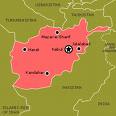
afghanmapOctober 7 marked the eleventh anniversary of the US war in Afghanistan. More than 2,000 American soldiers have now been killed, and as the US presidential candidates debate each other to lead the most dominant power on Earth, perhaps it is time for someone to ask them: Was it worth it?

On September 11th 2001, 2,977 people were killed. Almost 700 people in one firm alone (Cantor-Fitzgerald) died; 343 fire fighters and paramedics were killed, as were 60 police officers. Only 291 bodies were ever found ‘intact’. Over half of the families who lost loved ones that day received not a single piece of remains. Within three months 300 fire-fighters went on leave due to respiratory problems, almost half a million New Yorkers are being treated for post-traumatic stress disorders, and 1,000 first responders have since died from acute illnesses related to clean-up activities.
Wall Street shut down for 6 days, and as a direct result of 9/11 more than 146,100 people lost their jobs. Within the first month New York City alone exceeded $105 billion in economic losses.
Was it worth it?
America then went to war. But not just Iraq and Afghanistan: Pakistan, Yemen and Somalia have also been attacked. So have the citizens of the United States: freedoms, privacy and civil rights once taken for granted are gone, in the name of ‘national security’.
Operation Iraqi Freedom officially lasted for eight years and eight months. By December 2011, 4,486 US and 318 non-US troops had been killed fighting in Iraq, more than 1,800 more than who died on September 11th. However, according to the New York Times, a year after operations ceased US Special Operations units have quietly begun re-entering Iraq at the behest of the Iraqi government.
In Afghanistan, the war that began on October 7th 2002 still marches on. Operation Enduring Freedom is not due to end until 2014, an exact century after the onset of World War One. So far Afghanistan has taken the lives of 3,196 soldiers: 2,130 American, 433 British, and 158 Canadian. Forces killed in Afghanistan also amount to more than all the lives lost on 9/11.
Thus 8,000 troops have been killed for the 2,977 lost on September 11th 2001.
Was it worth it?
It gets worse. Once soldiers return from the theatre of operations the numbers keep climbing. For every single death in Afghanistan or Iraq, twenty-five soldiers commit suicide. During the first six months of 2012 there were 187 Army suicides, 55 Air Force, 32 Marine Corps, 39 Navy and 5 Coast Guard. The cumulative effect of multiple deployments and post-traumatic stress disorders et alia suggest, however, tens of thousands of additional deaths.
Each year, 6,500 veteran suicides are documented at a rate of one every 80 minutes. Only the Army releases figures and it is unclear if this includes active duty personnel or veterans of other wars. Although only 1% of Americans have served in Iraq or Afghanistan, they account for a massive 20% of the total annual rate. The Department of Veterans Affairs claim 18 veteran suicides per day, and for every successful suicide 20 are attempted yet fail. Rates of death were far higher in both World Wars: permanent disabilities now affect veterans today who otherwise would have died on the field. In World War One, an average of 57% of all soldiers mobilised were killed; in World War Two, more than 55 million soldiers and civilians died. In other words, the wounded from the Iraq and Afghanistan wars are a testimony to modern medicine saving lives that in the past would certainly have been lost, but can lead to tragic results nevertheless.
If the lowest suicide rate to assume is one per day by active duty or Iraq/Afghanistan vets, more than 4,000 must be added to the numbers killed above. And if we assume only half of the 6,500 veterans suicides per year are as a result of wars in Iraq and Afghanistan, an additional 36,000 deaths could be included to the totals. Whether suicides account for a further 4,000 or 40,000 deaths, they bring the ratio to between 4:1 to 16:1 deaths in payback for the 2,977 victims of 9/11.
These are just coalition losses of course. The official number of victims in Iraq has been stuck on 100,000 since 2004, not revised upwards since. But, in 2007 the British Opinion Research Businesssurvey calculated that up to 1.5 million Iraqis had been killed in the war. This confirmed an earlier British survey by the Lancet that calculated 655,000 to 1 million Iraqis had died in just three years, from 2003-2006. Although the war continued for a further five years the studies have not been repeated nor revised to account for additional Iraqi casualties, arguably due to intense American criticism.
There are almost no figures for Afghanistan casualties, but Human Rights Watch recorded 1,000 civilian deaths in 2006 and the UN estimates 12,000 deaths since 2007. There are no statistics for the first five years of the war.
Was it worth it?
Let us not omit the secret wars in Pakistan, Yemen and Somalia. Considering the drone programme is covert the numbers are almost certainly low. We do know however, that in Yemen drones have killed up to 1,026 men, women and children (at least 34) since 2002. Somalia is not on most Americans’ radar-screens but it is on the drones’: since 2007, 170 Somalis are dead from these Unmanned Aerial Vehicle strikes. In Pakistan drones have killed a reported 3,341 (at least 176 children) and wounded a minimum of 1,366 people. The ratio of wounded-to-killed indicates how deadly drone are, in part confirming their ‘precision’. They are surgically precise in that they do not wound: they intentionally tear to pieces anyone nearby.
How about the cost of capture, torture and rendition? Housing a single prisoner at Guantánamo Bay in Cuba costs the US taxpayer $800,000 per year. More than 100,000 men were detained in Iraq, many at the notorious Abu Ghraib; thousands more were held at Bagram Airfield or the infamous (CIA funded) ‘Salt Pit’ torture chamber north of Kabul, Afghanistan. Officers forced scores of detainees to physical, psychological and sexual abuse before shipping them off to even worse prisons around the world.
The non-fiscal cost of the consequences of tortures and imprisonment-without-trial cannot be calculated. For every single death or incarceration there is a father, brother, son, nephew, friend or neighbour who will never forget what these wars have wrought. Revenge lives long—generation-to-generation. We already see the first signs of what the wars have bought, exhibited in riots, uprisings, increased anti-American hostilities, destruction of US sovereign life and property, coups, and civil wars.
Was it worth it?
What about the economic cost? In 2003, George W. Bush estimated that the wars would cost $50 to $60 billion. Yet a 2011 study by Brown University’s Watson Institute for International Studiesestimated the final cost of the wars to be $4.4 trillion, not including medical costs for injured veterans or rebuilding aid to Afghanistan. Economist Joseph Stiglitz estimated the war in Iraq alone would cost $2.2 trillion. And all of the costs are funded upon borrowed money, demonstrated by the US debt skyrocketing from $6.4 trillion in March 2003 to over $16 trillion as of October 1st, 2012.
During the Vietnam war, Undersecretary of State George Ball wrote, “[I]n terms of US prestige…we would gain more through enlarging the war.” National Security Advisor McGeorge Bundy opined, “[E]ven if it fails, the policy will be worth it” because of US “prestige”.
If the American public—22.5 million now actually (not officially) unemployed—understood the economic price they would have to pay, would they have agreed to so eagerly support the wars? If the US Congress could have foreseen that a bare-minimum of four times as many soldiers as those who died on 9/11would die, would it have been worth it? If the consequences of anger, revenge, blowback—and stratospheric loss of prestige—were considered, would the US have still gone to war?
Was it worth it?