Showing posts with label contaminated food. Show all posts

Thursday, January 3, 2013

Interview 570 – New World Next Week with James Evan Pilato


Good to hear that we can look forward to continued broadcasts of "New World Next Week" through 2013


Tuesday, January 1, 2013

Russia throws poisonous meat back to US


Pravda
Anastasia Garina
Russia throws poisonous meat back to US. 48807.jpeg
U.S. meat supplies to Russia have been banned. The Russian Federation and the United States differ in the assessment of the causes of the situation. Russia claims that the reason for the ban was the presence of ractopamine drug in US meat. America insists that Russia's actions were a response to the adoption of the Magnitsky Act by the Senate and accuses Russia of violating WTO rules.

On December 7, 2012 Russia's Federal Agency for Agricultural Control, Rosselhohznadzor, banned the imports of meat containing ractopamine. This is a food additive that allows to reduce the content of fat in beef and pork. The drug is added to food so that animals grow the muscle mass instead of fat. According to researchers, ractopamine affects the human cardiovascular system, and in some cases can cause food poisoning. This drug is banned for use in 160 countries, including China and Russia. It is allowed in 24 countries, including Canada and the United States. Codex Alimentarius of the World Health Organization, adopted in July 2012 in Rome by representatives of 186 countries, allows the contents of ractopamine in meat.

Formally, Russia does not prohibit the delivery of pork and beef from the United States. It only notified a number of countries, including the US of A, of the need to provide documents saying that animals had not been fed ractopamine - the drug that is banned in Russia. However, the warned countries (in addition to the U.S. the list includes Canada, Brazil and Mexico and excludes 20 countries where the drug is used) do not have the appropriate expertise, because there was no need to have it before. Rosselkhoznadzor promised to introduce a transitional period for those countries, until about the end of January 2013. However, specific implementation mechanisms remain unclear.

As for foreign countries, the move of the Russian Agency for Agricultural Control will hit the United States most. Russia is the fourth largest importer of U.S. meat and spends about $500 million a year on it. The Russian market consumes 0.6 percent of all beef and 1.4 percent of pork produced in the United States. More than 200 containers of meat products worth about $20 million are currently on their way to Russia from the United States.

However, the lack of U.S. meat on the Russian market will affect the Russian economy. The pork from the United States comes fourth on the volume of shipments to Russia. In total, the share of imported meat in the Russian market makes up not less than a third.

The United States regards the ban of meat imports as a political move. According to American analysts, Russia has reacted so to the recent adoption of the Magnitsky Act by the U.S. Congress. On December 6, the U.S. Senate almost unanimously (92 votes "for" and 4 - "against") approved the bill that imposed visa and financial sanctions against Russian officials involved, according to Washington, in the death of Sergei Magnitsky, a lawyer of Hermitage investment fund. The first three parts of this document are devoted to the interaction of Russia and the U.S. in the WTO. In particular, the bill abolishes the Jackson-Vanik amendment for Russia and Moldova, which was adopted in 1974. It is expected that U.S. President Barack Obama will sign the bill in the near future.

"This seems to be in retaliation to the Senate's passage of the trade bill with Russia ... there is certainly no doubt about it," Rich Nelson, chief strategist at research and brokerage company Allendale Inc, said.

Russian officials were surprised to know that US analysts associated the ban on meat imports with the Magnitsky Act.

"One can speculate about whether it was done in retaliation or not, but the measure was based on the content of some additives in meat that are contrary to Russian sanitary standards," deputy director of the Institute of the USA and Canada, Victor Supyan told Pravda.Ru.

Previously, the Russian side promised to take comprehensive, multidimensional and extremely strong measures should the Magnitsky Act be adopted in the USA. Presently, the United States accuses Russia of violating WTO rules. "All WTO members break these rules. This is normal," Deputy Prime Minister Arkady Dvorkovich said in response to similar accusations in November of this year in an interview with the Kommersant newspaper. However, on Saturday, U.S. officials said they were expecting actions from Russia to change the situation. The U.S. side expressed a hope that in the near future Russia would remove the ban on the imports of meat, thus fulfilling its obligations as a WTO member. Russia, in turn, does not see any violations in its actions.


Monday, December 10, 2012

Op-Ed: Proposition 37 — possible that election fraud made it fail


Digital Journal
Anne Sewell

It seems there were significant “irregularities” in the vote totals for Proposition 37, the ballot initiative to label genetically engineered foods, that could not be explained by random coincidence.

On election day, November 6, Proposition 37 - the ballot initiative for mandatory labeling of food with GMO content - failed by a narrow margin. With 4,277,985 people voting "yes" (47.9%) and 4,835,045 people voting "no" (53.1%), it was very close. Since then, some rumors have been going around about possible election fraud. Food Democracy Now!, one of the groups involved in Prop 37 has been closely monitoring the results as they came in, and they hadn't seen any credible reports of voting irregularities, that is up until now.

On Thursday, Food Democracy Now! received some very disturbing news from a voter integrity monitor. This monitor claims that possible "statistical anomalies" had been detected in 9 counties in California.

Francois Choquette, a statistician closely involved in monitoring incoming election results in California, said there were significant “irregularities” in the vote totals for Prop 37 that could not be explained by random coincidence.

Since then, a team of independent statisticians has started analyzing raw voter data or “preliminary data from 17 of California's 58 counties”.

So far, potential anomalies have been detected in a number of the largest precincts in Orange, Los Angeles, San Francisco, Alameda and San Diego counties, among others. While it is not definite that election fraud has actually taken place, it is important for Prop 37 supporters to be aware that the results of the election as they stand are not final. Food Democracy Now! is asking supporters to stand with them as they call for further inquiry into the questionable patterns being revealed.

By visiting this web page, you can join in standing for open and transparent elections and ask the California Secretary of State, Debra Bowen, to ensure that the election results from Prop 37 are properly counted.

Today, Friday December 7th is the day that county election officials in the state of California are required to report their final results to the Secretary of State’s office . According to state law, Secretary of State Debra Bowen has until December 14th to certify the results of the election.

Here is where the worry arises. On election night, the California Secretary of State’s office called the election for the No side, declaring that Yes on 37 to label genetically engineered foods had failed to pass by a margin of 46.9% to 53.1%, with some 4.3 million Californians having been reported voting Yes on 37 by the next morning.

However, since that date the ballot proposition has slowly and steadily advanced both its vote total, and also the percentage of the total vote.

As of Monday, December 3rd at 4:58 pm, the California Secretary of State’s office reported that Prop 37 had garnered 48.5% votes to the No side’s 51.5%, with 5,986,652 voting to Label GMOs and 6,365,236 Californians voting against.

The very next morning, according to the California Secretary of State’s website, the Yes on 37 campaign had received 6,004,628 votes and edged down to 48.4% of the vote total. The timestamp on the website showed December 4, 2012, 6:04 a.m.

This was an important milestone, as the Yes on Prop 37 side had gained six million votes, a significant achievement. Food Democracy Now! immediately shared the good news via Twitter @food_democracy at 8:40 am PST.

Friday, November 23, 2012

Organic Consumers Association Statement On California Prop 37 Uncounted Votes


Organic Consumers Association
Katherine Paul
FOR IMMEDIATE RELEASE CONTACT: Organic Consumers Association Katherine Paul, 207.653.3090,
Organic Consumers Association
FINLAND, Minn. - Nov. 12, 2012 - The Organic Consumers Association (OCA) is monitoring the ongoing vote count and election results for Prop 37, the California Right to Know Genetically Engineered Food Act. The OCA will contest the vote if results differ substantially from pre-election poll results or if there are reports of any voting irregularities, particularly in Orange and San Mateo Counties where paperless ballot systems make voting more vulnerable to fraud.

Prop 37 was defeated by 6 percentage points, 53% to 47%, according to the California Secretary of State on election night. However, as with every election, not every ballot had been counted as of midnight Nov. 6. On election night, there were still 3.3 million uncounted votes. As of November 11, the vote totals were 5,205,044 NO to 4,619,580 YES

"The OCA, along with the California Right to Know Campaign and its attorneys, are closely monitoring the ongoing vote count process," said Ronnie Cummins, Director of the OCA and OCF, which contributed more than $1 million to the Prop 37 campaign. "We will challenge the outcome if the final count indicates more YES than NO votes, or if the results are substantially different from our pre-election polls."

State law requires county elections officials to report their final results to the Secretary of State by December 7. The Secretary of State has until December 14 to certify the results of the election.

The OCA hired Lake Research Partners to conduct pre-election polling for Prop 37. The final results of the polling are not yet available.

"Win or lose, Prop 37 is just the beginning," said Cummins. "We've put GMO labeling on the national map, and we've put Big Ag and Big Food on notice: This movement is stronger than ever, and it's not going away."

Activists in Washington State have already collected more than half of the signatures they need to put a similar GMO labeling initiative on the ballot there in 2013. Plans are also in the works to reignite legislative attempts in Vermont and Connecticut, where laws don't provide for citizens ballot initiatives.

The Organic Consumers Association (OCA) is an online and grassroots non-profit 501(c)3 public interest organization campaigning for health, justice, and sustainability.

The Organic Consumers Fund is a 501(c)4 allied organization of the Organic Consumers Association, focused on grassroots lobbying and legislative action.

Wednesday, November 7, 2012

PROP 37 AND CORPORATE LIES IN THE POST TRUTH ERA

RBN


As a historic vote with profound implications for the future of our food system nears, the question becomes whether a campaign with limitless resources and a disdain for the truth can defeat an overwhelmingly popular idea supported by a grassroots army, and over 3000 public interest organizations: the right to know what's in the food we eat and feed our families.

Poll after poll showed 90% of Americans (and Californians) favored labeling foods that have been genetically engineered (GMOs) and nearly a million signatures were gathered by California volunteers in just 10 weeks - easily qualifying Prop 37 for the ballot. And as of the first week of October, the Yes on 37 campaign enjoyed a 2 to 1 lead in the polls.

This broad statewide (and national) support - across party lines - made perfect sense. Prop 37 posits a simple question: Do we have the right to know what's in the food we eat and feed our children, or is that a decision better left to the pesticide and junk food companies bankrolling the opposition campaign?

Prop 37 isn't a referendum on genetically modified foods. It's not a ban, or a warning, it's a label.

The debate over the efficacy of genetically engineered foods should and will continue. In the meantime, Californians have a right to know, and for good reason.


A growing body of research links GMO foods to potential health risks, increased pesticide use, biodiversity loss, the emergence of super bugs and "super weeds" and the unintentional contamination of conventional crops.

Prop 37 simply adds a line of ink to a label -- as is currently required for 3,000 other ingredients -- so consumers know which products have been altered in a laboratory. 61 other countries have provided their citizens with this right, and choice, it's time we do the same.

Corporate Backlash Against Our Right to Know

In response to this growing outcry for food transparency a who's who of the world's most notorious corporate bad actors, with long histories of deceiving the public, polluting the environment, and endangering public health, converged on California to convince us we don't deserve this basic, human right. A right that nearly half the world's population already enjoys.

The No on 37 campaigns two largest contributors are pesticide giants Monsanto ($8.1 million) and Dupont ($5.4 million) - who for decades assured us Agent Orange, DDT, and Tobacco were safe. At the same time, Monsanto has actively advocated for labeling in Europe.

So how do companies like these go about persuading us that we don't deserve the right to know what they're doing to our food?

The Only Recourse: An Unprecedented Campaign of Deception

The campaign against the right to know has relied on three essential components: unlimited resources, a willingness to repeatedly lie, and a willingness to double and triple down on those lies-even when they are debunked by independent fact checkers.
Seriously, when was the last time giant, out-of-state pesticide and junk food companies spent $45 million to improve your health, protect the environment or save you money?

Spoiler Alert-they never have.

The No On 37 campaign knows that the less you know about your food, the more money they are likely to make. Their goal is literally that simple, even though their campaign of deception is far more elaborate.

They've set up phony AstroTurf groups, misrepresented spokespeople and embellished their credentials, and misrepresented leading science, government, professional and academic organizations-including (but not limited to) the National Academy of Sciences, Academy of Nutrition and Dietetics, US Food and Drug Administration and World Health Organization. They've bankrolled demonstrably phony "economic studies," made repeated false statements in advertisements, deceived voters with mailers sent by obvious front groups, and repeated one falsehood after another---hoping somehow that no one would ever notice.

Saturday, November 3, 2012

Wednesday, October 31, 2012

Aspartame is linked to leukemia and lymphoma in new landmark study on humans


Natural News
Ethan Evers

As few as one diet soda daily may increase the risk for leukemia in men and women, and for multiple myeloma and non-Hodgkin lymphoma in men, according to new results from the longest-ever running study on aspartame as a carcinogen in humans. Importantly, this is the most comprehensive, long-term study ever completed on this topic, so it holds more weight than other past studies which appeared to show no risk. And disturbingly, it may also open the door for further similar findings on other cancers in future studies.

The most thorough study yet on aspartame - Over two million person-years

For this study, researchers prospectively analyzed data from the Nurses' Health Study and the Health Professionals Follow-Up Study for a 22-year period. A total of 77,218 women and 47,810 men were included in the analysis, for a total of 2,278,396 person-years of data. Apart from sheer size, what makes this study superior to other past studies is the thoroughness with which aspartame intake was assessed. Every two years, participants were given a detailed dietary questionnaire, and their diets were reassessed every four years. Previous studies which found no link to cancer only ever assessed participants' aspartame intake at one point in time, which could be a major weakness affecting their accuracy.

One diet soda a day increases leukemia, multiple myeloma and non-Hodgkin lymphomas

The combined results of this new study showed that just one 12-fl oz. can (355 ml) of diet soda daily leads to:

- 42 percent higher leukemia risk in men and women (pooled analysis)
- 102 percent higher multiple myeloma risk (in men only)
- 31 percent higher non-Hodgkin lymphoma risk (in men only)


These results were based on multi-variable relative risk models, all in comparison to participants who drank no diet soda. It is unknown why only men drinking higher amounts of diet soda showed increased risk for multiple myeloma and non-Hodgkin lymphoma. Note that diet soda is the largest dietary source of aspartame (by far) in the U.S. Every year, Americans consume about 5,250 tons of aspartame in total, of which about 86 percent (4,500 tons) is found in diet sodas.

Confirmation of previous high quality research on animals

This new study shows the importance of the quality of research. Most of the past studies showing no link between aspartame and cancer have been criticized for being too short in duration and too inaccurate in assessing long-term aspartame intake. This new study solves both of those issues. The fact that it also shows a positive link to cancer should come as no surprise, because a previous best-in-class research study done on animals (900 rats over their entire natural lifetimes) showed strikingly similar results back in 2006: aspartame significantly increased the risk for lymphomas and leukemia in both males and females. More worrying is the follow on mega-study, which started aspartame exposure of the rats at the fetal stage. Increased lymphoma and leukemia risks were confirmed, and this time the female rats also showed significantly increased breast (mammary) cancer rates. This raises a critical question: will future, high-quality studies uncover links to the other cancers in which aspartame has been implicated (brain, breast, prostate, etc.)?

There is now more reason than ever to completely avoid aspartame in our daily diet. For those who are tempted to go back to sugary sodas as a "healthy" alternative, this study had a surprise finding: men consuming one or more sugar-sweetened sodas daily saw a 66 percent increase in non-Hodgkin lymphoma (even worse than for diet soda). Perhaps the healthiest soda is no soda at all.

Sources for this article include:

http://www.ncbi.nlm.nih.gov/pubmed/23097267
http://www.ncbi.nlm.nih.gov/pubmed/16507461
http://www.ncbi.nlm.nih.gov/pubmed/17805418


About the author:

Ethan Evers is author of the award-winning medical thriller "The Eden Prescription," in which cutting-edge researchers perfect an effective, all-natural treatment for cancer, only to be hunted down by pharmaceutical interests which will stop at nothing to protect their $80 billion cancer drug cash machine. The Eden Prescription is based on the latest science and draws on real historical events stretching back to the beginning of the "War on Cancer." Ethan has a PhD in Applied Science.

Tuesday, October 30, 2012

Hurricane Sandy Offers Insight on How to Prepare


Natural Society

hurricanesandypreparedness 245x153 What Hurricane Sandy Reveals About the Future of PreparednessHurricane Sandy has cleared entire grocery outlets of their essential items like water, shut off power from hundreds of thousands of homes, and incited gangs to call for the looting for local stores and wealthy homes. But it is nothing compared to a major disaster. Sure, Hurricane Sandy is projected to cost anywhere from $80 to $100 billion in damages, but it does not really compare to the reality of greater meltdown incidents.

The reality is that other major disaster scenarios that threaten the lives of many could lead to a response that is overwhelmingly more severe. Whether economic, nuclear, biological or otherwise, individuals will respond much differently when two circumstances arise surrounding such a situation:

There is no preemptive warning to prepare for the circumstances yet to be encountered.

There is direct harm presented towards individuals and their families. But where does Hurricane Sandy fit into all of this? Hurricane Sandy is extremely important as it is a ‘beta test’ of sorts to show how people will respond during a time of perceived crisis. Given that Hurricane Sandy does not pose a very real threat to the lives of citizens (directly), this response is of course much lighter than in the more life-threatening collapse situations. That said, store shelves have still been emptied of all essential items (particularly water, which was the first thing to go a few days ago), looters are conspiring to pick their targets, and millions face the reality of long-term power outages.

My video below details how many stores are even posting notices of their short supply to deter looters, riots over essential items like water, and other issues:


In other words, Hurricane Sandy gives you a glimpse into not only how a collapse scenario will function, but what you will require. I encourage you to read our information on how to prepare for not just Hurricane Sandy but any disaster in addition to the article on how to preserve your food without electricity. But at a glance, the key items that will immediately disappear or become highly challenging to find in a real collapse scenario include:

Fresh water: Water bottles, gallon jugs, and likely even access to nearby springs will be protected by certain groups.

Water-containing beverages: All types of juice, soda, milk, just about anything to quench thirst.

Firearms: Handguns, rifles, and shotguns will be most in demand however it’s likely even BB guns and airsoft will be purchased or looted for protection or otherwise.

Canned foods: Expect stores to sell out of long-term storable foods as soon as word of disaster hits.

Sugar and coffee: Items like sugar, coffee, spices, salt, and pepper will essentially be a new form of currency in the event of a meltdown. The bartering system of days past will be reinvigorated through the trade of once-cheap products like these in exchange for even major things like vehicles, weapons, and water.

Thankfully, you can be prepared. By purchasing a high quality water filtration device alone, you will be ahead of 99% of the population. The best options are either a gravity-based filtration system (that works using gravity instead of pressure provided by electricity), or an atmospheric water generator that is solar powered or can run reasonable fine on a generator. With either of these options, you will be able to address the most challenging issue of obtaining fresh water supply for you and your family. This alone may be enough of a barter tool to generate excess food and perhaps even weapons.

That said, it is important to begin stockpiling foods that you will be able to eat without electricity. Many foods exist that store for nearly forever, but it is still wise to eat from your storage each month and replace accordingly to achieve optimum freshness and subsequent taste. After all, you want to attempt to retain the most comfort in a collapse scenario through your foods to ensure that you and your family do not suffer from serious panic-induced hardships.

Hurricane Sandy presents a unique scenario in which we can understand how society will respond to disaster in highly-populated urban areas after being used to a ‘regular’ lifestyle for virtually the last several decades. Through this, it also brings widespread attention to just how necessary it is to ensure that you obtain and maintain the essential supplies needed for the survival of you and your family in a much more serious situation that could threaten the lives of the average citizen.

Just by taking minor steps into improving your preparedness kit and action plan, you can make a major different in not only your own life but the lives of many others.

Imperialism In The X-Factor Age


Global Research
Colin Todhunter

xfactorIn Vietnam, Agent Orange was dropped by the US to poison a foreign population. In Iraq and the former Yugoslavia, depleted uranium was used. In Western countries, things are a bit more complicated because various states have tended to avoid using direct forms of physical violence to quell their own populations (unless you belong to some marginalized group or hit a raw nerve, as did the Occupy Movement last year). The pretence of democracy and individual rights has to be maintained.
One option has been to use South American crack cocaine or Afghan heroin to dope up potential troublesome sections of the population. It’s worked wonders: highly lucrative for the drug running intelligence agencies and banks awash with drug money (1), while at the same time serving to dampen political dissent in the most economically and socially deprived areas. Another tactic has of course been the massive ever-increasing growth of the surveillance industry to monitor ordinary citizens.
But drugs, surveillance and direct violence are kind of a last resort to keep a population in check. Notwithstanding baton charges, tear gas and the use of rubber bullets on the European mainland and that the US Government is not ruling out the use of violence on its own people (2), ideology via the media has and continues to be the choice of method for population control in Western countries.
Whether it’s through the paranoia induced by the fear of terrorism or more general propaganda spewed out by the mainstream ‘news’ channels, political agendas and modes of thought are encouraged which seek to guarantee subservience and ‘integration’, rather than forms of critical thought or action that may lead to a direct questioning of or a challenge to prevailing forms of institutionalised power.
From trade unions to political parties, oppositional groups are infiltrated, deradicalised and incorporated into the system (3) and critical stances are stifled, ridiculed or marginalized. Consensus is manufactured both in cultural and political terms. The result is that presidential candidate TV debates, political discourse and much of the popular mass media is void of proper analytical discussion: public theatre scripted by speech writers and PR people, presented in manipulative, emotive, ‘human-interest’ terms.
From the TV news and commercials to the game-shows and latest instant fame programme, misinformation, narcissism and distraction pervade all aspects of life. Why be aware of the world’s ills and challenge anything when you can live in the dark, watch X-Factor, wear Reebok and shop till you drop? It is an infotainment paradise where lies are truth and unfettered desire a virtue.
It’s a world of crass consumerism and gleaming shopping malls bathed in designer lifestyle propaganda where people drown in their Friday night alcohol vomit, shop till they drop for things they don’t really need or indeed want and bask in their emptiness by watching TV with eyes wide shut.
But this is ‘free market’ democracy. And the concept behind it is that the mass of the population are a problem, and any genuine debate or the electorate’s ability to see what is actually happening must be prevented. People must be distracted – they should be watching millionaire footballers kick a ball around, mind numbing soap operas or some mindless sitcom. Every once in a while, at voting time, they are called on to parrot or back some meaningless slogans.
Politics is no longer about great ideas. The acquisition of power has become the core value in itself, not socialism or any other radical philosophy. What is required from mainstream political leaders is technocrat not, radical; middle manager, not firebrand. In an era of advanced capitalism, the role of mainstream glove puppet political leaders is to demonstrate competence when it comes to managing the machinery of state in order to fine tune the status quo, not overhaul it.

Wednesday, October 3, 2012

YouTube Removes Undercover Video Showing Whole Foods GMO Misinformation

Natural Society
Anthony Gucciardi


Youtube has pulled an undercover ‘Organic Spies’ video questioning Whole Foods employees as to whether or not any of the products within Whole Foods contained GMO ingredients. Created to show how even the employees themselves are misinformed (or even dishonest) about the very real presence of Monsanto’s GMOs in a store like Whole Foods that is supposed to promote health and wellness, the Organic Spies video received over 100,000 views in a few short days.
The video has since been removed due to apparently ‘violating the Terms of Service’, according to the genetic Youtube message that appears in place of the original video. As Infowars.com’s Aaron Dykes explains, this could be due to a third party complaint (such as Whole Foods demanding it be taken down), but it is not known as YouTube no longer tells the user of the third party identity. In other words, videos like these can be taken down without a trace of who is responsible.
You can see a re-upload of the video below:

One thing is clear, however. Whole Foods definitely has its eye on the video, attempting to perform ‘damage’ control through PR statements. Whole Foods even responded to the video after it became viral on the internet, stating on their blog that they certainly do carry GMOs within their store and that their employees questioned in the video were misinformed:
“The YouTube video showing our store Team Members giving conflicting responses to a question about GMOs reminds us that while we try to keep all our 70,000 Team Members up-to-speed on the latest information, clearly we need to do more. Some products in our stores DO contain GMOs – just like any other food store in the country, due to the pervasiveness of GMOs…”
Whole Foods Should Abandon GMOs, Monsanto
Just to be clear, I do believe that Whole Foods offers consumers a pretty considerable selection of organic non-GMO options at their stores. Many items contain the Non-GMO Project verified sticker, and they are certainly multitudes more in touch with real food than the average grocer. That said, it is important that we always keep corporations in line when it comes to protecting the health of ourselves and our families.
Ever since the recent French GMO study found that Monsanto’s GMOs (and Roundup) were contributing to tumor growth and organ damage, the international alarm over GMOs has been louder than ever. This is the perfect time to spread the word over carriers like Whole Foods and Trader Joe’s who still carry GMOs within their ‘natural health’ stores. After all, GMOs are not natural by any stretch of the word.
The success of the Organic Spies video signifies a serious paradigm shift in the way the average individual looks at an average business. Whole Foods, like virtually all other corporations who focus on selling direct to customer, depends entirely on the purchases of the consumer. If consumers literally demand that Whole Foods removes tumor-linked GMOs from their stories, stopping a major flow of income to Monsanto and other biotech giants, then they will be forced to comply.

Tuesday, September 18, 2012

Monsanto Throws $2.89 Million More Toward Stopping GE Food Labeling


Food Integrity Campaign
Sarah Damian

We're less than two months away from the November election – when California's Proposition 37 could become the country's first law mandating the labeling of genetically engineered (GE). But the law won’t happen if Monsanto or other Big Ag companies have anything to say about it.
According to the $2.89 million last Friday to defeat Proposition 37, making the GE crop producer's contributions against the labeling measure total $7.1 million.

From the campaign press release:

Other major pesticide companies also just made major additional contributions to defeat Proposition 37, including DuPont ($874,800), Dow AgroSciences ($815,200), Bayer CropScience ($381,600), BASF Plant Science ($357,700) and Syngenta ($178,700).

“Monsanto wants to buy this election so they can keep hiding what’s really in our food,” said Gary Ruskin, campaign manager of the Yes on Proposition 37 campaign. “They are on the losing side of history. Californians want the right to know what’s in our food, and we will win it.”

The “Big 6” pesticide firms (Monsanto, DuPont, Bayer, Dow, BASF and Syngenta) have contributed $19 million of the $32 million that the No on 37 campaign has raised.

There are at least 40 food and pesticide companies that have contributed significantly to the "No on 37" campaign – companies with products containing GE crops/ingredients and that apparently prefer their customers to remain uninformed about what exactly they're eating.

The same hackneyed reasoning for opposing GE labeling showed up again in a recent Los Angeles Times story:

Opponents say the label would unnecessarily dampen further [GE crop] development that is intended to feed a growing global population dependent on the U.S., the largest exporter of corn and soybean.
FIC has blogged repeatedly on why promoting GE food as the answer to the world's hunger problems is a misleading PR tactic. For more updates on Monsanto (a.k.a. frequent violator of food integrity), follow the FIC blog here.

Sarah Damian is New Media Associate for the Government Accountability Project, the nation's leadingwhistleblower protection and advocacy organization.

Thursday, September 13, 2012

Aspartame: Safety Approved In 90 Nations, But Damages Brain

GreenMediaInfo
Sayer Ji


A new study on aspartame has the potential to reignite the decades-old controversy behind this artificial sweetener's safety, or lack thereof.  As far back as 1996, folks were writing about the potential link between aspartame and increasing brain tumor rates.[i] Indeed, its intrinsic neurotoxicity and carcinogenicity has been confirmed in the biomedical literature. And yet, aspartame has been approved for use in thousands of consumer products in over 90 countries, [ii] and is still being consumed by millions worldwide on a daily basis – despite the fact that over 40 adverse health effects of aspartame have been documented.

The new study, published in the September edition of the Journal of Bioscience and titled, "Effect of chronic exposure to aspartame on oxidative stress in the brain of albino rats," aimed to test the hypothesis that chronic consumption of aspartame may be causing neurological damage in exposed populations.
They found that chronic (90 day) administration of aspartame to rats, at ranges only 50% above what the FDA considers safe for human consumption, resulted in blood and brain tissue changes consistent with brain damage.

Aspartame is metabolized into three distinct components: aspartic acid, methanol and phenylalanine. While aspartic acid is a well-known excitotoxin, phenylalanine only presents a serious health concern to those with a genetic disorder known as phenyletonuria. Methanol, on the other hand, is far more problematic, as it is not naturally found in significant quantities in the human diet.

According to a recent review

Until 200 years ago, methanol was an extremely rare component of the human diet and is still rarely consumed in contemporary hunter and gatherer cultures. With the invention of canning in the 1800s, canned and bottled fruits and vegetables, whose methanol content greatly exceeds that of their fresh counterparts, became far more prevalent. The recent dietary introduction of aspartame, an artificial sweetener 11% methanol by weight, has also greatly increased methanol consumption.[iii]
Moreover, the aspartame metabolite methanol (also known as wood alcohol) is highly toxic and is metabolized into the known human carcinogen formaldehyde and formic acid,[iv] which is known to be highly toxic to the central nervous system. Considering the fact that the normal human body temperature is approximately 98.6 degrees Farenheit, and that aspartame will convert to its toxic metabolites at temperatures as low as 86 degrees Farenheit, the finding that aspartame is neurotoxic to animals is not a surprise. The authors of the new study surmised that the observed adverse brain changes were due to the generation of oxidative stress in brain regions.

Aspartame, of course, is a proprietary synthetic chemical not found in nature, and exists primarily because plants like stevia, which have significant, clinically-substantiated healing properties, can be grown in your back yard for free and are therefore not profitable commodities that can be produced and controlled only by a few.
But, aspartame is not the only toxic sweetener on the market. A growing body of research now shows that sucralose, known by the brand-name Splenda, is also capable of suppressing the immune system, causing inflammatory bowel conditions such as Crohn's and ulcerative colitis, migraine headaches, and DNA damage.[v]

The trick is to stick with naturally occurring compounds, whose sweetness is not associated with adverse health effects. Below is a list of natural alternatives, along with the number of potential health benefits associated with each, as indexed on our website.

Monday, September 3, 2012

Fukushima plant “to keep contaminating the Pacific Ocean for the rest of time” if fuel can’t be removed — No good solution, must constantly pump out water from under buildings


ENENews
Title: Arnold Gundersen with another update on the unfolding effects of the Fukushima disaster
Source: KPFT Houston, If You Love This Planet Radio
Date: Aug 31, 2012
Description: This week, Dr. Caldicott brings on nuclear engineer Arnold Gundersen  [...]
At 19:00 in
Caldicott: If you put concrete on it, you know it’s going to keep going down into the water table. 
Gundersen: Right. 
Caldicott: And you know it’s going to keep contaminating the Pacific Ocean for the rest of time. 
Gundersen: Right. So the solution — there is no good solution — but the solution would be to bore holes underneath and constantly pull water out from under the buildings.
[...]
At 23:00 in
Caldicott: You are sacrificing the Pacific by leaving this stuff there for the rest of time, which will leak and drain consistently into the Pacific. 
Gundersen: You’re right. It needs to be constantly pumped out
[...]


Thursday, August 30, 2012

Daini workers needed emergency room after being at Unit 4 — Unable to decontaminate exposed people — “Plants are not safe”

ENE News

This video was taken on March 14, 2011.

  • Top left:Fukushima Daiichi
  • Top center: Fukushima Off-site Center
  • Top right: Kashiwazaki Nuclear Power Plant


Right now [Daini's] plants are not safe, so we use emergency power supplies.

Unfortunately they refuse to supply fuel.

We said, “We supply fuel then.” Then they said we cannot let you do so…

[Daini] doesn’t have water. We don’t have enough water to decontaminate exposed people…

We prepare emergency rooms for Unit 4 of [Daini] and people from [Daiichi].

We prepare emergency rooms for each. So Head Office, please think separately. That’s all.

Monday, August 27, 2012

The Biotech Goliath Roars: Monsanto’s Gang Dumps $25 Million into NO on 37 Campaign to Label GMOs

Organic Consumers

Yesterday it was revealed that the biotech industry and Big Ag have already dumped $25 million - $4.2 million from chemical and seed giant Monsanto alone - into the campaign to defeat Proposition 37 in California, the November 6 citizens ballot initiative that will require genetically engineered foods to be labeled and put an end to the deceptive industry practice of marketing GMO-tainted foods as “natural” or “all natural.”

The California Secretary of State just released the latest Who’s Who of donors to the NO on 37 and YES on 37 campaigns. Topping the list of donors to the NO on 37 anti-labeling campaign is Monsanto and the rest of the Biotech agri-toxics gang, aided and abetted by processed food manufacturers and supermarket chains. As of Aug. 15, they’ve raised more than $25 million to keep you from knowing what’s in your food. And of course the November 6 election is still more than two months away. On our side, YES on 37, we’ve raised $2.7 million with several million more in pledges.

Who are the top donors on our side, calling for truthful labels on GMOs? The top two donors are Mercola.com, the nation’s largest network of natural health consumers, and the Organic Consumers Fund (OCF), the allied grassroots lobbying arm of the Organic Consumers Association. Mercola.com has already donated $800,000 to the cause, while the OCF has donated approximately $700,000 so far, almost all of which has come in the form of small donations from organic food consumers. Other large donors to the YES on 37 campaign so far include Nature’s Path, Dr. Bronner’s, Lundberg Family Farms, Eden Foods, and Organic Valley, leading brands in the organic industry.

It’s clear that the NO on 37 folks have a lot at stake – namely, grotesque profits. After Monsanto, the top donor is DuPont Pioneer, at more than $2.4 million. Pepsi/Frito Lay has moved into the no. 3 spot, at more than $1.7 million. In all, nine companies have pitched in more than $1 million each – most of them biotech and pesticide companies, along with Pepsi, Nestle and Coca-Cola.

Total number of major donors so far to the NO on Prop 37 campaign? 45 – all with ties to the biotech, pesticide and Big Food industries. Total number of major donors to the YES campaign? 18 – none with ties to biotech, pesticides or Big Food.

Goliath has indeed roared, but the food fight of our lives has just begun. Goliath has more money, but David, our champion on the battlefield, has truth and grassroots power backing him up. How much more will the Biotech Bullies and Big Ag spend to keep voters in the dark about chemical and energy intensive GMO food? Please stay tuned from now until Nov. 6. We’ll keep you informed and motivated to join OCA, OCF, and our allies in this historic battle that will determine the future of food and farming, not only in North America, but across the world.


Saturday, August 25, 2012

Which ‘Natural’ Food Companies Are Fighting the Effort to Label GMOs?

From the Trenches

Huffington Post  On Nov. 6, California voters will have the opportunity to vote on historic Proposition 37, which would mandate the labeling of genetically-engineered foods. At a time when it’s hard to get a large percentage of Americans to agree on almost anything, polls show that as many as 90 percent of us want genetically-modified organisms (GMOs) labeled. More than 40 other nations, including the entire European Union, already require disclosure. But Monsanto and its allies are dedicated to keeping consumers in the dark and are pouring tens of millions of dollars into a disinformation campaign intended to defeat Prop 37.

You might expect the biotech industry to try to block a measure that would require foods that contain GMOs to say so on their packages. After all, a growing body of scientific research is indicating that GMOs might be far more dangerous than was previously imagined. But Monsanto’s allies in the effort to defeat Prop 37 include some unexpected culprits. It can be shocking to realize that some of the most trusted names in the naturalfood world are in bed with Monsanto.

Naked Juice is owned by PepsiCo, which has donated $1.7 million to Monsanto’s efforts. Honest Tea, Odwalla and Simply Orange are owned by Coca-Cola, which has donated another million dollars. Alexia and Lightlife are owned by ConAgra, which has put in more than $1 million.

You won’t find this mentioned anywhere on the Kashi product packaging, but Kashi, as well as Gardenburger and Morningstar Farms, is owned by Kellogg, which has already coughed up more than $600,000 to defeat Prop 37.

Kashi has already been in plenty of trouble on the GMO front this year. A few months ago, a number of natural foods stores stopped carrying Kashi cereals when it came to their attention that the “soy used in most Kashi products is genetically modified, and that when the USDA tested the grains used there were found to be pesticides that are known carcinogens and hormone disruptors.”

In an attempt to defend itself, Kashi released a YouTube video that announced that:

“While it’s likely that some of our foods contain GMOs, the main reason for that is because in North America, well over 80 percent of many crops, including soybeans are grown using GMOs … Factors outside our control such as pollen drift from nearby crops

… have led to an environment where GMOs are not sufficiently controlled.”
This seemingly reasonable defense — that the only reason GMOs are found in Kashi products is because GMOs are widespread in the environment — might be valid if the problem was only trace GMOs, which lead to a product being less than 1 percent genetically engineered. But when theCornucopia Institute tested Kashi’s Go Lean cereal, which gets its protein from soy, they found that the soy was 100 percent genetically engineered.

There are other natural foods heroes whose profits are being used to try to keep us in the dark. Silk soy milk carries the “Non-GMO Project Verified” seal on its package. But Silk is owned by Dean Foods, which has donated more than a quarter million dollars to Monsanto’s efforts to defeat Prop 37.
The list of sell-outs who masquerade as bastions of organics is disappointingly long. R. W. Knudsen and Santa Cruz Organics are owned by Smucker, which has donated $388,000 to killing Prop 37. Cascadian Farm, Larabar and Muir Glen are owned by General Mills, which has put more than half a million dollars into the effort.

The good news is that even with large agribusiness companies purchasing natural and organic brands and then betraying consumers by funding the attack on GMO labeling, Prop 37 still stands an excellent chance of passing.

And not everyone has sold out, not by a long shot. There are still some authentic heroes in the natural food industry. Nature’s Path, Dr. Bronner’s, Nutiva and Lundberg Rice stand out among the companies that are contributing to the effort to pass Prop 37 and ensure your right to know what’s in your food. Organic Valley, Amy’s and Eden Foods are also standing up for your right to know. And the owner of a natural health website, Joseph Mercola (mercola.com), has donated nearly a million dollars to the good fight.

If you want to know more, the Cornucopia Institute has released a shopper’s guide to the companies that are donating on both sides of Prop 37.

At present, it’s not easy to know whether there are GMOs in your food. The Non-GMO Shopping Guide put out by the Institute for Responsible Technology is a great support. But the most important thing you can do is to help pass Proposition 37.

If Californians pass Prop 37 in November, it will have enormous implications to the food system throughout North America.

Ignorance, in some cases, may be bliss. But in the case of GMOs, the ignorance of not knowing what is in your food is not bliss, it’s subservience to Monsanto and its allies. And it could mean a lifetime of devastating health problems for you and your children.

It’s going to be a battle. Let’s win this one for ourselves, for the earth, and for all future generations.


Friday, August 17, 2012

80 Percent of Public Schools Have Contracts With Coke or Pepsi

Mother Jones
Tom Philpot

Is your kid's public school a Coke school or a Pepsi school?

If you don't know what I mean, consider yourself lucky. Starting in the early '90s, cash-strapped public schools began selling exclusive "pouring rights" to one or another Big Soda company, which would then supply all the beverages sold in on-site snack bars, stores, and soda machines as well as at sports events. Along with sugary drinks, of course, the companies also stuffed the 

In 2005, according to one survey, nearly half of all public elementary schools and about 80 percent of public high schools operated under pouring rights contracts. It's clear what the schools get for their trouble. It's no wonder that schools turn to selling junky snack food and cutting deals with sugary soda makers to augment stingy school-lunch budgets. As of 2011, we were spending more than twice as much on air conditioning for troops in Afghanistan than we do on feeding public school kids.The soda deals subsidize other aspects of schooling, too. Here's how the Rockford Register Star describes a contract between the Rockford, Illinois school district and Coca-Cola:
Under the existing 10-year contract, Coca-Cola paid the district $4 million upfront and an additional $350,000 a year to sell its beverages in schools. The annual payments have funded field trips, gym uniforms, SMART Boards and other frills that individual school budgets may not otherwise have afforded.
But what are they giving up in return? A just-released study by University of Illinois researchers compares the weight gain of kids in states that limit in-school junk food sales with those of kids in states that don't. The results, summarized by The New York Times:

Students who lived in states with strong laws throughout the entire three-year period gained an average of 0.44 fewer body mass index units, or roughly 2.25 fewer pounds for a 5-foot-tall child, than adolescents in states with no policies. The study also found that obese fifth graders who lived in states with stronger laws were more likely to reach a healthy weight by the eighth grade than those living in states with no laws.
The study didn't definitively prove that unimpeded junk food sales in schools causes the higher weight gain—they established correlation, but not causation. But the researchers did adjust their results to account for other factors that might have influenced kids' weight, including age, race/ethnicity, and socioeconomic status.

And their finding come on the heels of another study, released in May and by the same researchers, that found that kids in California schools, where junk food sales are limited, take in significantly fewer total calories than kids in states with no such restrictions. Here's how The Times 

According to the Robert Wood Johnson Foundation, obesity rates among children ages 6 to 11 have quadrupled over the past four decades, and nearly a third of children and adolescents—more than 23 million kids and teenagers—are obese or overweight.


The latest research on junk food in schools suggests an axiom that I might have hoped would be obvious: It makes no sense to transform public schools into a vehicle for marketing junk food to kids. In 2010, President Obama signed a law requiring the USDA to come up with national standards for snack foods and beverages sold in schools. The agency has yet to complete that task.

Thursday, July 5, 2012

Fukushima was ‘man-made’ disaster: Japanese probe

HuluPlus
Majid Siddique

TOKYO: Last year’s nuclear accident at Fukushima was a man-made catastrophe and not only due to the tsunami that hit the plant, a Japanese parliamentary panel said Thursday in its final report on the disaster.

“The TEPCO Fukushima Nuclear Power Plant accident was the result of collusion between the government, the regulators and (plant operator) TEPCO, and the lack of governance by said parties,” said the report by the Diet’s Fukushima Nuclear Accident Independent Investigation Commission.
“They effectively betrayed the nation’s right to be safe from nuclear accidents. Therefore, we conclude that the accident was clearly ‘man-made’.

“We believe that the root causes were the organisational and regulatory systems that supported faulty rationales for decisions and actions, rather than issues relating to the competency of any specific individual.”
The probe is the third of its kind in Japan since the world’s worst nuclear crisis in a generation.
An earlier report by plant operator Tokyo Electric Power (TEPCO) had all but cleared the huge utility, saying the size of the earthquake and tsunami was beyond all expectations and could not reasonably have been foreseen.

But an independent group of scholars and journalists, who reported their findings in February, said TEPCO could and should have done more.

It also said that had the company had its way, its staff would have been evacuated from the crippled plant and the catastrophe could have spiralled even further out of control.

The findings published on Thursday call for further investigation into the impact of the 9.0 magnitude earthquake — as opposed to the towering tsunami — on the reactors at Fukushima.

“As for direct cause of the accident, the commission reached the conclusion that we cannot definitely say any devices that were important for safety were not damaged by the earthquake,” it said.
“We cannot rule out the possibility that a small-scale LOCA (loss-of-coolant accident) occurred at the reactor No. 1 in particular.”

Although many scientists and activists have questioned the dominant narrative that cooling systems were knocked out by the rising waters, the government and TEPCO have been unwilling to say the reactors were damaged by the initial earthquake.

Tectonically-volatile Japan has a network of nuclear reactors that, until Fukushima, had supplied around a third of the nation’s electricity.

The nuclear industry has long boasted of its many safeguards against earthquakes, but much recent public opposition to atomic power has focused on the vulnerability of plants, especially those that sit near seismic faults.

The report said “it is considered that TEPCO management knew about delays in anti-quake works and postponement of tsunami measures and were aware that the Fukushima Daiichi (number one plant) was vulnerable.”

TEPCO also failed to act promptly in the early stages of the disaster, the panel concluded, but added: “This should not be attributed to individuals… at the plant but the structural problems of TEPCO.”
The administration of then premier Naoto Kan hampered operations as the disaster unfolded, the report said, and did not use a logical chain of command.

“The prime minister’s office was supposed to contact the plant operator through an on-the-spot taskforce. But… issued direct instructions to TEPCO head office and the accident site, confusing the command line.”

Japan’s nuclear watchdog was remiss because it did not force TEPCO to act, even when it knew things were going wrong, the report said.

“The Nuclear Industrial Safety Agency (NISA) knew TEPCO was postponing taking measures but did not give clear instructions,” it said, adding NISA “was unprepared for a disaster whose scale exceeded past accidents.” AFP


Tuesday, July 3, 2012

Death of the Birds and the Bees Across America

Global Research
F. William Engdahl


Birds and bees are something most of us take for granted as part of nature. The expression “teaching about the birds and the bees” to explain the process of human reproduction to young people is not an accidental expression. Bees and birds contribute to the essence of life on our planet. A study by the US Department of Agriculture estimated that “...perhaps one-third of our total diet is dependent, directly or indirectly, upon insect-pollinated plants.”1

The honey bee, Apis mellifera, is the most important pollinator of agricultural crops. Honey bees pollinate over 70 out of 100 crops that in turn provide 90% of the world's food. They pollinate most fruits and vegetables--including apples, oranges, strawberries, onions and carrots.2 But while managed honey bee populations have increased over the last 50 years, bee colony populations have decreased significantly in many European and North American nations. Simultaneously, crops that are dependent on insects for pollination have increased. The phenomenon has received the curious designation of Colony Collapse Disorder (CCD), implying it could be caused by any number of factors. Serious recent scientific studies however point to a major cause: use of new highly toxic systemic pesticides in agriculture since about 2004.

If governments in the EU, USA and other countries fail to impose a total ban on certain chemical insecticides, not only could bees become a thing of the past. The human species could face staggering new challenges merely to survive. The immediate threat comes from the widespread proliferation of commercial insecticides containing the highly-toxic chemical with the improbable name, neonicotinoids. Neonicotinoids are a group of insecticides chemically similar to nicotine. They act on the central nervous system of insects. But also on bees and  small song birds. Recent evidence suggests they could also affect human brain development in newborn.

Some five to six years back, reports began to circulate from around the world, especially out of the United States, and then increasingly from around the EU, especially in the UK, that entire bee colonies were disappearing. Since 2004 over a million beehives have died across the United States and beekeepers in 25 states report what is called Colony Collapse Disorder. In winter of 2009 an estimated one fifth of bee hives in the UK were lost, double the natural rate.3 Government authorities claimed it was a mystery.

And in the USA a fact sheet from the Environmenrtal Protection Agency (EPA) on Bayer AG’s Clothianidin, a widely used neonicotinoid, warned:

“Available data indicate that clothianidin on corn and canola should result in minimal acute toxic risk to birds. However, assessments show that exposure to treated seeds through ingestion may result in chronic toxic risk to non-endangered and endangered small birds (e.g., songbirds) and acute/chronic toxicity risk to non-endangered and endangered mammals.”4
Alarming UK results

A private UK research organization, Buglife and the Soil Association, undertook tests to try to determine cause of the bee death. They found that the decline was caused in part by a group of pesticides called neonicotinoids.5  Neonicotinoids are “systemic” chemicals that kill insects by getting into the cell of the plant. In Britain it’s widely used for crops like oilseed rape and for production of potted plants.

Friday, June 8, 2012

Indiana Radiation Spike Triggers Elevated Levels In Other States, Media Stays Silent

Elevated Indiana radiation levels — specifically near the border of Indiana and Michigan — have prompted explosions, military helicopters, thousands of eyewitness accounts, but where is the mainstream media coverage? Now independent radiation experts are reporting increased levels in some other states, with one particular station noticing an increase since just around 11:45am mountain time on Thursday.

This coincides with community board posts created just around the same time in a number of locations, even before the incident hit the public. In one such posting on a law enforcement website discussing the radiation increase, an individual from Chicago states “We’ve been encountering some high readings at the labs here.”

Independent radiation monitoring station owner Joey Stanford has uploaded a video showing spiked radiation levels as far as Colorado. Some individuals are questioning the actual source of the increased radiation, stating that it could be solar-based.

Stanford created the video in response to the growing concerns over elevated radiation levels stemming from Indiana. Indiana radiation levels normally hover around 5 and 6 counts per minute (CPM), but the levels drastically increased to as much as 7,139 CPM without warning. Afterwards, the EPA disabled the online measurement tool. Here is the screenshot of the tool showing the skyrocketing levels.
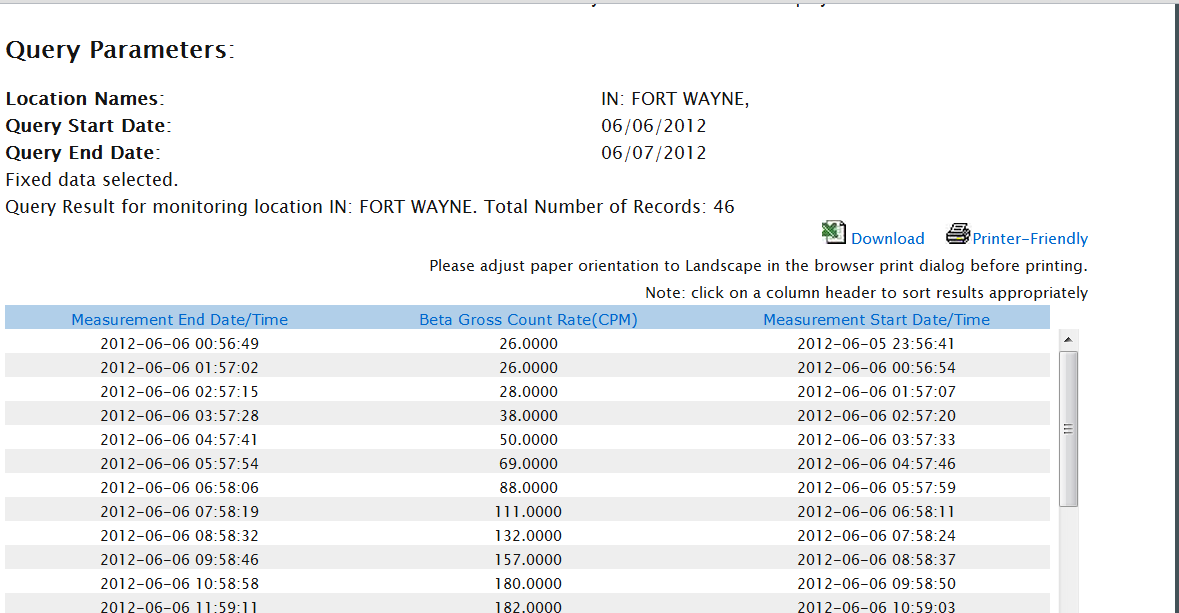
Joey’s report echoes what many stations are finding, with live Twitter updates reporting a consistently increased amount of radiation since the initial event around 11:45 AM on Thursday. Some Twitter updates from last night’s Radiation Monitor, Joey’s own station all the way in Colorado, read:

252 CPM, 2.0462 uSv/h, 1.9820 AVG uSv/h, 7 time(s) over natural radiation

324 CPM, 2.6309 uSv/h, 2.1884 AVG uSv/h, 8 time(s) over natural radiation

222 CPM, 1.8026 uSv/h, 1.7459 AVG uSv/h, 6 time(s) over natural radiation

Once again, this is nothing compared to the 7,139 CPM reported near Indiana, however it shows that there is a possibility of correlation. While the answer as to what is going on is not clear, it is clear that it has piqued the interest of government officials. Military helicopters, aircraft, and Department of Homeland Security hazmat fleets have reportedly been dispersed towards the area based on eyewitness photos and accounts.