Showing posts with label George H.W. Bush. Show all posts

Tuesday, December 4, 2012

Arson Seen in Attack on Ex-Israeli Spy


Consortium News

Exclusive: Suspected arson destroyed the Montreal home of ex-Israeli intelligence officer Ari Ben-Menashe, who says he escaped through a rear door. It’s unclear if the fire was an assassination attempt to finally silence a man who has angered the Israeli government, powerful Republicans and others, writes Robert Parry.


By Robert Parry

Ex-Israeli intelligence officer Ari Ben-Menashe says he narrowly survived a possible assassination attempt Sunday night when his upscale home in Montreal was set ablaze in what Canadian authorities are describing as suspected arson. Police cited how quickly the house was ravaged and noted that a suspicious person was seen fleeing the scene shortly after the fire began.

In a phone call with me on Monday, Ben-Menashe said that when he detected the fire, he alerted a woman staying in the house to flee and then was able to escape through a back door. But he said everything inside was destroyed, including his passport, personal papers and his clothing. “Everything is gone,” Ben-Menashe said.
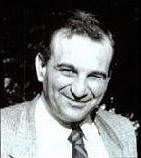
Ex-Israeli intelligence
officer Ari Ben-Menashe.
(Photo from his memoir,
Profits of War.)

Ben-Menashe said he believed the fire was set with “a Molotov cocktail” but he had no clear idea who might have tried to kill him. He did acknowledge that he has a number of enemies around the world resulting from his past as an Israeli intelligence officer and his more recent work as an international consultant often working in global hotspots.

Among Ben-Menashe’s enemies are some of his former Israeli superiors who consider him a traitor for exposing sensitive Israeli secrets and powerful Republicans, including former President George H.W. Bush whom Ben-Menashe fingered as involved in national security scandals in the 1980s.

Ben-Menashe, who served in Israeli military intelligence in the 1970s and 1980s, was arrested in the United States in 1989 for his involvement in military sales to Iran. He says the Israeli government then urged him to plead guilty to the U.S. charges, but he refused and began disclosing Israeli secrets to journalists, including me in early 1990 when I was a correspondent for Newsweek magazine.

At first, the Israeli government denounced Ben-Menashe as an “impostor” but after I obtained official Israeli letters of reference describing his decade-long work within the External Relations Department of the Israel Defence Forces, Israeli officials changed their story. They labeled him simply “a low-level translator.” But the letters described Ben-Menashe’s service in “key positions” and said he handled “complex and sensitive assignments.”

Despite the evidence that Israeli officials had first lied and then retreated to a new cover story, the Bush administration and the Israeli government managed to galvanize friendly journalists who went out of their way to discredit Ben-Menashe as a compulsive liar. [For details about one of the key denouncers of Ben-Menashe, see Consortiumnews.com’s “Unmasking October Surprise ‘Debunker’”.]

However, Ben-Menashe convinced a New York jury that he indeed had been working on official Israeli business in his transactions with Iran. He was acquitted in fall 1990. Ben-Menashe also continued to give interviews and provide testimony about the secret dealings involving Republicans and the Israeli government.

October Surprise Allegations

Perhaps Ben-Menashe’s most controversial claim was that he and other Israeli intelligence officers assisted the Republicans in brokering a deal with Iran’s Islamic regime of Ayatollah Ruhollah Khomeini in 1980 to hold 52 American hostages until after the U.S. election to ensure President Jimmy Carter’s defeat. As a result of this so-called October Surprise caper, the hostages were not released until Jan. 20, 1981, immediately after Ronald Reagan was sworn in as U.S. President, Ben-Menashe said.

After leveling his October Surprise accusations in 1990-1991 – and providing investigative journalist Seymour Hersh information about Israel’s nuclear program for his book The Samson Option – Ben-Menashe was essentially a man on the run from both the Israeli government and the U.S. administration of George H.W. Bush.

Ben-Menashe sought refuge in Australia, arriving in spring 1991, still carrying his Israeli passport. After obtaining Ben-Menashe’s Australian immigration records, journalist Marshall Wilson reported that Ben-Menashe requested what amounted to political asylum.
Dated May 15, 1991, Ben-Menashe’s 25-page declaration stated: “My case is an unprecedented case of political persecution by two governments. It was an attempt by Israel and the United States to cover up their relations with Iran since 1979.”

Ben-Menashe detailed the curious circumstances of his 1989 arrest while on a private visit to the U.S. and added: “I was not willing to keep quiet and be discredited by pleading guilty to the bogus charges. I did not accept my government’s proposal to do so. Any arms sales to Iran that I was involved in was solely in the capacity of being an employee of the Israeli government. Everything I did was authorised by the appropriate authorities in the Israeli and United States governments.

“Since I did not go along with the program and decided I would truthfully defend myself in court, I was disowned by the Israeli Government and will be prosecuted for breaking the Official Secrets Act if I return. …  I will be prosecuted … behind closed doors, ‘for national security reasons,’ and I will never again see the light of day.”

But Ben-Menashe said his case had other implications. “As an aftermath of my [1990] trial a new scandal has broken directly involving the President of the United States [George H.W. Bush],’’ Ben-Menashe wrote, “about the President being involved in an arms-for-hostage release delay deal [with Iran] in 1980. I am a central witness on that issue.

“Democratic members of the US Congress are going to speak to me about that and other issues involving US sales of unconventional weapon systems to Iraq, all connected to the present [George H.W. Bush] administration of the US,’’ Ben-Menashe told Australian immigration.  “Paradoxically speaking I am now being punished for being acquitted.”

Later in May 1991, Ben-Menashe faced an apparent plan by George H.W. Bush’s administration to divert him from Los Angeles Airport to Israel when he was en route to Washington to testify to Congress about his allegations. If he had been turned over, his fate would likely have been similar to that of technician Mordechai Vanunu, who disclosed Israel’s secret nuclear weapons program and then was kidnapped in Rome and returned to Israel for trial and imprisonment.

A Last-Minute Tip

However, before Ben-Menashe’s flight, I received a tip from a U.S. intelligence source about the plan and checked with congressional investigators who were expecting to interview the Israeli. When they couldn’t get a clear commitment from the Bush administration about Ben-Menashe’s safe passage, I called him in Australia as he was about to leave for the Sydney airport.

I suggested that he delay his flight, which he did. Later, I was informed by congressional investigators that they finally had extracted assurances from the Bush administration that Ben-Menashe would be allowed to proceed to Washington and he rescheduled his flight. Though he was not diverted to Israel, he was taken aside by U.S. authorities in Los Angeles and subjected to some harsh questioning.

That evening, I picked Ben-Menashe up at Dulles Airport and was surprised how shaken he was. I drove him to my home in Arlington, Virginia, and he asked if he could spend the night in my guest room, thinking that he was under surveillance and fearing for his life. With some hesitation, I consented.

Months later, when pro-Israeli journalists escalated their character assassination of Ben-Menashe, one New Republic writer Steven Emerson criticized my ethics for allowing Ben-Menashe to stay over in my house, which struck me as a curious accusation not only because there is no such ethical standard but because the fact had never been made public. The reference led me to believe that Ben-Menashe had not been paranoid when he worried about being under surveillance or for his safety.

Although substantial evidence has emerged to support Ben-Menashe’s claims, Republicans and the Israeli government continued to deny the October Surprise story and U.S. congressional investigations in the early 1990s confronted a stonewall of Republican obstruction. Ultimately, the investigations concluded that solid evidence of a GOP conspiracy was lacking. [For the latest details on this controversy, see Robert Parry’s new book, America’s Stolen Narrative.]

A Life of Intrigue

When published in 1992, Ben-Menashe’s memoir, Profits of War, provided further details about the cloak-and-dagger operations conducted by U.S. and Israeli intelligence.
A Jew who was born in Iran and who emigrated to Israel as a teenager, Ben-Menashe explained how his background proved valuable to Israeli intelligence after the Shah of Iran, a close Israeli ally, was overthrown in 1979. As Israel tried to rebuild some relationship with Iran, Ben-Menashe was able to reconnect with some of his friends from his youth who were rising inside the new revolutionary government.

Ben-Menashe said those contacts led him into a role as an intermediary on military sales to Iran during the U.S.-Iranian hostage crisis in 1980 and placed him near the decision by Prime Minister Menachem Begin to throw in Israel’s lot with Republican Ronald Reagan in his campaign to unseat President Jimmy Carter. Over the next several years, Ben-Menashe remained a key middleman in the arms transactions that were crucial to Iran in its long war with Iraq.

Yet, by the early 1990s, after his arrest and acquittal, Ben-Menashe had become a man without a country. On Oct. 23, 1991, he was informed that his refugee application in Australia had failed. A departmental officer declared that “there appears to have been ample opportunity for one government or another [the U.S. or Israel] to have taken action against Mr Ben-Menashe if his political importance made him of real interest to them.” [See here and here.]

Ben-Menashe appealed the finding, but on Dec. 12, 1991, the Refugee Status Review Committee confirmed the adverse ruling. A letter signed by its Chairman said in part: “The applicant’s fear of the consequences of breaking Israeli law does not warrant international protection. … The applicant has, therefore, not established a well-founded fear of persecution were he to return to Israel.’’ [See here, here, here and here.]

However, the decision was not unanimous, as Austrialian journalist Marshall Wilson reported. One member of the panel added, “I request a meeting to discuss aspects of this case, particularly the matters of what constitutes persecution given this extraordinary mix of international conspiracies and intrigue and the laws under which the applicant could be charged should he return to Israel.

“I believe the applicant has been an intelligence operative of the Israeli Government and has been involved in various arms deals. The American use of Israel to sell arms to Iran during the Iran-Iraq War is attested to by a number of sources. The delay in the release of the American hostages also is now widely accepted as true.’’

In the end Ben-Menashe left Australia of his own free will without further resort to the courts. He eventually settled in Canada, married a Canadian woman, received citizenship and built a new life as an international consultant.

Ben-Menashe stood by his sworn testimony about the October Surprise machinations and other allegations, but his credibility continued to come under assault. It didn’t seem to matter even when some Israeli officials confirmed that Ben-Menashe, indeed, had been involved in important clandestine operations for Israel.

For instance, American journalist Craig Unger was told by a senior intelligence official, Moshe Hebroni, that “Ben-Menashe served directly under me. … He had access to very, very sensitive material.” [Village Voice, July 7, 1992] In the Israeli daily, Davar, reporter Pazit Ravina wrote, “in talks with people who worked with Ben-Menashe, the claim that he had access to highly sensitive intelligence information was confirmed again and again.”

Now, in investigating the mysterious fire that could have killed Ben-Menashe — and that succeeded in destroying many of his personal papers – the authorities in Canada may have to determine if the fire resulted from some new enemy or an enemy from Ben-Menashe’s past, someone who preferred that the former Israeli spy finally be silenced.

Investigative reporter Robert Parry broke many of the Iran-Contra stories for The Associated Press and Newsweek in the 1980s. You can buy his new book, America’s Stolen Narrative, either in print here or as an e-book (from Amazon and barnesandnoble.com).

Wednesday, October 31, 2012

Electronic Voting Machines Designed to “Steal Elections”


Global Research
Harvey Wasserman


vote
CICJ Books has just released “Grassroots, Geeks, Pros, and Pols: The Election Integrity Movement’s Rise and Nonstop Battle to Win Back the People’s Vote, 2000-2008″ by Marta Steele.
Marta Steele has done yeoman work for the election integrity movement. She has plowed through more websites and blogs than one can even imagine. She set out with the nearly impossible task of writing the definitive historical narrative of the folly of electronic voting in the United States between 1988 and 2008. More shockingly, she accomplished that task.
Electronic voting machines are perfectly designed to steal elections. That’s their principle purpose. Ireland has just gotten rid of them altogether. Germany, Japan, Canada, Switzerland all use paper ballots. Why? Because you can actually count them in public, and then count them again.
But here in the US, elections are corporate-owned and operated. Anyone who experienced pushing the e-spot for John Kerry and having the name George W. Bush light up—as happened so often in Ohio 2004—knows all too well that what Marta Steele documents in this remarkable book has become the defining reality in American election theft.
What she has done by way of documentation is truly impressive. Never again will those who question the validity of electronic voting be called “conspiracy theorists.” Through sheer tenacity, the author has scoured the vast morass of cyberspace and brought back all the essential data and assembled it in an understandable and analytical fashion. Readers can only draw one conclusion from her work – those who deny the death of democracy are foolish “coincidence theorists.”
She accumulated mountains of incidences that show the so-called “red shift” in favor of the Republican Party is not an anomaly or computer “glitch,” but evidence that there is systematic tampering of computerized voting machines by private companies connected to the Republican Party. Although our newspaper, the Columbus Free Press, and our website freepress.org published plenty on the flaws of electronic voting and election irregularities, we were nonetheless overwhelmed by the research documented in this volume. Those who read this book will no longer fall for the easy propaganda lines and talking points put forth by Karl Rove and his cohorts in explaining away impossible election results.
This book is important because its research is so detailed, its history so clear, and its analysis so convincing. The book destroys the mythology that “it can’t happen here” – that our system is an old and infallible democracy that can’t be corrupted. This powerful work will force all who read it to take a side, but more importantly, to take action, perhaps even direct action.
A key breakthrough that the book allows is to shatter the absurd notion that the empire of the United States may very well meddle in and steal elections abroad, but would never use these tactics at home. The fact that the Bush family, with their patriarch George Herbert Walker Bush being the CIA director, is so inextricably linked to the rise of electronic voting and improbably election results, should be no surprise. That’s why it is no coincidence that she starts her history of election voting irregularities in the year that George H.W. Bush wins the New Hampshire and becomes president.
The Bush family ascendancy corresponds to black box, nontransparent voting in America. The more we’ve privatized our software and hardware and called it “trade secrets,” the better the Bush family candidates have done, against all odds. Their presidential victories, with the official exit polls falling well outside the margin of errors and predicting victories for their opponents, would easily be denounced by election observers in a Third World country.
Small wonder that when push came to shove, Ohio’s Republican Secretary of State J. Kenneth Blackwell refused to allow United Nations observers into the Buckeye State polling places to check the veracity of the 2004 balloting.
We believe this book does more than any other to expose the evils of electronic voting. The endnotes alone amount to a giant step forward in revealing the crimes of privatized e-voting in our nation.
As Al Gore and John Kerry refused to do, we must now face the reality that as long as our balloting process is dominated by electronic machines, the outcome of any election can be flipped by a governor or secretary of state with a few late-night key strokes. Considering the hundreds of millions the rich and super-rich are willing to spend to control the government, would you ever doubt they would hesitate to buy an election?
What Marta Steele has done is to confirm far beyond any reasonable doubt that as long as electronic machines are at the core of our vote count, there is no such thing as democracy in the USA. What we have instead is an electronic corporatocracy….proprietary, secretive, anti-democratic and for sale (or lease) to the highest bidder. The real question is: now that Marta had made this all perfectly clear, what are we going to do about it?

~ with Harvey Wasserman

Wednesday, September 5, 2012

INTERPOL: Judge Orders Extradition And Arrest Of Former U.S. Treasury Undersecretary David Mulford

Daily Bail


Argentina hasn't forgotten Mulford's role in the 2001 crisis.
A judge in Argentina has ordered the arrest of CreditSuisse executive and former U.S. Treasury Undersecretary David Mulford because he failed to testify over a 2001 Argentine debt swap, the state news agency reported on Monday.

Federal Judge Marcelo Martinez de Giorgi will ask Interpol to issue an international arrest warrant seeking Mulford's extradition for questioning over the bond exchange carried out by the government in an unsuccessful bid to avoid default.

Mulford, who currently serves as vice chairman international of Credit Suisse Investment Bank, was seen as one of the debt swap's architects when he served as a senior official at Credit Suisse First Boston (CSFB).

Argentina's government swapped about $30 billion in debt for new, longer-maturity issues in June 2001. But it stopped paying most of its debts six months later as the economy collapsed.

A local court has been investigating the swap for more than 10 years to see if Argentine officials committed any crime when they hired banks to carry out the swap. Former Economy Minister Domingo Cavallo and former Finance Secretary Daniel Marx have been charged in the case, which has yet to go to trial.

Mulford was first called to testify in the probe in 2002 but he has never done so, according to court documents cited by the Telam news agency.

Argentine officials have "made numerous attempts by all possible legal means to achieve David Mulford's compliance, in this country's territory as well as through U.S. authorities, and all of these have invariably failed," the documents stated.

Cavallo said that Mulford was one of the main engineers of the swap.

Mulford worked at the U.S. Treasury from 1984 to 1992 and was at the center of international economic negotiations under former U.S. Presidents Ronald Reagan and George H.W. Bush.

He later served as the U.S. ambassador to India.

---

Here's Mulford on the 2008 crisis:

Debt-swap fraud is not forgiven in 3, 2, 1...

Sunday, April 17, 2011

Obama’s UnConstitutional Self-Created U.N. “Authority” Is Most Dangerous Precedent

ThereAreNoSunglasses

Louis Fisher

[This is clearly grounds for impeachment.  Is Congress going to honor the commitments made to defend and protect the American people and their Constitution, or will We the People have to do this ourselves?  This is some deadly serious shit people.  We are witnessing a war of lawyers, who frame the crimes that they are committing on a daily basis as "humanitarian" actions to stop genocide, when it is a fact that what is happening on the ground is criminal, papered-over with a thin veneer of legality.  Barack Obama has corrupted the United Nations, turning it into an instrument of aggression, to be used for his own hidden agenda, which is characterized by a an aura of lawlessness and messianic delusions of grandeur.  It will get no clearer than this.  It is only a matter of time before the US military is called into action in the American homeland itself in the service of this megalomaniac obsession with total control.]

Obama’s U.N. Authority?


Only the elected representatives of Congress, not the U.N., can authorize the United States to use military force against another nation.


President Obama has yet to explain to Congress and the American people how he received authority from the United Nations Security Council to initiate military operations against Libya. On March 21, he informed Congress that “at my direction, U.S. military forces commenced operations to assist an international effort authorized by the United Nations (U.N.) Security Council.” An April 1 memo by the Office of Legal Counsel states that Security Council Resolution 1973 “imposed a no-fly zone and authorized the use of military force to protect civilians.” Because Libya did not comply with the resolution, the OLC concluded that President Obama was justified in using military force against Libya to maintain “the credibility of the United Nations Security Council and the effectiveness of its actions to promote international peace and security.”

May the U.N., rather than the elected representatives of Congress, authorize the United States to use military force against another nation? Is it possible to transfer the constitutional power of Congress to an international body? The answer to both questions: No. Authority under law and the Constitution must come from Congress. Statutory law, dating to 1945, speaks unambiguously about the use of American troops in a U.N. military operation: “The President is authorized to negotiate a special agreement or agreements with the Security Council which shall be subject to the approval of the Congress by appropriate Act or joint resolution.” 22 U.S.C. 287d.

What is the history of this law? Why was it ignored when President Harry Truman went to war against North Korea in 1950 without seeking or obtaining authority from Congress? The record plainly demonstrates that he violated the Constitution, the 1945 statute and his own public pledge to the Senate. The record also shows that members of Congress have failed to protect the Constitution, their own institutional powers and the rights of citizens who elected them to office.

During World War II, the United States and allied nations agreed to create an international body to act against military aggression. The result was the U.N. Charter of 1945. The drafters of that document appreciated the need to protect the war powers of Congress. They knew why the United States had failed to join the League of Nations. The Versailles Treaty was rejected by the Senate in 1919 and again in 1920 because President Woodrow Wilson refused to accept reservations offered by Sen. Henry Cabot Lodge. A key amendment stated that the United States assumed no obligation to engage in wars authorized by the League unless “Congress, which, under the Constitution, has the sole power to declare war or authorize the employment of the military or naval forces of the United States, shall by act or joint resolution so provide.”

Wilson opposed the Lodge reservations, claiming that they “cut out the heart of this Covenant” and represented “nullification” of the treaty. Personal spite and rigidity caused Wilson to dig in his heels. As newspapers reported, “The President has strangled his own child.” Wilson had no principled objection to Lodge’s language on the war power. On March 8, 1920, Wilson wrote to Sen. Gilbert Hitchcock, acknowledging that whatever obligations the U.S. government undertook in a League military action “would of course have to be fulfilled by its usual and established constitutional methods of action.” The Constitution, Wilson said, requires that “Congress alone can declare war or determine the causes or occasions for war, and that it alone can authorize the use of the armed forces of the United States on land or on the sea.”

Those who drafted the U.N. Charter did not want a repeat of the Versailles Treaty. The charter provides that whenever member states agree to participate in a U.N. military operation, nations must act in accordance with their “constitutional processes.” During Senate debate on the charter, Truman from Potsdam wired this note to Sen. Kenneth McKellar on July 27, 1945, pledging: “When any such agreement or agreements are negotiated it will be my purpose to ask the Congress for appropriate legislation to approve them.”

To implement the charter, it was necessary for Congress to pass legislation that satisfied U.S. constitutional processes. The language in § 6 of the U.N. Participation Act of 1945 did precisely that. Agreements “shall be subject to the approval of the Congress by appropriate Act or joint resolution.” Statutory language could not be written more clearly. The legislative history of this provision, including hearings, committee reports and floor debate, all point to the same result: The president must seek congressional approval in advance.

With these safeguards in place to protect the Constitution and congressional powers, Truman on June 26, 1950, announced that the U.N. Security Council had acted to order a withdrawal of North Korean forces to positions north of the 38th parallel, and that “in accordance with the resolutions of the Security Council, the United States will vigorously support the effort of the Council to terminate this serious breach of the peace.” At that point he made no commitment of U.S. military forces.

On the following day, he informed the nation that the Security Council had called upon all U.N. members to provide assistance and that he had “ordered United States air and sea forces to give the [South] Korean Government troops cover and support.” The military commitment deepened. At no time did Truman seek authority from Congress. Secretary of State Dean Acheson claimed that Truman had done his “utmost to uphold the sanctity of the Charter of the United Nations and the rule of law.” In fact, Truman had violated the Constitution, the U.N. Participation Act and his own pledge to the Senate five years earlier.

Other presidents have built on Truman’s precedent. In November 1990, President George H.W. Bush obtained a U.N. resolution to act militarily against Iraq after its invasion of Kuwait, claiming that he did not need congressional authority. Nevertheless, Congress passed authorizing legislation in January 1991. President Bill Clinton used U.N. resolutions to act militarily against Haiti and Bosnia. At no time did he seek authority from Congress.

Presidents have some discretion to use military force without advance congressional authorization, including repelling sudden attacks and rescuing American citizens. None of those justifications apply to Libya. America was not threatened or attacked by Libya. Obama has called the military operation a humanitarian intervention that serves the national interest. Yet launching hundreds of Tomahawk missiles and ordering air strikes against Libyan ground forces, for the purpose of helping rebels overthrow Col. Moammar Gadhafi, constitutes war. Under the U.S. Constitution, there is only one source for authorizing war. It is not the Security Council or NATO. It is Congress.

Louis Fisher is scholar in residence with the Constitution Project. He worked for Congress as professional staff from 1970 to 2010 and is the author of Presidential War Power (2004). His articles and congressional testimony are available at www.loufisher.org.