Showing posts with label Iraq. Show all posts

Monday, January 14, 2013

The Age of the Siege: Nazi Military Tactics Revisited


NATO Strategies, Economic Sanctions and the "Responsibility to Protect"

Global Research

Felicity Arbuthnot

NATOBLOOD“Disengage, avoid, and withhold support from whatever abuses, degrades and humiliates humanity.” (Alice Walker, b:1944.).

“[former Danish PM and Secretary General of NATO] Anders Fogh Rasmussen, Du har blod på dine hænder” ( “You have blood on your hands”), Danish protester, 2003.

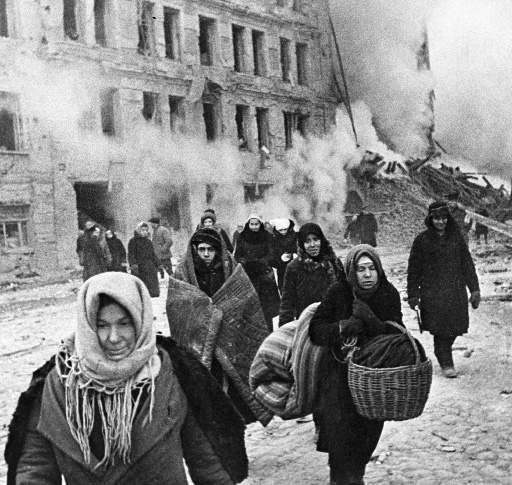
The siege of Leningrad is still considered the most lethal siege in world history, a shocking “racially motivated starvation policy”, described as: “an integral part of Nazi policy in the Soviet Union during World War 11.”

The 872 day siege began on 8th September 1941 and was finally broken on 27th January 1944. It is described  as: “one of the longest and most destructive sieges in history and overwhelmingly the most costly in casualties.” Some historians cite it as a genocide. Due to record keeping complexities the exact number of deaths resultant from the blockade’s deprivations are uncertain, figures range from 632,000 to 1.5 million.

Sieges now extend to entire countries, they have become the torture before the destruction. And they are not counted in long days, but in long years. Iran thirty three years, Iraq thirteen-plus years. Ironically the disparity in the deaths in Iraq resultant from that siege, mirror near exactly what was considered a “genocide” in Leningrad.

Syria has been subject to EU “restrictions” since 2011, ever more strangulating, with near every kind of financial transaction made impossible by May 2011- when “restrictions” were also placed on President Assad himself, all senior government officials, senior security and armed forces Heads. The list of that denied is dizzying (i.) By February 2012, assets of individuals were frozen, as those of the Central Bank of Syria.

Cargo flights by Syrian carriers to the EU were also barred, as was trade in gold, precious metals and diamonds – anything which might translate in to hard cash, without which neither individuals or countries can purchase the most basic essentials.
By July 2012 Syrian Arab Airlines and even Syria’s Cotton Marketing Organisation had joined the EU’s victims.

America of course, had been way ahead of the game, with the Syria Accountability and Lebanese Sovereignty Act (ii) signed in to law on 12th December 2003, the year of Iraq’s comprehensive US-led destruction. Thus the mighty USA’s personal siege on under twenty one million people, is now entering its tenth year.

By last August, as with Iraq before it, the inability to trade meant that, as ever, the now Nobel Peace Prize winning EU and the policies of the Nobel Peace Prize winning US President, were targeting Syria’s most vulnerable.

Friday, December 14, 2012

The Syria Chemical Weapons Saga: The Staging of a US-NATO Sponsored Humanitarian Disaster?


Global Research
Prof Michel Chossudovsky

Modeled on the Saddam Hussein WMD narrative, the propaganda ploy concerning the alleged threat of Syria’s chemical weapons has been building up over several months.

Iskander Mach 6-7
The Western media suggests –in chorus and without evidence– that a “frustrated” and “desperate” president Bashar al Assad is planning to use deadly chemical weapons against his own people. Last week, U.S. officials revealed to NBC News that “Syria’s military has loaded nerve-gas chemicals into bombs and are awaiting final orders from al-Assad”.

Western governments are now accusing Syria of planning a diabolical scheme on the orders of the Syrian head of State. Meanwhile, the media hype has gone into full gear. Fake reports on Syria’s WMD are funneled into the news chain, reminiscent of the months leading up to the March 2003 invasion of Iraq.

The evolving media consensus is that “the regime of Syrian leader Bashar al-Assad appears to be entering its twilight” and that the “international community” has a responsibility to come to the rescue of the Syrian people to prevent the occurrence of a humanitarian disaster.

“... Fears are growing in the West that Syria will unleash chemical weapons in a last-ditch act of desperation”

Recent reports that the embattled government of Syria has begun preparations for the use of chemical weapons [against the Syrian people] . After two years of civil war and more than 40,000 deaths, events in Syria may be heading to a bloody crescendo. (WBUR, December 11, 2012)

The antiwar critics have largely underscored the similarities with the Iraq WMD ploy, which consisted in accusing the government of Saddam Hussein of possessing Weapons of Mass Destruction (WMD).

The alleged WMD threat was then used as a justification to invade Iraq in March 2003. The WMD Iraq ploy was subsequently acknowledged in the wake of the invasion as an outright fabrication, with president George W. Bush and Prime Minister Tony Blair actually recognizing that it was a “big mistake”. In a recent statement Nobel Peace Laureate Archbishop Desmond Tutu called for ‘lying’ Blair and Bush to face trial in the Hague`s International Criminal Court

Syria versus Iraq

The Syria WMD saga is in marked contrast to that of Iraq. The objective is not to” justify” an all out humanitarian war on Syria, using chemical weapons as a pretext.

An examination of allied military planning as well as the nature of US-NATO support to the opposition forces suggests a different course of action to that adopted in relation to Iraq (2003) and Libya (2011).

The purpose is indeed to demonize Bashar Al Assad but the objective at this stage is not the conduct of an all out “shock and awe” war on Syria, involving a full fledged air campaign. Such an action would, under present conditions, be a highly risky undertaking. Syria has advanced air defense capabilities, equipped with Russian Iskander missiles (see image) as well as significant ground forces. A Western military operation could also lead to a response from Russia, which has a naval base at the port city of Tartus in Southern Syria.

Moreover, Iranian forces from its revolutionary guards corps (IRGC) are present on the ground in Syria; Russian military advisers are involved in the training of the Syrian military.

In recent developments, Syria took delivery of the more advanced Russian Iskander missile system, the Mach 6-7, in response to the deployment of US Made Patriot missiles in Turkey. Syria already possesses the less advanced E-Series Iskander. Syria is also equipped with the Russian ground to air defense missile system Pechora-2M. (see video below)

Iskander Mach 6-7

Description

The Pechora-2M is a surface-to-air anti-aircraft short-range missile system designed for destruction of aircraft, cruise missiles, assault helicopters and other air targets at ground, low and medium altitudes.

Monday, December 10, 2012

US troops secretly return to Iraq


Over 3,000 U.S. troops have secretly returned to Iraq via Kuwait for
operations pertaining to the recent developments in Syria and
northern Iraq, Press TV reports.
According to our correspondent, the U.S. troops have secretly entered Iraq in multiple stages and are mostly stationed at Balad military garrison in Salahuddin province and al-Asad air base in al-Anbar province.

Reports say the troops include U.S. Army officers and almost 17,000 more are set to secretly return to Iraq via the same route.

All U.S. troops left Iraq by the end of 2011, after nine years of occupation, as required by a 2008 bilateral security agreement between the two countries. The troops left Iraq for the neighboring Kuwait.

Washington decided to pull out all its troops from Iraq after Baghdad refused to grant legal immunity to the remaining U.S. soldiers.

Washington claims that the only U.S. military presence left in Iraq now is 157 soldiers responsible for training at the U.S. Embassy, as well as a small contingent of Marines protecting the diplomatic mission.

FACTS & FIGURES

In 2003, the U.S. led the invasion of Iraq under the pretext that former Iraqi dictator, Saddam Hussein, possessed weapons of mass destruction.

The initial invading force in Iraq was around 130,000 soldiers.  This number was expected to be dropped down to under 50,000 within a year.  Two years later, there were 150,000 U.S. soldiers in the country.  One of the interesting Iraq war facts is that as of November 2009, there were around 115,000 U.S. soldiers still stationed there. iraqwarfacts.com

In October 2004, a CIA report concluded that former Iraqi dictator did not possess weapons of mass destruction at the time of U.S. invasion in 2003.

There is no agency that keeps track of accurate numbers of Iraqis killed but some local sources put the number well over one million.

Most of the Iraqis displaced post-2006 have not returned home, and an estimated 1.5 million live in neighboring countries. undispatch.com

The direct cost of the Iraq war to the United States Treasury was $1 trillion. That excludes the “downstream” costs of things like veteran benefits and long-term care for the wounded. One trillion divided by the U.S. population of 307 million equals a cost of over $3,200 per American citizen taxpayer. undispatch.com

According to icasualties.org, the total number of U.S. military fatalities, as a result of the 2003 attack and the following occupation, stands at 4,486.

Thursday, December 6, 2012

Op-Ed: US-UK Genocide Against Iraq 1990-2012 Killed 3.3 Million-Including 750K Children


Denis Campbell's U.K. Progressive
Sherwood Ross

Approximately 3.3 million Iraqis, including 750,000 children, were “exterminated” by economic sanctions and/or illegal wars conducted by the U.S. and Great Britain between 1990 and 2012, an eminent international legal authority says.

The slaughter fits the classic definition of Genocide Convention Article II of, “Deliberately inflicting on the group conditions of life calculated to bring about its physical destruction in whole or in part,” says Francis Boyle, professor of international law at the University of Illinois, Champaign, and who in 1991 filed a class-action complaint with the UN against President George H.W. Bush.

The U.S. and U.K. “obstinately insisted” that their sanctions remain in place until after the “illegal” Gulf War II aggression perpetrated by President George W. Bush and UK’s Tony Blair in March, 2003, “not with a view to easing the over decade-long suffering of the Iraqi people and children” but “to better facilitate the U.S./U.K. unsupervised looting and plundering of the Iraqi economy and oil fields in violation of the international laws of war as well as to the grave detriment of the Iraqi people,” Boyle said.

In an address last Nov. 22 to The International Conference on War-affected Children in Kuala Lumpur, Malaysia, Boyle tallied the death toll on Iraq by U.S.-U.K. actions as follows:

The slaughter of 200,000 Iraqis by President Bush in his illegal 1991 Gulf War I.
The deaths of 1.4 million Iraqis as a result of the illegal 2003 war of aggression ordered by President Bush Jr. and Prime Minister Blair.

The deaths of 1.7 million Iraqis “as a direct result” of the genocidal sanctions.
Boyle’s class-action complaint demanded an end to all economic sanctions against Iraq; criminal proceedings for genocide against President George H.W. Bush; monetary compensation to the children of Iraq and their families for deaths, physical and mental injury; and for shipping massive humanitarian relief supplies to that country.

The “grossly hypocritical” UN refused to terminate the sanctions, Boyle pointed out, even though its own Food and Agricultural Organization’s Report estimated that by 1995 the sanctions had killed 560,000 Iraqi children during the previous five years.

Boyle noted that then U.S. Secretary of State Madeline Albright was interviewed on CBS-TV on May 12, 1996, in response to a question by Leslie Stahl if the price of half a million dead children was worth it, and replied, “we (the U.S. government) think the price is worth it.”

Albright’s shocking response provides “proof positive of the genocidal intent by the U.S. government against Iraq” under the Genocide Convention, Boyle said, adding that the government of Iraq today could still bring legal action against the U.S. and the U.K. in the International Court of Justice. He said the U.S.-U.K. genocide also violated the municipal legal systems of all civilized nations in the world; the 1989 Convention on the Rights of the Child; and the Fourth Geneva Convention of 1949 and its Additional Protocol 1 of 1977.

Boyle, who was stirred to take action pro bono by Mothers in Iraq after the economic sanctions had been imposed upon them by the Security Council in August, 1990, in response to pressure from the Bush Senior Administration. He is the author of numerous books on international affairs, including “Destroying World Order” (Clarity Press.)

Friday, November 30, 2012

Prof. Michel Chossudovsky Presents 9/11 Revisited: Seeking the Truth


The Highway of Death


A short film about the atrocities that took place along the road from Mutlaa, Kuwait to Basra. Iraq on February 26th & 27th, 1991.

Friday, November 2, 2012

What happens when you can’t trust the state

Le Monde Diplomatic
Serge Halimi


There would seem to be no chance that a man who made a fortune out of financial speculation might reach the White House just four years after private banks caused a crisis and had to be bailed out by taxpayers. The uncertainty to the very last minute about the outcome of the US election was probably due to worsening distrust of the state, and everything it does.

The problem of public debt is now at the very heart of US political life, thanks to the dramatic increase in budget deficits caused by the cost of two simultaneous wars (Afghanistan and Iraq), the bank bailouts and new enormous tax cuts (1). Some people claim that “we would love to help but we can no longer afford it.” Others also look to the incestuous links between government and private enterprise, the dubious process that transforms former heads of government into lobbyists or highly paid public speakers (see Blair Inc). The old fear of bureaucratic waste, parasitic middlemen and huge projects that come to nothing, is increasingly exacerbated by suspicions of venality.

The justification that “it costs too much and it won’t work” was already a powerful deterrent against any social action by the state. But perhaps there is now also a conviction that elected representatives have become too remote, too corrupt and too closely associated with the interests of an oligarchy to serve the common good. The right, claiming to be liberal, takes advantage of this lack of confidence and suggests (as with Mitt Romney) that if you want to run a country you might as well first prove yourself by managing a company or a hedge fund.

Yet fraud and waste are rife in the private sector, too. Unknown numbers of engineers, accountants and sociologists, trained at public expense, squander their talents on perfecting the lines of a car bonnet, a new packaging material or a cigarette filter, or on designing outlandish insurance contracts and tax-free investment schemes. Financial success is almost always more important to a company than the social value of its products.
A scandal may occasionally damage or destroy the head of a corporation; it generally does so without questioning the structures on which their activities and power are based. But prevarication by a mayor or a minister, supposed government capitulation to a lobby, or doubts about the funding of an election campaign have immediate repercussions for the state. They undermine its right to raise taxes, organise the country and mobilise the nation.

Almost everywhere people are eager for change. But without the proper instruments to achieve their aims, new or old, all they can do is feel their way, mark time, and sometimes — against all their hopes — go into reverse.

Iran vs the Empire: Fighting dollarization


PressTV
Eric Walberg


The West's attempts to destroy the Iranian economy through heightened sanctions-including most imports, oil exports and use of banks for trade operations-is having its affect. According to Johns Hopkins University Professor Steve Hanke, Iran is facing hyperinflation, with a monthly inflation rate of nearly 70% per month and its national currency, the rial, plummeting in value against western currencies. Iran is the latest casualty to be placed on his Hanke-Krus Hyperinflation Index, which includes France (1795), Germany (1922), Chile (1973), Nicaragua (1986), Argentina (1990), Russia (1992), Ecuador (1999) and Zimbabwe (2007), countries which experienced price-level increases of at least 50% per month.

Hanke, relishing his role as the world’s expert on this nightmarish phenomenon, has "played a significant role in stopping more hyperinflations than any living economist, including 10 of the 57 episodes" on his Index. He writes that Iran has three options: spontaneous dollarization (people unloading rials on the black-market for dollars, as happened in Zimbabwe), official dollarization (the government withdrawing the currency in favor of dollars, as in Ecuador), or a currency board issuing a new domestic currency backed 100% by-you guessed it-dollars. Hanke insists that the foreign currency does not have to be US dollars. Pitcairn Island, for instance, uses New Zealand dollars.

The inflation doctor admits vaguely that there are "foreign factors," without a hint of criticism of not only the sanctions, but the active subversion of Iran through everything from support of Iranian terrorists, assassinations of leading scientists, right up to war (the US encouraged Iraq to invade Iran in 1980). He emphasizes "Iran's complex system of subsidies, capital controls, and multiple exchange rates," but most of all "massive overprinting of money," though he complains that "the Central Bank of The Islamic Republic of Iran has not reported any such statistics for some time." As if a country living through a state of emergency is likely to divulge such sensitive information.

He coolly dismisses consumers' expectations influencing prices, since "fear surrounding military tensions is nothing new for Iranians". Indeed, the US has been targeting Iran for destruction ever since it threw off its colonial chains in 1979-a dangerous example for other, especially Muslim countries. It is miraculous that Iran has done so well economically since the revolution, given the unremitting victimization it has experienced. One can only marvel at the stubborn courage it has shown to build an Islamic society in the teeth of opposition by the world empire and even by other Muslim nations allied to the empire.

We indeed may ask why Iran's inflation rate has jumped so dramatically precisely in recent times. Of course, it is because of the sanctions. And why the sanctions? Is it really fears that Iran will develop a nuclear bomb, despite professions to the contrary and membership in the IAEA? No. Besides Iran’s role in inspiring the current 'Islamic Reawakening' in the Middle East, there is another very important reason, one which flies in the face of Hanke's 'three options' for Iran.

Those ‘options’ all amount to one: accept US-dollar dictatorship. Iran has been trying to trade oil in non-US dollar currencies since 2008, when it opened its Oil Bourse. Iraq did this in 2000, and the US reaction was invasion-dollarization at gunpoint. The point of the sanctions today is a last-ditch attempt by the US to force Iran to comply with the US world order, as epitomized by continued acceptance of the US dollar as the world’s reserve currency.

Hanke insists it is not necessary for Iran to use US dollars as its substitute currency, which in any case would be ridiculous under the circumstances. However, the alternative of using, say, New Zealand dollars finesses the reality that all currencies are tied to the US dollar, as the de facto international reserve currency. This has been the case in reality since the 1930s, when the world abandoned the gold standard. Acknowledging this fact, over 20 countries call their legal tender 'dollars'.

Whether the government moves quickly to raise the white flag, as in Ecuador, or belatedly, as in Zimbabwe, or insists on printing pretty new paper scrip tied 100% to the US dollar through an exchange board, as did Argentina, merely confirms the obvious. In past cases, such as Chile, Nicaragua and Zimbabwe, the message was, ‘your socialist policies are unacceptable.’ In Iran's case, the message is, ‘take dollars for your oil.’

Hanke's monetarist credo-printing money causes inflation-ignores the underlying causes of inflation. As he admits, Iranians have faced war fears for over three decades. The exchange controls and subsidies, "government monopolies, price controls, and Soviet-style economic planning," which Hanke calls "wrong-headed," are not the cause of inflation, but a way for the government to keep it under control. However, at a certain point, the "foreign factors" become so egregious that even such measures fail. That is what has happened now, as sanctions have created extreme pain for the average Iranian. Bare shelves and panic in the face of invasion threats means that the currency will devalue, however many rials the government prints.

This is what happened in Germany in 1922, when it was forced to export everything to buy the gold to pay the extortionate reparations. It ended by resorting to Hanke’s currency board and marks issued against gold, but the underlying cause-the extortion practiced by Britain and France-only ended when Hitler took power and canceled the reparations. The devastation cause by "foreign factors" led in that instance to the rise of fascism.

Tuesday, October 16, 2012

Obama’s War Record


Global Research
Jack A. Smith


obamadoublespeakWhen Sen. Barack Obama ran for the presidency in 2008 many wishful-thinking Democratic voters viewed him as a peace candidate because he opposed the Iraq war (but voted yes on the war budgets while in the Senate). Some others assumed his foreign/military policy would be along the lines of Presidents George H. W. Bush (whom Obama admires) or Bill Clinton. Some who identified as progressives actually thought his foreign/military policy might tilt to the left.

Instead, center rightist that he is, Obama’s foreign/military policy amounted to a virtual continuation of George W. Bush’s Global War on Terrorism under a different name. He extended Bush’s wars to Pakistan, Yemen, Somalia, Libya and elsewhere while greatly expanding the war in Afghanistan, hiking the military budget, encouraging the growth of militarism in U.S. society by repeatedly heaping excessive praise on the armed forces, and tightening the military encirclement of China.

Summing up some of his military accomplishments a few months ago, Obama declared: “We’ve succeeded in defending our nation, taking the fight to our enemies, reducing the number of Americans in harm’s way, and we’ve restored America’s global leadership. That makes us safer and it makes us stronger. And that’s an achievement that every American — especially those Americans who are proud to wear the uniform of the United States Armed Forces — should take great pride in.”

Obama actually has little to show for his war policy after nearly four years. Most importantly, Afghanistan — the war he supported with enthusiasm — is predictably blowing up in his face. A symbol of the Bush-Obama 11-year Afghan folly is the recent 2,000th death of an American soldier, not at the hands of the Taliban but a U.S.-trained Afghan police officer, our supposed ally. The truth is that public opinion in Afghanistan has always overwhelmingly opposed the invasion, and rightly so.

Obama hopes to avoid the embarrassment of a takeover by the Taliban or another violent Afghan civil war (as happened in the 1990s) after the bulk of U.S. troops pull out at the end of 2014. He’s made a deal with the Kabul government that allows Washington to keep thousands of American troops — Army, CIA agents with their drones, elite Special Operations forces and pilots — until 2024. There are two reasons for this. One is to keep a U.S.-controlled government in Kabul as long as possible. The other is to station American combatants near Afghanistan’s borders with Iran to the west and China to the east for another 10 years, a verdict hardly appreciated in Tehran and Beijing.

The Middle East is in turmoil. Israel’s still threatening to attack Iran, an act that would transform turmoil into catastrophe. The Syrian regime refuses to fall, much to Washington’s chagrin. Egypt’s new government has just declared partial independence from Washington’s longstanding domination. The plight of the Palestinians has worsened during Obama’s presidency. Relations with China and Russia have declined.

Very few of Obama’s 2008 foreign/military election promises have come to fruition. He said he would initiate a “new beginning” in relations with the international Muslim community which had reached a low point under Bush. America’s popularity jumped after the president’s promising Cairo speech in 2009. But now, after repeatedly attacking Muslim countries with drone assassins, the rating is only 15% positive, lower than when Bush was in command.

Obama had promised to improve relations with Latin America, get diplomatically closer to Iran and Cuba, settle the Israel-Palestine dispute and close Guantanámo prison, among a number of unrealized intentions.

All the foreign developments the Democrats could really brag about at their convention were ending the war in Iraq “with heads held high” as our legions departed an eight-year stalemated conflict that cost Uncle Sam $4 trillion, and assassinating al-Qaeda leader Osama bin-Laden (which drew the most enthusiastic of those jingoist “USA! USA! USA!” chants from Democratic delegates).

Actually, Bush ended the Iraq war by signing an agreement with the Baghdad regime — before the new president took office — to pull out all U.S. troops at the end of 2011. Obama supported the treaty but tried unsuccessfully until the last minute to coerce the Iraqis to keep many thousands of American troops in the country indefinitely. (Antiwar.com reported Oct. 2 that up to 300 U.S. soldiers and security personnel have been training elite Iraqi security forces for months.)

Obama as warrior president discombobulated the Republicans who in past elections always benefited from portraying the Democrats as “weak on defense.” Efforts to do so this year have fallen flat after the president in effect melted down his undeserved Nobel Peace Prize to make more bullets. Obama also obtained a second dividend. He wasn’t besieged by antiwar protests as was his predecessor, because most anti-Bush “peace” Democrats would not publicly oppose Obama’s militarist policies. (This essentially destroyed the mass U.S. antiwar movement, which has been kept going on a much smaller scale by the left and the pacifists.)

Throughout Obama’s election declarations he occasionally speaks of, and exaggerates, increasing threats and hazards confronting the American people that only he can manage. He told the convention that the “new threats and challenges” are facing the country. Romney does the same thing, in spades. Overstating the threats confronting the U.S. is a perennial practice for Democratic and Republican presidents and candidates. George W. Bush brought this dishonest practice to an apogee, at times sounding as though he was reciting a Halloween ghost story to gullible children — but this year’s candidates are no slackers.

Historian and academic Andrew J. Bacevich, an Army colonel in the Vietnam War and now strongly opposed to America’s wars, mentioned fear-mongering in an article published in the January-February issue of The Atlantic magazine. He writes: “This national-security state derived its raison d’être from — and vigorously promoted a belief in — the existence of looming national peril…. What worked during the Cold War [fear of the 'Communist menace' and nuclear war] still works today: to get Americans on board with your military policy, scare the hell out of them.”

The main purpose of this practice today is to frighten the public into uncomplainingly investing its tax money into the largest military/national security budget in the world — about $1.4 trillion this year (up to $700 billion for the Pentagon and an equal amount for national security).

This accomplishes two objectives for that elite ruling class that actually determines the course of empire: First, it sustains the most powerful military apparatus in history, without which the U.S. could hardly function as world leader (yes it has the biggest economy, but look at the shape it’s in). Second, it constitutes a huge annual infusion of government cash — a stimulus? — into the economy via the military-industrial complex without the “stigma” of being considered a welfare-like plan to create jobs or benefit the people. (This is wrongly called Military Keynesianism, a notion that was repudiated by the great liberal economist John Maynard Keynes, who helped pull the U.S. out of the Great Depression with his plan to increase government spending to end the crisis.)

The White House and Congress talk about reductions in military spending, and there may be some cuts by eliminating obsolete defense systems — but over the decade the budget will continue to expand. Obama said to the convention, and Romney will pledge the same if elected — “As long as I am Commander-in-Chief we will sustain the strongest military in the world.”
This has been a sine qua non for election to the presidency for decades. It is so familiar and so justified by official scare stories that most Americans don’t think twice about paying an annual national fortune to maintain the most powerful military machine in the world to deal with a few thousand opponents with relatively primitive weapons many thousands of miles away. The U.S. military, of course, has an entirely different purpose: at a time of gradual U.S. decline and the rise several other countries such as Brazil, India and China, among others — Washington’s military power is intended to keep the United States in charge of the world.

Wednesday, October 10, 2012

Was it worth it? Afghanistan 11 years later


Global Research
Tanya Carlina Hsu
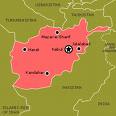
afghanmapOctober 7 marked the eleventh anniversary of the US war in Afghanistan. More than 2,000 American soldiers have now been killed, and as the US presidential candidates debate each other to lead the most dominant power on Earth, perhaps it is time for someone to ask them: Was it worth it?

On September 11th 2001, 2,977 people were killed. Almost 700 people in one firm alone (Cantor-Fitzgerald) died; 343 fire fighters and paramedics were killed, as were 60 police officers. Only 291 bodies were ever found ‘intact’. Over half of the families who lost loved ones that day received not a single piece of remains. Within three months 300 fire-fighters went on leave due to respiratory problems, almost half a million New Yorkers are being treated for post-traumatic stress disorders, and 1,000 first responders have since died from acute illnesses related to clean-up activities.
Wall Street shut down for 6 days, and as a direct result of 9/11 more than 146,100 people lost their jobs. Within the first month New York City alone exceeded $105 billion in economic losses.
Was it worth it?
America then went to war. But not just Iraq and Afghanistan: Pakistan, Yemen and Somalia have also been attacked. So have the citizens of the United States: freedoms, privacy and civil rights once taken for granted are gone, in the name of ‘national security’.
Operation Iraqi Freedom officially lasted for eight years and eight months. By December 2011, 4,486 US and 318 non-US troops had been killed fighting in Iraq, more than 1,800 more than who died on September 11th. However, according to the New York Times, a year after operations ceased US Special Operations units have quietly begun re-entering Iraq at the behest of the Iraqi government.
In Afghanistan, the war that began on October 7th 2002 still marches on. Operation Enduring Freedom is not due to end until 2014, an exact century after the onset of World War One. So far Afghanistan has taken the lives of 3,196 soldiers: 2,130 American, 433 British, and 158 Canadian. Forces killed in Afghanistan also amount to more than all the lives lost on 9/11.
Thus 8,000 troops have been killed for the 2,977 lost on September 11th 2001.
Was it worth it?
It gets worse. Once soldiers return from the theatre of operations the numbers keep climbing. For every single death in Afghanistan or Iraq, twenty-five soldiers commit suicide. During the first six months of 2012 there were 187 Army suicides, 55 Air Force, 32 Marine Corps, 39 Navy and 5 Coast Guard. The cumulative effect of multiple deployments and post-traumatic stress disorders et alia suggest, however, tens of thousands of additional deaths.
Each year, 6,500 veteran suicides are documented at a rate of one every 80 minutes. Only the Army releases figures and it is unclear if this includes active duty personnel or veterans of other wars. Although only 1% of Americans have served in Iraq or Afghanistan, they account for a massive 20% of the total annual rate. The Department of Veterans Affairs claim 18 veteran suicides per day, and for every successful suicide 20 are attempted yet fail. Rates of death were far higher in both World Wars: permanent disabilities now affect veterans today who otherwise would have died on the field. In World War One, an average of 57% of all soldiers mobilised were killed; in World War Two, more than 55 million soldiers and civilians died. In other words, the wounded from the Iraq and Afghanistan wars are a testimony to modern medicine saving lives that in the past would certainly have been lost, but can lead to tragic results nevertheless.
If the lowest suicide rate to assume is one per day by active duty or Iraq/Afghanistan vets, more than 4,000 must be added to the numbers killed above. And if we assume only half of the 6,500 veterans suicides per year are as a result of wars in Iraq and Afghanistan, an additional 36,000 deaths could be included to the totals. Whether suicides account for a further 4,000 or 40,000 deaths, they bring the ratio to between 4:1 to 16:1 deaths in payback for the 2,977 victims of 9/11.
These are just coalition losses of course. The official number of victims in Iraq has been stuck on 100,000 since 2004, not revised upwards since. But, in 2007 the British Opinion Research Businesssurvey calculated that up to 1.5 million Iraqis had been killed in the war. This confirmed an earlier British survey by the Lancet that calculated 655,000 to 1 million Iraqis had died in just three years, from 2003-2006. Although the war continued for a further five years the studies have not been repeated nor revised to account for additional Iraqi casualties, arguably due to intense American criticism.
There are almost no figures for Afghanistan casualties, but Human Rights Watch recorded 1,000 civilian deaths in 2006 and the UN estimates 12,000 deaths since 2007. There are no statistics for the first five years of the war.
Was it worth it?
Let us not omit the secret wars in Pakistan, Yemen and Somalia. Considering the drone programme is covert the numbers are almost certainly low. We do know however, that in Yemen drones have killed up to 1,026 men, women and children (at least 34) since 2002. Somalia is not on most Americans’ radar-screens but it is on the drones’: since 2007, 170 Somalis are dead from these Unmanned Aerial Vehicle strikes. In Pakistan drones have killed a reported 3,341 (at least 176 children) and wounded a minimum of 1,366 people. The ratio of wounded-to-killed indicates how deadly drone are, in part confirming their ‘precision’. They are surgically precise in that they do not wound: they intentionally tear to pieces anyone nearby.
How about the cost of capture, torture and rendition? Housing a single prisoner at Guantánamo Bay in Cuba costs the US taxpayer $800,000 per year. More than 100,000 men were detained in Iraq, many at the notorious Abu Ghraib; thousands more were held at Bagram Airfield or the infamous (CIA funded) ‘Salt Pit’ torture chamber north of Kabul, Afghanistan. Officers forced scores of detainees to physical, psychological and sexual abuse before shipping them off to even worse prisons around the world.
The non-fiscal cost of the consequences of tortures and imprisonment-without-trial cannot be calculated. For every single death or incarceration there is a father, brother, son, nephew, friend or neighbour who will never forget what these wars have wrought. Revenge lives long—generation-to-generation. We already see the first signs of what the wars have bought, exhibited in riots, uprisings, increased anti-American hostilities, destruction of US sovereign life and property, coups, and civil wars.
Was it worth it?
What about the economic cost? In 2003, George W. Bush estimated that the wars would cost $50 to $60 billion. Yet a 2011 study by Brown University’s Watson Institute for International Studiesestimated the final cost of the wars to be $4.4 trillion, not including medical costs for injured veterans or rebuilding aid to Afghanistan. Economist Joseph Stiglitz estimated the war in Iraq alone would cost $2.2 trillion. And all of the costs are funded upon borrowed money, demonstrated by the US debt skyrocketing from $6.4 trillion in March 2003 to over $16 trillion as of October 1st, 2012.
During the Vietnam war, Undersecretary of State George Ball wrote, “[I]n terms of US prestige…we would gain more through enlarging the war.” National Security Advisor McGeorge Bundy opined, “[E]ven if it fails, the policy will be worth it” because of US “prestige”.
If the American public—22.5 million now actually (not officially) unemployed—understood the economic price they would have to pay, would they have agreed to so eagerly support the wars? If the US Congress could have foreseen that a bare-minimum of four times as many soldiers as those who died on 9/11would die, would it have been worth it? If the consequences of anger, revenge, blowback—and stratospheric loss of prestige—were considered, would the US have still gone to war?
Was it worth it?

U.S. Now Overtly Supports MKO's Terrorist Operations


Iran Review
Interview with Tony Cartalucci
By: Kourosh Ziabari

In a flagrant show of hostility toward the Iranian nation and a clear exercise of double standards in dealing with international terrorism, the U.S. Department of State has just removed the name of Mujahedin-e-Khalq Organization (MKO) from its list of foreign terrorist organizations. MKO which was established on September 5, 1965 is a terrorist cult which assisted Saddam Hussein in the 1980s war with Iran and killed more than 40,000 innocent Iranian civilians. It's also responsible for the assassination of several high-ranking Iranian officials in the first years of Islamic Revolution and also 5 Iranian nuclear scientists since 2010.
 
The U.S. government claimed that MKO has not been involved in any terrorist operation in the past 10 years and thus its designation as a foreign terrorist organization should be revoked. This hostile decision by the U.S. government is obviously an attempt aimed at putting more pressure on Iran over its nuclear program with the final objective of persuading Iran to make political concessions. However, the high-ranking MKO officials have constantly declared that their final objective is a regime change in Iran. The Council of the European Union had removed the name of MKO from the EU's list of terrorist organizations in 2009.
 
In order to delve on the removal of MKO's name from the list of foreign terrorist organizations by the U.S. Department of State and its underlying reasons, Iran Review conducted an interview with American journalist and researcher Tony Caralucci.
 
Tony Cartalucci, is an independent geopolitical researcher based in Bangkok, Thailand. He maintains the Land Destroyer Report blog and is regularly republished across the alternative media. His work has also appeared translated in newspapers from Europe and the Middle East, to Asia and South America. He is currently co-authoring a book with geopolitical analyst and photographer Nile Bowie, titled, "Subverting Syria" available through Progressive Press. 
Cartalucci is one of the informed American sources about the underground activities of the MKO and has written an elaborate article in this regard for the Global Research. What follows is the text of Iran Review's interview with Tony Cartalucci which was conducted a few days after the U.S. delisted MKO and provoked anger and astonishment across Iran.
  
Q: Dear Tony; please tell us about the proofs and evidence which are available and attest that the United States and Israel have been funding, equipping and supporting MKO in its anti-Iran operations. I think Seymour Hersh and Glenn Greenwald have extensively written in this regard. Am I right?
 
A: I am most familiar with Seymour Hersh's reports. Seymour Hersh, citing those directly involved in U.S. programs to fund, arm, provide intelligence and even training to MKO terrorists, has reported extensively on the group over the years. In 2008, he published an article titled, "Preparing the Battlefield," and revealed that MKO, still on the U.S. State Department Foreign Terrorist Organization (FTO) list at the time, was receiving "arms and intelligence, directly or indirectly from the United States." In a 2012 article Hersh published, titled, "Our Men in Iran?" he reveals that MKO terrorists were actually trained inside the United States as far back as 2002.
 
Hersh's 2012 article also reveals that MKO terrorists have been working with Israel in carrying out their attacks within Iran, meaning that while Israel now attempts to convince the world that Iran poses a threat to its existence, Israel itself has been violating the security of Iran for over a decade, carrying out attacks that have killed Iranians and destroyed Iranian infrastructure.
 
Similar admissions have been made in articles published by the British press. One article from the Daily Mail titled "Mossad Training Terrorists to Kill Iran's Nuclear Scientists, U.S. Officials Claim," states that U.S. officials "confirmed" that Israel was behind the MKO terrorists that killed several of Iran's nuclear scientists.
 
But perhaps the most damning evidence of all, comes from U.S. policy makers themselves, particularly from within the Fortune 500 funded Brookings Institution in their 2009 report, "Which Path to Persia?" where they fully admit MKO is a terrorist organization. Brookings policy makers stated explicitly that "undeniably, the group has conducted terrorist attacks," yet MKO was still being considered as a viable "potential U.S. proxy." Brookings added that, "to work more closely with the group (at least in an overt manner), Washington would need to remove it from the list of foreign terrorist organizations." And that is just what U.S. politicians, former U.S. military and intelligence officers, and policy makers set out to do, lobby to get MKO delisted from the U.S. State Department's FTO list.
 
At one point, during the closing phases of America's occupation of Iraq, the U.S. literally handed over one of its military bases, "Camp Liberty," to MKO. The U.S. State Department played a leading role in organizing this handover, again, despite the U.S. State Department itself having the militant group listed on its own foreign terrorist list.
 
There is no doubt that the United States was for over a decade, using a listed-terrorist organization as an armed proxy against the nation of Iran as part of a wider strategy to destabilize, manipulate, and terrorize its population. This was all done in direct violation of U.S. and international anti-terror laws and understandings. Now that MKO is delisted, we can only expect this support and MKO operations to expand.


Q: What's your assessment of the U.S. Department of State taking MKO off the list of foreign terrorist organizations? Will this decision help the MKO militants to foster and promote their terrorist operations across Iran and further their plans of destabilizing Iran under the guise of a civilian, peaceful organization?
 
A: The sole purpose of the U.S. State Department delisting MKO was not because the organization has "reformed" itself in any way or abandoned its terroristic posture, but specifically for the U.S. to foster and promote their terrorist operations across Iran in a more overt manner, just as was prescribed by Brookings policy makers. It was the fulfillment of just one of many long-planned steps toward further destabilizing Iran.
 
That it occurred during the presidential administration of Barack Obama is important - it illustrates that the West's agenda is singular and continuous, independent of elections and the alleged political ideologies of sitting presidents. What began as part of the Bush "War on Terror" was carried out to completion under Obama, with the explicit support of his Secretary of State, Hillary Clinton. That policy seems to manifest itself first in corporate-financier funded think tanks like Brookings before being rubber stamped by politicians and sold to the public by the media, gives us a clearer picture of the West's true power structure and helps us understand better what that true power structure has in store for Iran in the future.
 
In regards to how MKO will be portrayed to the public, it is unlikely that the organization will exist under the guise of a "civilian, peaceful organization," but rather will continue a more covert campaign of violence and subversion inside Iran and along its peripheries. The West, because MKO is now delisted, can simply be more liberal in regards to funding and arming it, but will do so still very much out of the view of an easily distracted American public.
 
If and when the West succeeds at triggering wide scale unrest and/or violence within Iran itself, MKO may be introduced as an armed "pro-democracy" movement just as terrorists operating in Syria have been by the West. MKO's Paris-based political wing will then be merged into a Western stable of "transitional leaders," just as has been set up during the Western destabilization of Libya and Syria.
 
Q: It was on the reports that MKO had invested a great amount of money in lobbying efforts to convince the U.S. government to remove its name from the list of terrorist organizations. Many high-ranking U.S. officials, including the governors of different states, Congressmen and former CIA officials had also supported their bid. Would you please explain more about this?
 
A: I believe the story of the MKO paying out large amounts of cash to U.S. politicians, former military officers, and lobbyists was an attempt to conceal what is in reality a decades-long conspiracy to use the group as an armed proxy against Iran. By portraying MKO's American lobbyists as merely financially motivated, the true nature of their duplicity and betrayal to the American people, as well as their true motives, have been obfuscated. Of course, it is the United States that is funding MKO in the first place. Are we then expected to believe they are taking this money and sending it right back to America to lobby for their delisting? Of course not, it was a combination of theater and formalities to preserve in the eyes of stakeholders in the West's international order, a semblance of "rule of law."