Showing posts with label Torture. Show all posts

Tuesday, January 8, 2013

Does Truth Have A Future In America?


Global Research
Dr. Paul Craig Roberts

statueAs a writer I have found that one problem in communicating with readers is that many have political, social, economic, or ideological agendas. 

They read in order to confirm their beliefs and agendas. Neither the right-wing nor the left-wing can escape their ideological boxes and are creatures of their biases. They want their prejudices vindicated and their beliefs supported.

A writer who tells them something that they do not want to hear receives abuse.

These readers cannot benefit from facts and new information and change their minds. Truth is what validates their prejudices, biases, or their programing. Objective truth is not the matrix in which they live.

If a writer makes a case so clear that readers simply cannot avoid it, the reader will intentionally misread the article or book and attack the writer for saying everything that he does not say. The chorus will join in the effort to shut down the unwelcome information before it reaches others.

The Israel Lobby uses the technique of branding everyone who criticizes, no matter how constructively and moderately, any Israeli government policy, no matter how egregious, an anti-semite. The Israeli government applies this tactic to its own Israeli political opposition and to Jews themselves who are branded “self-hating Jews” if they criticize government policy toward the Palestinians. The effect is to deprive the Israeli government of constructive criticism. Only the Israel Lobby could call former President Jimmy Carter an anti-semite. Anyone who is not totally enthusiastic about Israel’s theft of Palestinian lives and properties is an enemy of Israel. These wild accusations from the Israel Lobby deprive anti-semite of any meaning. Essentially, every moral person has become an anti-semite. The Israeli government has simply cut itself off from truth.

The identical hardline substitution of self-interest for factual reality characterizes the American right and left. The right-wing insists that America is going broke because of welfare spending. The left-wing persists in its belief that government is capable of great good if only the right people are in power and that social institutions, such as religion, and inanimate objects, such as guns, are responsible for human evil.

If a majority of Americans sought objective truth instead of confirmation of their beliefs, truth could prevail over special interests. Reality would inform social, political, and economic life, and American prospects would be good. But when a majority are hostile to facts and truths that do not support their biases and serve their interests, there is a disconnect from reality, which is the situation in America today.

It is ironic that the left-wing, which has a large repertoire of tales of societies in the clutches of shamans, witch doctors and priests, imposes its own artificial or make-believe realities on social, political, and economic explanations. Leftists who appear to be oblivious to the militarized murderous police state erected by Bush and Obama still go out of their way to tell me how evil Ronald Reagan was and that I must also be evil because I served in the Reagan administration.

Wednesday, January 2, 2013

Obama continues rendition despite extensive condemnation of tactic


PressTV

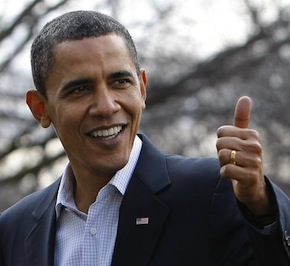
US President Barack Obama

US President Barack Obama’s administration is continuing rendition, the practice of sending terrorism suspects to third countries for detention and interrogation without due process.

George Bush administration’s practice of rendition is continuing under the Obama administration despite widespread condemnation of the tactic in the years after the September 11, 2001 attacks, the Washington Post reported on Wednesday.

According to the US daily, it is unknown how many renditions have taken place during Obama’s first term due to the secrecy involved but his administration has not disavowed the practice.

In the latest example of Obama administration’s use of the tactic, a number of American interrogates visited three European men with Somali origins in a jail in the small African country of Djibouti. The detainees had been arrested on a vague pretext in August as they were passing through the African country.

US agents accused the three men of supporting Somalia’s al-Shabab group. The prisoners were secretly indicted by a federal grand jury in New York two months after their arrest. They were then clandestinely taken into custody by the FBI and flown to the United States to face trial.

The secret arrests and detentions became known on December 21, when the suspects appeared briefly in a Brooklyn courtroom.

The US government has revealed little about the circumstances of the arrests. The FBI and federal prosecutors for the Eastern District of New York have also not said where and why the defendants were detained.

Human rights advocates have condemned Obama administration’s decision to continue rendition.

Obama, in his first presidential candidacy, had strongly suggested he might end the practice but the tactic is still continuing under his administration.

Saturday, December 15, 2012

Report finds harsh CIA interrogations ineffective


Washington Post
Greg Miller

After a contentious closed-door vote, the Senate intelligence committee approved a long-awaited report Thursday concluding that harsh interrogation measures used by the CIA did not produce significant intelligence breakthroughs, officials said.

The 6,000-page document, which was not released to the public, was adopted by Democrats over the objections of most of the committee’s Republicans. The outcome reflects the level of partisan friction that continues to surround the CIA’s use of waterboarding and other severe interrogation techniques four years after they were banned.

The report is the most detailed independent examination to date of the agency’s efforts to “break” dozens of detainees through physical and psychological duress, a period of CIA history that has become a source of renewed controversy because of torture scenes in a forthcoming Hollywood film, “Zero Dark Thirty.”

Officials familiar with the report said it makes a detailed case that subjecting prisoners to ­“enhanced” interrogation techniques did not help the CIA find Osama bin Laden and often were counterproductive in the broader campaign against al-Qaeda.

The committee chairman, Sen. Dianne Feinstein ­(D-Calif.), declined to discuss specific findings but released a written statement describing decisions to allow the CIA to build a network of secret prisons and employ harsh interrogation measures as “terrible mistakes.”

“I also believe this report will settle the debate once and for all over whether our nation should ever employ coercive interrogation techniques,” Feinstein said.

That conclusion has been disputed by high-ranking officials from the George W. Bush administration, including former vice president Richard B. Cheney and former CIA director Michael V. Hayden. Both of them argued that the use of waterboarding, sleep deprivation and other measures provided critical clues that helped track down bin Laden, the al-Qaeda leader who was killed in a U.S. raid in Pakistan in May 2011.

Largely because of those political battle lines, Republicans on the Senate intelligence committee refused to participate in the panel’s three-year investigation of the CIA interrogation program, and most opposed Thursday’s decision.

Sen. Saxby Chambliss of Georgia, the committee’s ranking Republican, said in a statement that the report “contains a number of significant errors and omissions about the history and utility of CIA’s detention program.” He also noted that the review was done “without interviewing any of the people involved.”

The 9 to 6 vote indicates that at least one Republican backed the report, although committee officials declined to provide a breakdown.

Other GOP lawmakers voiced support for the report’s conclusions. Sen. John McCain (Ariz.), who was a prisoner of war in Vietnam, issued a statement saying that the committee’s work shows that “cruel” treatment of prisoners “is not only wrong in principle and a stain on our country’s conscience, but also an ineffective and unreliable means of gathering intelligence.”

It could be months, if not years, before the public gets even a partial glimpse of the report or its 20 findings and conclusions. Feinstein said the committee will turn the voluminous document over to the Obama administration and the CIA to provide a chance for them to comment.

When that is completed, the committee will need to vote again on whether to release even a portion of the report, a move likely to face opposition from the CIA, which has fought to keep details of the interrogation program classified.

Even if it were released, the report would probably have little impact beyond providing new ammunition for a largely dormant interrogation debate.

The agency abandoned its harshest interrogation methods years before President Obama was elected, and the Justice Department began backing away from memos it had issued that had served as the legal basis for the program.

Earlier this year, the Justice Department closed investigations of alleged abuses, eliminating the prospect that CIA operatives who had gone beyond the approved methods would face criminal charges.

Civil liberties groups praised the report.

Thursday, December 13, 2012

Treatment of 9/11 suspects won't be disclosed at trial


LATimes
Richard A. Serrano

A military judge says details of the harsh interrogations of Khalid Shaikh Mohammed and four other terrorism defendants can't be mentioned in court. Human rights advocates object.
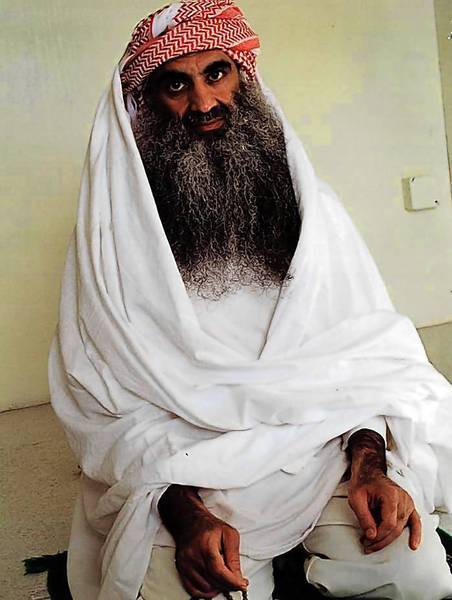
Khalid Shaikh Mohammed pictured in July in detention at Guantanamo Bay, Cuba.
Khalid Shaikh Mohammed pictured in July at the U.S. prison at
Guantanamo Bay, Cuba. Details of his harsh treatment will
not be permitted at his terrorism trial. 
  

WASHINGTON — The judge in the military commission case against Khalid Shaikh Mohammed and four other suspected Sept. 11 plotters ruled that details of harsh interrogation techniques used on them would be kept secret during their trial, a decision that human rights advocates called an attempt to hide the fact that the men were tortured.

The order, signed by Army Col. James L. Pohl on Dec. 6 and made public Wednesday, represents a clear victory for U.S. military and Justice Department prosecutors in the opening round of pretrial disputes. The first and only trial in the Sept. 11, 2001, terrorist attacks could begin as soon as next year.

Prosecutors had wanted all information about the five men's arrests and treatment at so-called black sites abroad to remain classified. Pohl agreed even though some government officials have acknowledged that Mohammed, for instance, was waterboarded 183 times after his 2003 capture in Pakistan. Waterboarding simulates drowning; many consider it torture.

Nevertheless, Pohl ruled that "enhanced interrogation techniques that were applied to the accused … including descriptions of the techniques as applied, the duration, frequency, sequencing and limitations of those techniques," would remain classified. Nor will he permit the defendants or their attorneys to discuss those matters in legal papers or open court.

"Names, identities and physical descriptions of any persons involved with the capture, transfer, detention or interrogation" of the accused will not be released, he said, nor will any "information that would reveal or tend to reveal the foreign countries" where the suspects were held before their transfer to the prison at the U.S. Naval Base at Guantanamo Bay, Cuba.

Pohl approved a 40-second audio delay in future proceedings to further protect classified information.

His "Protective Order No. 1" marks one of the most significant rulings in a case with worldwide interest in how the U.S. handles terrorism suspects as families await justice for nearly 3,000 loved ones killed in the airliner attacks at New York City's World Trade Center, the Pentagon outside Washington and a farm field in western Pennsylvania.

Defense lawyers, the American Civil Liberties Union and a group of news organizations — including the Tribune Co., owner of the Los Angeles Times — had urged the judge to permit disclosure of this information.

"We're profoundly disappointed," said Hina Shamsi, an ACLU lawyer, adding that she would probably appeal the protective order. "The government wanted to ensure that the American public would never hear the defendants' accounts of illegal CIA torture, rendition and detention, and the military judge has gone along with that shameful plan."

Eugene Fidell, a military law expert at Yale Law School, said many would view the ruling as the government's attempt to try the men in secrecy despite new military commission safeguards under the Obama administration that promised transparency.

Wednesday, November 28, 2012

Breaking Private Manning


by MICHAEL RATNER

By the time the 23-year-old soldier’s court martial starts on February 4, 2013, Bradley Manning will have spent 983 days in prison, including nine months in solitary confinement, without having been convicted of a single crime. This week, in pre-trail hearings, a military court is reviewing evidence that the conditions under which he has been held constitute torture. These conditions include the nine-month period spent 23 hours a day in a six-by-eight-foot cell where he was forbidden to lie down or even lean against a wall when he was not sleeping – and when he was allowed to sleep at night, officers woke him every five minutes – and where he was subjected to daily strip searches and forced nudity. The UN Special Rapporteur for Torture has already found this amounted to cruel, inhuman and degrading treatment, and possibly torture.

For almost three years Manning has endured intense physical and mental pressure, all designed to force him to implicate WikiLeaks and its publisher Julian Assange in an alleged conspiracy to commit espionage. It is also a message to would-be whistleblowers: the U.S. government will not be gentle.
“[If] you saw incredible things, awful things… things that belonged in the public domain, and not on some server stored in a dark room in Washington, D.C.… what would you do? … It’s important that it gets out…it might actually change something… hopefully worldwide discussion, debates, and reforms…”
These are purportedly Manning’s words*, and that is change many of us would like to believe in: that if you give people the truth about their government’s unlawful activities, and the freedom to discuss it, they will hold their elected officials accountable.

But it is one thing to talk about transparency, the lifeblood of democracy, and even to campaign on it – in 2008, candidate Obama said, “Government whistleblowers are part of a healthy democracy and must be protected from reprisal” – and another thing to act on it. On a fundamental level, Manning is being punished, without being convicted, for a crime that amounts to having the courage to act on the belief that without an informed public our republic is seriously compromised. Or, as he is quoted saying, for wanting  “people to see the truth…

regardless of who they are… because without information, you cannot make informed decisions as a public.”
The U.S. government is intent on creating a portrait of Manning as a traitor who aided and abetted Al Qaeda by releasing classified information into the public domain. But what actually occurred was that documents were sent anonymously to WikiLeaks, which published them in collaboration with The New York TimesThe Guardian and other news media for the benefit of the general public, much like the Pentagon Papers were published a generation ago.

The emails the prosecution is using to try to prove Manning was the source of the leaks also depict the side of the story they want to hide, that of a young soldier grappling with the dilemma of a would-be whistleblower who knows he is taking great risks by exposing the state-sponsored crimes and abuses he witnessed, the “almost criminal political back-dealings… the non-PR-versions of world events and crises,” as he is quoted describing them to the confidant who ultimately betrayed him.

“I will officially give up on the society we have if nothing happens.”  One can’t help wondering what Manning must think now, after so long under such brutal conditions of confinement. Did he expect the government to punish him in such a disproportionate and unlawful manner?

Manning’s abusive pre-trial treatment is a clear violation of the Fifth, Sixth, and Eighth Amendments to the U.S. Constitution, the United Nations Convention Against Torture, and even U.S. military law. In fact, Manning’s defense attorney David Coombs is arguing in the pre-trail hearings this week that in view of this blatant disregard for his client’s most fundamental rights, all charges should be dismissed.

The government claims this was all done to prevent Manning from committing suicide, though any rational observer might point out that these conditions are more likely to drive someone to suicide than keep him from it. The more likely explanation is the obvious one: the government wants to break Manning enough to force him to implicate WikiLeaks and Assange, and make enough of a show of it to deter other whistleblowers. At stake is the foundation of our democracy, a robust free press, and the fate of a true American hero.

*Disclaimer: Bradley Manning has not been convicted of any charges, nor has he admitted to any of the allegations against him. Likewise, he has not acknowledged the chat logs that purport to be his words.

Michael Ratner is President Emeritus of the Center for Constitutional Rights, which represents WikiLeaks and Julian Assange as well as other journalists and major news organizations seeking to make the documents from the Manning trial public.

Saturday, November 10, 2012

Appeals Court: Tortured US Whistleblowers Can’t Sue


AntiWar
Jason Ditz

The 7th US Circuit Court of Appeals has thrown out a lawsuit by two US whistleblowers, Donald Vance and Nathan Ertel, who were tortured by the US military after coming forward with evidence of wrongdoing by the contracting company they were working for.
The court ruled that US military commanders“enjoy broad immunity” in cases of torture abroad and that the military chain of command “couldn’t be responsible” just because detainee abuse crossed a legal boundary. The ruling added that torturing detainees is “a part of human nature that is very difficult to control.” They added that being liable for the torture would “distract” the military’s leadership.
US Court of Appeals Judge James Gwim had previous rejected Obama Administration arguments to this effect, saying that torture lawsuits could continue against officials and that US citizens were always entitled to due process related to their detention. The administration condemned Gwim for “second-guessing” the military.

Vance and Ertel approached the government about an illegal program dubbed “beer for bullets,” in which the company they were working for smuggled liquor into Iraq to trade to US soldiers for their weapons and ammo, and then sold those weapons on the open market. When the company learned they were whistleblowers, they had their papers confiscated and the military captured them when they attempted to return to the US.

Dissenting Judge David Hamilton blasted the ruling, saying that there were clear avenues for handling torture cases inside the US, and there was no good reason to “erect hurdles” just because the US citizens were tortured by the US outside of the country.


“That disparity attributes to our government and to our legal system a degree of hypocrisy that is breathtaking,” Hamilton added. Vance and Ertel’s lawyer says the two have not decided whether or not to appeal to the next level, but said he believes the ruling’s grant of blanket immunity will eventually wind up in the Supreme Court.

Thursday, November 8, 2012

Presidential Elections: Powerful “Special Interest Groups” Won Again


Global Research
Dr. Paul Craig Roberts

AMERICAThe election that was supposed to be too close to call turned out not to be so close after all. In my opinion, Obama won for two reasons:

(1) Obama is non-threatening and inclusive, whereas Romney exuded a “us vs. them” impression that many found threatening, and

(2) the election was not close enough for the electronic voting machines to steal.

As readers know, I don’t think that either candidate is a good choice or that either offers a choice. Washington is controlled by powerful interest groups, not by elections. What the two parties fight over is not alternative political visions and different legislative agendas, but which party gets to be the whore for Wall Street, the military-security complex, Israel Lobby, agribusiness, and energy, mining, and timber interests.

Being the whore is important, because whores are rewarded for the services that they render. To win the White House or a presidential appointment is a career-making event as it makes a person sought after by rich and powerful interest groups. In Congress the majority party can provide more services and is thus more valuable than the minority party. One of our recent presidents who was not rich ended up with $36 million shortly after leaving office, as did former UK prime minister Tony Blair, who served Washington far better than he served his own country.

Wars are profitable for the military/security complex. Israel rewards its servants and punishes its enemies. Staffing environmental regulatory agencies with energy, mining, and timber executives is regarded by those interests as very friendly behavior.

Many Americans understand this and do not bother to vote as they know that whichever candidate or party wins, the interest groups prevail. Ronald Reagan was the last president who stood up to interest groups, or, rather, to some of them. Wall Street did not want his tax rate reductions, as Wall Street thought the result would be higher inflation and interest rates and the ruination of their stock and bond portfolios. The military/security complex did not want Reagan negotiating with Gorbachev to end the cold war.

What is curious is that voters don’t understand how politics really works. They get carried away with the political rhetoric and do not see the hypocrisy that is staring them in the face. Proud patriotic macho American men voted for Romney who went to Israel and, swearing allegiance to his liege lord, groveled at the feet of Netanyahu. Obama plays on the heart strings of his supporters by relating a story of a child with leukemia now protected by Obamacare, while he continues to murder thousands of children and their parents with drones and other military actions in seven countries. Obama was able to elicit cheers from supporters as he described the onward and upward path of America toward greater moral accomplishments, while his actual record is that of a tyrant who codified into law the destruction of the US Constitution and the civil liberties of the American people.

The election was about nothing except who gets to serve the interest groups. The wars were not an issue in the election. Washington’s provoking of Iran, Russia, and China by surrounding them with military bases was not an issue. The unconstitutional powers asserted by the executive branch to detain citizens indefinitely without due process and to assassinate them on suspicion alone were not an issue in the election. The sacrifice of the natural environment to timber, mining, and energy interests was not an issue, except to promise more sacrifice of the environment to short-term profits. Out of one side of the mouth came the nonsense promise of restoring the middle class while from the other side of the mouth issued defenses of the offshoring of their jobs and careers as free trade.

The inability to acknowledge and to debate real issues is a threat not only to the United States but also to the entire world. Washington’s reckless pursuit of hegemony driven by an insane neoconservative ideology is leading to military confrontation with Russia and China. Eleven years of gratuitous wars with more on the way and an economic policy that protects financial institutions from their mistakes have burdened the US with massive budget deficits that are being monetized. The US dollar’s loss of the reserve currency role and hyperinflation are plausible consequences of disastrous economic policy.

How is it possible that “the world’s only superpower” can hold a presidential election without any discussion of these very real and serious problems being part of it? How can anyone be excited or made hopeful about such an outcome?


Wednesday, November 7, 2012

Portland Police Accused of Tasering Elderly Man for No Transit Ticket


E. Snow


According to video producer's Reddit Post:


8:15 Tuesday Nov. 6, 2012 Man tasered multiple times while on ground and beaten by transit police for lack of Max ticket. Conversation preceding incident went as such: Officer: "Do you have a ticket?" Victim: "No, I'll just leave." Officer: "No you won't." Victim: "Don't touch me..."
Officers names and badge numbers are: Scott Guy 14963 Bob Downing 15 'Refused Name' 1459 Scott 'Skippy' Olsen 26435 Taylor Letsis 47186
Does a lack of paid fare require the tasering of one of our fellow Portlanders? This man showed no anger or malice toward the Police, he made no threats, nor did he brandish any weapon. Being concerned for the welfare of my fellows brings me to share this video in which a man is subdued, held to the wet ground and tasered three times. This unbridled violence unleashed upon a citizen--one who was elderly and unable to verbally respond to the police before being violently assaulted--breeds a concern for my personal welfare as well as that of the commuters whom I share a train and conversation with daily. This misuse of a potentially lethal weapon upon the citizens of Portland has been an issue in the public eye for some time now (senior citizens nonetheless). When will the injustice stop? Why did the officer in front of me attempt to obstruct my witnessing of such an outburst of violence? How can we make certain these Transit Police, who are overeager to make use of their kinetically holstered weapons, are brought to justice--without paid leave (vacation).


Tuesday, October 23, 2012

Former CIA officer in leaks case pleads guilty to a single charge


Washington Post
Greg Miller
Sari Horwitz


A former CIA officer who was charged with repeatedly leaking classified informationpleaded guilty in federal court Tuesday to a single charge of disclosing the identity of an undercover CIA operative.

Under the plea agreement, the former officer, John C. Kiriakou, will be sentenced to prison for up to 30 months. The agreement marks the end of a case that involved the spilling of secrets to reporters and that was part of the Obama administration’s unprecedentedcrackdown on leaks.


Kiriakou, 47, worked undercover for the CIA for years and took part in multiple operations that led to the capture of al-Qaeda suspects in Pakistan. But he is most widely known for being among the first former CIA officials to speak publicly about the agency’s secret interrogation program, describing in a 2007 television interview the use of waterboarding on al-Qaeda suspects.

As part of the agreement, the Justice Department dropped four other charges against Kiriakou, including allegations that he had illegally shared sensitive national defense information with reporters and had lied to the CIA’s publication review board about the contents of a memoir he published.

The case was one of six leaks-related prosecutions brought by the Justice Department since President Obama took office, more than all prior administrations combined. The plea deal comes just months after the department announced that it was closing its investigation of the deaths of prisoners in CIA custody without bringing a single charge.

Experts on leaks crimes said the government will probably regard a plea from Kiriakou as a significant victory given the collapse of previous leaks cases, including the attempted prosecution of a former National Security Agency executive, Thomas Drake.

“The government will say that any guilty plea is a win, and the defense will say they were forced into a corner,” said Steven Aftergood, an expert on classification issues with the Federation of American Scientists. “In some sense, they will both be right.”

Kiriakou is only the second person convicted of violating a 1970s law that made it illegal to disclose the identities of undercover U.S. intelligence operatives. In 1985, CIA officer Sharon Scranage pleaded guilty to disclosing the names of other agents to her boyfriend in Ghana and was sentenced to five years in prison, Aftergood said.

Kiriakou had initially pleaded not guilty to all the charges and insisted that he had never knowingly shared classified information or leaked other secrets. The government’s case against him was based largely on e-mail exchanges between Kiriakou and news reporters, as well as his responses when confronted about the disclosures by FBI agents.

Sunday, October 21, 2012

If you give the police more Tasers, don't be shocked by the result


If you give the police more Tasers, don't be shocked by the result

The Guardian
David Mitchell

David Mitchell
The police have been going through a rough patch recently. First they were implicated in the phone-hacking scandal – though they managed to escape most of the blame when we collectively came to the surprising conclusion that it was more serious for tabloid journalists to neglect the public interest than offi
cers of the crown. But while they deflected a lot of that responsibility, their attempts to deflect it over Hillsborough have been catastrophically counterproductive. And as senior officers have been caught dining with Murdochs or maligning the dead, officers on the ground have been getting shot and called plebs. Or not called plebs, depending on who you believe.
Meanwhile the Police Federation's attempts to extract retribution for the disputed p-word, in the form of Andrew Mitchell's sacking, have been roundly slagged off by former Labour minister Chris Mullin, who last week described the organisation as "a bully", "a bunch of headbangers" and "a mighty vested interest that has seen off just about all attempts to reform the least reformed part of the public service". He didn't call them plebs though. Then again, some police have taken to wearing "PC Pleb and Proud" sweatshirts, so perhaps the insult has lost its sting? Maybe they'll soon be sporting "Sergeant Headbanger Will See You Now" riot shields or stab vests with the slogan "You Needn't Try Stabbing ThisMighty Vested Interest".
Another accessory which the Police Federation advocates is the Taser. In June it wrote to the prime minister asking for the number of Tasers to be trebled so that every frontline officer could have one. "They need to have the proper equipment to do the job," says Paul Davis, secretary of the Federation's operational policing subcommittee. And officers certainly seem to be getting a lot of use out of them. Just last week, a policeman Tasered an elderly blind man as part of an operation to check whether his white stick was a samurai sword. It wasn't.
Of course, anyone might get rattled by a semi-paralysed blind man slowly tapping his way with a stick towards you. Apart from anything else, it's so spooky. Those are the high-pressure moments when you need the training to kick in. According to guidelines, officers are permitted to use Tasers when they "would be facing violence or threats of violence of such severity that they would need to use force to protect the public, themselves and/ or the subject" and this moment is surely eerie enough to qualify. The whole event would barely be worthy of note if it weren't for the fact that they shot him in the back. But then the gentleman is quite old and has suffered two strokes in the last few years – so the comparatively slow rate at which he was fleeing was probably taken as provocation.
Incidentally, if you do get Tasered by the police, it's advisable to watch your language. As Boris Johnson has pointed out, it's now an offence to swear at a police officer. So, should you incur a public-spirited 50,000-volt warning shot – perhaps for brandishing your pension book in an aggressive manner or because a young PC has mistaken your tartan shopping trolley for a piece of field artillery – don't accidentally shout "Oh fuck!" or you might get sent to prison. Keep it to a "Dash it all, that smarts, constable!" and be on your way. As soon as you can stand.
In the case of Colin Farmer, the suspected samurai, the police have apologised and Chief Superintendent Stuart Williams said: "We have launched an urgent investigation to understand what lessons can be learned." That response demonstrates everything that's wrong with large organisations. In terms of dereliction of duty, I think it's worse than Tasering a blind pensioner. What possible good can this "investigation" do? We know what happened. A police officer, who Colin Farmer described as "an absolute thug with a licence to carry a dangerous weapon", made a brutal and stupid mistake. How can an investigation illuminate the situation further? Will DNA analysis of the stick reveal that it's a sword after all?
All of which feels like an inopportune context for Keith Bristow, the director general of the new National Crime Agency, to request more police powers. He's trying to influence the new communications data bill so that he'll be able to scour Skype and social media networks for wrongdoers. But he's quick to allay the fears of those who call the bill a "snoopers' charter": "I value my privacy, I don't want to be snooped upon," he explains. "That's not what we're talking about here. We're talking about criminals who run organised crime gangs that import drugs… We're talking about predatory paedophiles, we're talking about dangerous people."
Oh, well that's OK then! He's only going to be snooping on criminals. Personally I don't think that's enough – I think criminals should be arrested and charged, not just snooped on. But just as long as the NCA won't accidentally be snooping on anyone who's not definitely a criminal, I can't see the harm in it.
In an ideal world, Keith Bristow would be wasting his breath. When a state law-enforcement agency says "We need more powers", it should carry as little weight as when I say (as I have spent much of the last couple of weeks saying) "I want you to read my book". Not because either statement is insincere: all writers genuinely want people to read their books and all law-enforcement agencies really believe they need more powers. But, when they say that, they should be completely ignored. Not criticised, not accommodated, just disregarded.
The sincerity is beguiling but it's meaningless. "Help us to do our jobs better," the police implore. "We can see the good we could do if you let us." They almost certainly can. But they can't see what it would cost society in lost freedoms. They can't know the consequences of potentially irreversible authoritarian steps.
It's a frightening state of affairs. Those who know most about law enforcement – those who actually do it – are the least qualified to advise on what its rights, powers and funding should be. We have to ignore their cries and trust our instincts. We have to balance our fears of the indefinable, nebulous worlds of crime and terrorism, with the fact that, if we put Tasers in our public servants' hands, at some point they'll use them on us.
David Mitchell's autobiography, Back Story (HarperCollins), is out now

Friday, October 19, 2012

Rewarding Impunity


Why is President Obama's attorney general handing out prizes for sweeping torture under the rug?

Foreign Policy
David Cole


On Oct. 17, Eric Holder handed out the Justice Department's annual awards for distinguished service to a slew of department employees. Featured at the top of the awards announcement were the men and women who successfully prosecuted 10 New Orleans police officers for killing innocent civilians in the wake of Hurricane Katrina, and a U.S. marshal who risked his life to protect a victim from a violent fugitive during the fugitive's capture. But buried at the bottom of the list -- the 13th of 14 "distinguished service awards" -- was a more unusual awardee: Assistant U.S. Attorney John Durham. Durham and his team received the award not for bringing anyone to justice, but for declining to hold accountable anyone in the CIA for its brutal interrogations of detainees at secret prisons, or "black sites," in connection with President George W. Bush's "war on terror."

"In order to conduct the investigations," the citation reads, "the team had to review significant amounts of information, much of which was classified, and conduct many interviews in the United States and at overseas locations."
There's no question that Durham worked hard for a long time, and that the investigation was complex and substantial. After all, more than 100 men were "disappeared" into the CIA's black sites for extended incommunicado detention and interrogation. Because the CIA prisons were a secret, everything that happened there is classified, complicating investigation still further. And because the investigation itself is secret, we can't know precisely what evidence Durham considered, what roadblocks he faced, what judgment calls he made.
But here's what we do know. Many of those "disappeared" into the CIA's black sites were tortured and/or illegally subjected to cruel, inhuman, and degrading treatment. Abu Zubaydah and Khalid Sheikh Mohammed, for example, were waterboarded 83 and 183 times, respectively. They and other detainees were stripped naked, doused with water, beaten about the face and stomach, slammed into walls, deprived of sleep for days on end, forced into painful stress positions, and confined in small dark boxes for hours at a time. And these were just the "authorized" torture tactics, given a green light by a secret memo written in August 2002 by John Yoo and Jay Bybee from the Justice Department's Office of Legal Counsel, and specifically okayed by President Bush, Vice-President Dick Cheney, National Security Adviser Condoleezza Rice, Attorney General John Ashcroft, and White House Counsel Alberto Gonzales, among others.
We also know, thanks to the CIA's own Inspector General, that CIA interrogators in the black sites went beyond even the illegal brutality authorized by high-level officials. One detainee was threatened with a handgun and a power drill. A mock execution was staged next to a detainee's cell. Interrogators threatened to kill the children of another detainee if he didn't tell them what they wanted to know.
We also know that in 2005, CIA higher-up Jose Rodriguez ordered the destruction of videotapes of two of those interrogations, shortly after the Washington Post revealed the existence of the CIA secret prisons where the interrogations took place, and while the tapes were under request from several courts and a Senate committee looking into charges of abuse.
Durham cleared everyone in the CIA of accusations of wrongdoing. Does he deserves a medal for that? Maybe so, but then there are a few other recipients the attorney general left out. Surely John Yoo and Jay Bybee deserve medals for making the interrogations possible in the first place, by issuing a memo that Jack Goldsmith, director of the Office of Legal Counsel after Bybee, has called a "get out of jail free card." Goldsmith himself, along with his successors as OLC heads under Bush -- Daniel Levin and Steven Bradbury -- also deserve medals for secretly allowing the torture tactics to continue even after the administration rescinded the initial memo when the Post published it. Tellingly, the Bush administration could not publicly defend, even for a moment, what everyone had signed off on in secret; but Goldsmith, Levin, and Bradbury ensured, in subsequent secret memos and authorizations, that the CIA's illegal program could go on.


Tuesday, October 16, 2012

Judge Bans the T-Word in 9/11 Hearing


Huffington Post
Daphne Eviatar

It didn't take long for the word "torture" to rear its ugly head in the September 11th terrorism case, as pre-trial hearings began today with a slew of procedural issues. Though the question of whether the five accused men have to actually show up in court every day wouldn't seem all that exciting or controversial, as soon as one of the defense lawyers started to say his client was traumatized by having been tortured at the hands of his U.S. interrogators, the judge shut him up.

"We have to talk about torture," said defense attorney Captain Michael Schwartz, who represents Walid Bin Attash, claiming it's relevant to whether the accused should be "forcibly extracted" from their prison cells.

"No we don't. I'm telling you I don't think it's relevant to this issue," said Judge James L. Pohl, presiding over the military commission case of the five 9/11 co-defendants. "I'm not going to keep revisiting the issue I told you is not relevant."

Schwartz tried to explain. "There is the physical and emotional strain that is relevant to the decision of whether they're going to come to court. Those things are inextricably linked."

Pohl quickly interrupted. "The issue before me is whether or not the accused has a right to voluntarily choose to not come to court for these proceedings. The issue of why is not before me... I don't think that's relevant."

Schwartz looked bewildered, but persisted. "The issue of my client's ability to participate in his defense is relevant," he insisted.

Judge Pohl: "No it's not. When I say it's irrelevant, we're done." Pohl refused to allow Captain Scwhartz to even make his claim for the record, which he presumably wanted to do to preserve a later right to appeal.

Ultimately, Judge Pohl ended the discussion by ruling in the defense lawyers' favor, saying he'd allow the defendants to waive their right to attend their hearings and trial so long as they did it knowingly and following a set of procedures he would set out this afternoon.

That short exchange gives us an interesting clue of how the word "torture" and related claims of detainee mistreatment are likely to be treated as this September 11 terrorism trial finally gets underway.

Secrecy surrounding the detainees' treatment in U.S. custody -- including their having been subjected to "enhanced interrogation techniques" that amount to torture -- will play a much larger role in motions expected to be argued tomorrow.


Abu Zubaydah Poses a Real Threat to al Qaeda


9/11 Blogger
Kevin Ryan

Abu Zubaydah, a man once called al-Qaeda’s “chief of operations” appears to be at the center of an unraveling of the official myth behind al Qaeda.  After his capture in early 2002, Zubaydah was the first “detainee” known to be tortured.  The information allegedly obtained from his torture played a large part in the creation of the official account of 9/11 and in the justification for the continued use of such torture techniques.  Yet in September, 2009, the U.S. government admitted that Zubaydah was never a member or associate of al Qaeda at all.  These facts raise an alarming number of questions about the veracity of our knowledge about al Qaeda, and the true identity of the people who are said to be behind the 9/11 attacks.

Unlike other alleged al Qaeda leaders, including Khlaid Sheik Mohammed and Rasmi bin Alshibh, Zubaydah has never been charged with a crime.  As these other leading suspects await their continually-postponed military trial, Zubaydah is instead being airbrushed out of history.  Why would the U.S. government want us to forget Zubaydah, the first and most important al Qaeda operative captured after 9/11?

The 9/11 Commission called Zubaydah an “Al Qaeda associate,” a “long-time ally of Bin Ladin,” a “Bin Ladin lieutenant,” and an “al Qaeda lieutenant.”[1] The Commission’s claims were somewhat contradictory in that Zubaydah was, in the Commission’s report, represented as both an al Qaeda leader and simply a terrorist colleague who collaborated in the training and recruiting of operatives.  For example, the Commission reported that Zubaydah “helped operate a popular terrorist training camp near the border with Pakistan” [Khalden Camp], and that Bin Laden had an agreement with Zubaydah to “conduct reciprocal recruiting efforts whereby promising trainees at the camps would be invited to join al Qaeda.”  It was unclear why a “Bin Laden lieutenant” would need such a reciprocal agreement with Bin Laden.

Other claims made by the 9/11 Commission were that “KSM and Zubaydah each played key roles in facilitating travel for al Qaeda operatives,” and that “Zubaydah had been a major figure in the millenium plots.” These claims are supported primarily by the torture testimony of Zubaydah and others, and by Zubaydah’s “diary.”

In an amazing turnabout in 2009, an attorney for Zubaydah wrote in The Guardian that the majority of the accusations against Zubaydah were understood by all parties to be false.  In fact, he wrote, they “were known to be false when uttered.“[2]  Attorney Brent Mickum said that his client, said to be the “number three man in al Qaeda,” was never a member or associate of al Qaeda and that — “These facts really are no longer contested: [Zubaydah] was not, and never had been, a member of either the Taliban or al-Qaida. The CIA determined this after torturing him extensively.”  In fact, he “was never a member or a supporter of any armed forces that were allied against the United States,” and he was never the “head of a military camp that trained terrorists. That allegation is false at all levels.”

It turns out that Mickum’s report was correct and that “Abu Zubaydah’s supposed relationship with al-Qaida is a complete myth.”[3]

We know this because, as of September 2009, the U.S. government agreed that Zubaydah was never an al Qaeda operative.  During Zubaydah’s habeas corpus petition, the government admitted that Abu Zubaydah had never been a member of al-Qaeda, nor involved in the attacks on the African embassies in 1998, or the attacks on the United States on September 11, 2001.[4]  The motion, filed by the U.S. government, states:
  
…the Government has not contended in this proceeding that Petitioner [Zubaydah] was a member of al-Qaida or otherwise formally identified with al-Qaida.
Respondent [The United States Government] does not contend that Petitioner was a “member” of al-Qaida in the sense of having sworn a bayat (allegiance) or having otherwise satisfied any formal criteria that either Petitioner or al-Qaida may have considered necessary for inclusion in al-Qaida. Nor is the Government detaining Petitioner based on any allegation that Petitioner views himself as part of al-Qaida as a matter of subjective personal conscience, ideology, or worldview.
The Government has not contended in this proceeding that Petitioner had any direct role in or advance knowledge of the terrorist attacks of September 11, 2001.
… the Government has not contended that Petitioner had any personal involvement in planning or executing either the 1998 embassy bombings… or the attacks on September 11, 2001.
In his article that same year, attorney Mickum went on to point out that the torture tapes, which the CIA had first lied to the 9/11 Commission about and then destroyed, had a lot to do with Zubaydah.  Mickum wrote:  “the videotapes of his torture were destroyed. Just recently, the government revealed that 90 of the 92 videotapes that the CIA destroyed related to our client.”  Not only that, Mickum went on to say that the U.S. government has removed all “reference to my client from the charge sheets and factual returns of other prisoners whose cases were being prosecuted. Abu Zubaydah has been linked to nearly 50 prisoners and former prisoners through media accounts and official Guantanamo Bay documents. Of these, approximately two dozen have either had their charges dropped or have been released from custody.”  They have, essentially, “airbrushed Abu Zubaydah out of history.”

Obviously this attempt to remove a key 9/11 accomplice from history must make a significant difference to the official account of 9/11.  We would expect that major revisions to the 9/11 Commission Report would be necessary given the knowledge that the man never had a connection to al Qaeda.

In order to better understand just how much Zubaydah meant as a primary source for the official account of 9/11, we must review the extensive claims made about Zubaydah by the U.S. government and mainstream media  over the years.  We’ve seen that the 9/11 Commission (falsely) called Zubaydah an “al Qaeda lieutenant.”  The Joint Congressional inquiry did the same, calling him “al-Qa’ida leader Abu Zubaydah,” and the “Bin Ladin lieutenant captured in March 2002.”  As late as 2006, the Justice Department’s Inspector General report on the 9/11 attacks called Zubaydah a “Bin Laden lieutenant.”

When Zubaydah was captured, in March 2002, U.S. government officials touted him as the biggest catch of the War on Terror, at least until the capture of Khalid Sheik Mohammed (KSM).  FBI Director Robert Mueller stated that Zubaydah’s capture would help deter future attacks.[5]  White House spokesman Ari Fleischer said that Zubaydah could provide a treasure-trove of information about al-Qaeda.[6]  Secretary of Defense Donald Rumsfeld claimed that Zubaydah was “a man who knows of additional attacks”, who has “trained people to do this”, and was a big fish who had a fountain of knowledge.[7]

The extensive allegations against Zubaydah went on and on, and included that he was:
  • along with KSM, one of “Al Qaeda’s top operational managers” – “Counterterrorism Czar”Richard Clarke, in his book Against All Enemies
  • “sinister” and “there is evidence that he is a planner and a manager as well. I think he’s a major player.” – Former State Department director of counter-terrorism, Michael Sheehan [8]
  •  “extremely dangerous” and a planner of 9/11. – State Department legal advisor John B. Bellinger III in a June 2007 briefing.[9]
  • a trainer, a recruiter, understood bomb-making, was a forger, a logistician, and someone who made things happen, and made “al-Qaeda function.” – Former CIA station chief, Bob Grenier [10]
  • “a close associate of UBL’s, and if not the number two, very close to the number two person in the organization. I think that’s well established.” -Donald Rumsfeld [11]
  •  “a very senior al Qaeda official who has been intimately involved in a range of activities for the al Qaeda.” – Donald Rumsfeld [12]
  • a “very senior al Qaeda operative.” – Donald Rumsfeld
  • a “key terrorist recruiter and operational planner and member of Osama bin Laden’s inner circle.” – White House spokesman Ari Fleischer [13]
  • someone whose capture was a “very serious blow” to al-Qaeda and therefore one of al-Qaeda’s “many tentacles” was “cut off.” – White House spokesman Ari Fleischer
  •  “one of the top operatives plotting and planning death and destruction on the United States.” –President George W. Bush [14]
  •  “one of al-Qaeda’s top leaders” who was “spending a lot of time as one of the top operating officials of al Qaeda, plotting and planning murder.” –President George W. Bush [15]
  •  “al Qaeda’s chief of operations.” – President George W. Bush [16]
  • “one of the top three leaders” in al-Qaeda. – President George W. Bush [17]
  • someone whose interrogation “led to reliable information”, a “prolific producer” of information, with whom originated roughly 25 percent of the information on al Qaeda that came from human sources. – Michael Hayden [18]
  • one of three individuals “best positioned to know about impending terrorist atrocities.” – Michael Hayden [19]
As the myth of Zubaydah grew, it was reported that he was –
  • “worth a ton of guys at Gitmo.”[20]
  • a “senior bin Laden official” and the “former head of Egypt-based Islamic Jihad.”[21]
  • “played a key role in the East Africa embassy attacks.”[22]
  • listed as a “trusted aide” to bin Laden with “growing power.”[23]
  • in control of al-Qaeda.[24]
  • an aide of bin Laden who ran training camps in Afghanistan and “coordinated terror cells in Europe and North America.”[25]
  • a “key terrorist recruiter, operational planner, and member of Osama Bin Laden’s inner circle.”[26]
  • “bin Laden’s CEO”,[27] and “a central figure in Al Qaeda”[28]
  • Bin Laden’s “travel planner.”[29]
  • “one of a handful of men entrusted with running the terrorism network in the event of Osama bin Laden’s death or capture.”[30]
  • a senior bin Laden lieutenant who was believed “to be organizing al Qaida resources to carry out attacks on American targets.”[31]
  • the fourth ranking member of al Qaeda behind Bin Laden, Ayman al-Zawahiri, and Muhamed Atef.[32]
  • someone who knew the identities of “thousands” of terrorists that passed through al Qaeda training camps in Afghanistan [33]
  • a colleague of Richard Reid, the shoe-bomber.[34]
  • one of bin Laden’s top planners of terrorist operations who knew of al Qaeda plots and cells.[35]
  • the “connection between bin Laden and many of al-Qaida’s operational cells.”[36]
  • the source of information that UAL Flight 93 was intended to hit the White House.[37]
Because we now know that Zubayda was never an al Qaeda operative, or even an al Qaeda associate, we are forced into the stunning realization that all of this was false.  The questions that should arise from that realization include:  How much of what we know about al Qaeda, and how much of the War on Terror, was built on the torture testimony of a man who clearly could not have known anything about al Qaeda at all?

Originally, we were told that it was Zubaydha who first identified KSM as the Bin Laden associate called “Mukhtar.”  This was according to Ali Soufan, the FBI official who first interrogated him at a secret CIA site in Thailand.  Soufan also claimed that Zubaydah said KSM was the “mastermind” behind the 9/11 attacks.  In his 2007 book, CIA director Tenet went further, claiming that “interrogating Abu Zubaydah led to Ramsi bin al Shibh.”[38]

Thursday, September 6, 2012

Libyan Man Describes Horrific Experience Of Being Waterboarded By US Troops

Business Insider
Joshua Berlinger

Earlier today, Human Rights Watch released a report in which it charges the CIA and UK security forces of serious human rights violations.
The 154-page report, Delivered Into Enemy Hands: U.S.-Led Abuse and Rendition of Opponents to Qaddafi’s Libyawas based on recently uncovered and declassified documents from the CIA and Qaddafi's security forces and interviews with 14 former detainees — most of whom had some relationship to the Libyan Islamic Fighting Group (LIFG), which worked to overthrow Gaddafi for about two decades.
And some of what HRW uncovered is shocking:
Mohammed Shoroeiya was one of the 14 subjects interviewed. He was arrested in Peshawar, Pakistan, in April 2003 by Pakistani and U.S. personnel, and eventually transferred to a U.S.-run detention facility in Afghanistan.  
The report states that Shoroeiya was periodically tortured by, "all of whom he believed to be American." in a manner similar to waterboarding: 
Shoroeiya said the board was made of wood and could turn around 360 degrees. Sometimes they would strap him onto the board and spin him around while wearing a hood that covered his nose and mouth. This would completely disorient him. While he was strapped to the board with his head lower than his feet, they would pour buckets of extremely cold water over his nose and mouth to the point that he felt he was going to suffocate. After the hood was put over his face, he said, “then there is the water pouring…. They start to pour water to the point where you feel like you are suffocating.” When asked how many times this was done to him, he said “a lot …a lot … it happened many times …. They pour buckets of water all over you.”
The report did not mention why Shoroeiya was arrested, nor did it highlight a particular reason that he was tortured in the specific detention facility referred to above. 
The CIA have refused to comment on the specific details of the case, though told Business Insider that it has been on the record about three cases where "detainees were subjected to the waterboarding technique".

Wednesday, September 5, 2012

CIA faces new waterboarding claims from Libya

The Telegraph
Alex Spillius


New claims of waterboarding by the CIA have emerged, contradicting claims by the US authorities that only three people were submitted to a practice widely regarded as torture.

The assertions were made by Libyan opposition figures arrested by the Americans and handed over to Col Muammar Gaddafi in the middle of the last decade when Washington was seeking rapprochement with the late Libyan dictator.

They are contained in a report by Human Rights Watch, which interviewed 14 former prisoners after the fall of Col Gaddafi. Most belonged to the Libyan Islamic Fighting Group that had worked to overthrow him for 20 years.

Two out of the men interviewed said they were submitted to interrogation tactics that match previous instances of waterboarding.

After his arrest in Peshawar, Pakistan in 2003, Mohammed al-Shoroeiya said he was flown for half an hour to a location he later came to believe was in Afghanistan.

He said he was placed on a board that could rotate through 360 degrees. After a hood was put over his face, he said, “They start to pour water to the point where you feel like you are suffocating.”

When asked how many times this was done to him, he said: “A lot …a lot … it happened many times …. They pour buckets of water all over you.”

Khalid al-Sharif, who was arrested along with al-Shoroeiya, said: They gave me a different type of torture every day. Sometimes they used water, sometimes not.… Sometimes they stripped me naked and sometimes they left me clothed.”

Now head of the Libyan National Guard, Mr Sharif claimed he was held for two years in two different US-run detention centres believed to be operated by the CIA in Afghanistan.

Both men have always disavowed al-Qaeda and were never accused of sympathising with the global terror group by the Americans.

Laura Pitter, counterterrorism advisor at Human Rights Watch and author of the report, said: “Not only did the US deliver Gaddafi his enemies on a silver platter but it seems the CIA tortured many of them first,” said “The scope of Bush administration abuse appears far broader than previously acknowledged and underscores the importance of opening up a full-scale inquiry into what happened.”

Human Rights Watch said the report demonstrated that Britain and numerous other countries were complicit in helping hand over Col Gaddafi’s opponents.

Intelligence documents discovered in Tripoli supported similar claims by Abdul Hakim Belhadj, leader of the LIFG who was a key figure in the overthrow of Col Gaddafi, and a deputy Sami Mostafa al-Saadi.

The US government has stated that only three senior al-Qaeda figures were submitted to waterboarding.

When he came into office in January 2009 President Barack Obama banned the practice and ordered an investigation into all so called harsh interrogation techniques. It recently concluded that CIA officials should be charged.

Last week Eric Holder, the US attorney general, announced that no one would be prosecuted for the deaths of a prisoner in Afghanistan in 2002 and another in Iraq in 2003.