Showing posts with label Mortgage Fraud. Show all posts

Friday, November 2, 2012

What happens when you can’t trust the state

Le Monde Diplomatic
Serge Halimi


There would seem to be no chance that a man who made a fortune out of financial speculation might reach the White House just four years after private banks caused a crisis and had to be bailed out by taxpayers. The uncertainty to the very last minute about the outcome of the US election was probably due to worsening distrust of the state, and everything it does.

The problem of public debt is now at the very heart of US political life, thanks to the dramatic increase in budget deficits caused by the cost of two simultaneous wars (Afghanistan and Iraq), the bank bailouts and new enormous tax cuts (1). Some people claim that “we would love to help but we can no longer afford it.” Others also look to the incestuous links between government and private enterprise, the dubious process that transforms former heads of government into lobbyists or highly paid public speakers (see Blair Inc). The old fear of bureaucratic waste, parasitic middlemen and huge projects that come to nothing, is increasingly exacerbated by suspicions of venality.

The justification that “it costs too much and it won’t work” was already a powerful deterrent against any social action by the state. But perhaps there is now also a conviction that elected representatives have become too remote, too corrupt and too closely associated with the interests of an oligarchy to serve the common good. The right, claiming to be liberal, takes advantage of this lack of confidence and suggests (as with Mitt Romney) that if you want to run a country you might as well first prove yourself by managing a company or a hedge fund.

Yet fraud and waste are rife in the private sector, too. Unknown numbers of engineers, accountants and sociologists, trained at public expense, squander their talents on perfecting the lines of a car bonnet, a new packaging material or a cigarette filter, or on designing outlandish insurance contracts and tax-free investment schemes. Financial success is almost always more important to a company than the social value of its products.
A scandal may occasionally damage or destroy the head of a corporation; it generally does so without questioning the structures on which their activities and power are based. But prevarication by a mayor or a minister, supposed government capitulation to a lobby, or doubts about the funding of an election campaign have immediate repercussions for the state. They undermine its right to raise taxes, organise the country and mobilise the nation.

Almost everywhere people are eager for change. But without the proper instruments to achieve their aims, new or old, all they can do is feel their way, mark time, and sometimes — against all their hopes — go into reverse.

Saturday, October 27, 2012

CNBC Exec’s Children Murdered, 1 Day After CNBC Reports $43 Trillion Bankster Lawsuit


IntelHub
JG Vibes

This week financial news organization CNBC gave some mainstream attention to the largest money laundering and racketeering lawsuit in United States History, in which “Banksters” and their U.S. racketeering partners are being accused of laundering of 43 trillion dollars worth of ill gotten gains.

The lawsuit is said to involve officials located in the highest offices of government and the financial sector.
Since this information was surprisingly revealed by the mainstream news organization there has been a very suspicious and deadly fallout at the CNBC headquarters.
Within hours the original page for the article was taken down, and CNBC senior vice president Kevin Krim received news that his children were killed under very suspicious circumstances.
It seems that the murder happened first and then the page was removed later.
According to mainstream accounts the children’s nanny is responsible for the murders, allegedly stabbing both children.
However, those same mainstream news sources report the highly unlikely story that the nanny slit her own throat just after committing the homicides.
Police have released very little information and although a wider plot has not been officially implicated, it seems very possible that these murders are a show of force against the press organization for releasing such damning information about the most powerful people in the world.
Here is some more information about the lawsuit from the Wall Street Journal:
“In the District Court lawsuit, Spire Law Group, LLP — on behalf of home owner across the Country and New York taxpayers, as well as under other taxpayer recompense laws — has expanded its mass tort action into federal court in Brooklyn, New York, seeking to halt all foreclosures nationwide pending the return of the $43 trillion ($43,000,000,000.00) by the “Banksters” and their co-conspirators, seeking an audit of the Fed and audits of all the “bailout programs” by an independent receiver such as Neil Barofsky, former Inspector General of the TARP program who has stated that none of the TARP money and other “bailout money” advanced from the Treasury has ever been repaid despite protestations to the contrary by the Defendants as well as similar protestations by President Obama and the Obama Administration both publicly on national television and more privately to the United States Congress.
Because the Obama Administration has failed to pursue any of the “Banksters” criminally, and indeed is actively borrowing monies for Mr. Obama’s campaign from these same “Banksters” to finance its political aspirations, the national group of plaintiff home owners has been forced to now expand its lawsuit to include racketeering, money laundering and intentional violations of the Iranian Nations Sanctions and Embargo Act by the national banks included among the “Bankster” Defendants. “
Some of the alleged conspirators are Attorney General Holder, Assistant Attorney General Tony West, the brother in law of Defendant California Attorney General Kamala Harris, Jon Corzine (former New Jersey Governor), Robert Rubin (former Treasury Secretary and Bankster), Timothy Geitner, Treasury Secretary, Vikram Pandit (recently resigned and disgraced Chairman of the Board of Citigroup), Valerie Jarrett (a Senior White House Advisor), Anita Dunn (a former “communications director” for the Obama Administration), Robert Bauer (husband of Anita Dunn and Chief Legal Counsel for the Obama Re-election Campaign), as well as the “Banksters” themselves, and their affiliates and conduits.
It is expected that all news on this subject will be removed from CNBC, and that other news organizations will be discouraged from covering such information.
However, screen shots of the original CNBC article were taken to verify the authenticity of this story.
Assassination and brute intimidation are common strategies for the ruling class to use on people who may threaten their agenda.
This is the second situation this week in which a high level executive was the victim of a suspicious attack that seemed very much like an assassination.
The Intel Hub just reported that Nicholas Mockford, a 60 year old British executive for the oil company ExxonMobil was shot dead in front of his wife in an assassination-style killing in Brussels.

We will be keeping a close eye on both of these stories and provide more details as they become available.

Thursday, October 11, 2012

U.S. sues Wells Fargo in mortgage fraud case


Reuters


The U.S. government filed a civil mortgage fraud lawsuit on Tuesday against Wells Fargo & Co, the latest legal volley against big banks for their lending during the housing boom.

The complaint, brought by the U.S. Attorney in Manhattan, seeks damages and civil penalties from Wells Fargo for more than 10 years of alleged misconduct related to government-insured Federal Housing Administration loans.

The lawsuit alleges the FHA paid hundreds of millions of dollars on insurance claims on thousands of defaulted mortgages as a result of false certifications by Wells Fargo, the fourth-biggest U.S. bank as measured by assets.

"As the complaint alleges, yet another major bank has engaged in a longstanding and reckless trifecta of deficient training, deficient underwriting and deficient disclosure, all while relying on the convenient backstop of government insurance," said Manhattan U.S. Attorney Preet Bharara.

Wells, the largest U.S. mortgage lender, denied the allegations and said in a statement it believes it acted in good faith and in compliance with FHA and U.S. Department of Housing and Urban Development rules. The bank said many of the allegations have been previously addressed with HUD and added that its FHA delinquency rates have been as low as half the industry average.

In a regulatory filing in August, the bank said it was being investigated for possible violations of laws and regulations relating to mortgage origination practices, including FHA loans. Wells said it will vigorously defend itself against the suit.

Bharara's office has brought similar cases in the past few years, including one against Citigroup Inc unit CitiMortgage Inc, which settled the case for $158.3 million in February, and against Deutsche Bank, which paid $202.3 million in May to resolve its case.

The U.S. Attorney's office in Brooklyn brought the biggest such case, against Bank of America Corp's Countrywide unit, which agreed in February to pay $1 billion to resolve the allegations.

The Wells Fargo case is brought under the False Claims Act, which provides penalties for fraud against the government, and under the Financial Institutions Reform, Recovery, and Enforcement Act, or FIRREA for short, a little-used statute that has grown in popularity in the past year.

The law requires a lower burden of proof than criminal charges, has a longer statute of limitations than other financial laws and potentially could bring big fines.

A civil fraud unit that Bharara created in March 2010 filed its first lawsuit under FIRREA in December of that year.

DAMAGES AND PENALTIES

At issue In Tuesday's suit are loans Wells Fargo made through a program that allows banks to originate, underwrite and certify mortgages for FHA insurance, according to the complaint. Under the so-called Direct Endorsement Lender program, neither the FHA nor HUD reviews a loan before it is approved for FHA insurance, but lenders are supposed to follow program rules.

Between May 2001 and October 2005, according to the complaint, Wells certified more than 100,000 loans for FHA insurance, even though the bank knew its underwriters had failed to verify information that was directly related to the borrower's ability to make payments.

"The extreme poor quality of Wells Fargo's loans was a function of management's singular focus on increasing the volume of FHA originations (and the bank's profits), rather than the quality of the loans being originated," the complaint said.

The bank also failed to properly train its staff, hired temporary workers and paid improper bonuses to its underwriters to encourage them to approve as many loans as possible, the complaint said.

During a 7-month stretch in 2002, at least 42 percent of the bank's FHA loans failed to actual qualify for the insurance they were submitted for, even though the bank's internal benchmark for such violations was set at 5 percent.

Wells also kept its defective loans secret from HUD, the complaint said. From January 2002 to December 2010, the bank internally identified more than 6,000 "materially deficient" loans, including 3,000 that had defaulted in the first six months, but did not comply with its self-reporting obligations, the complaint said.

Prior to October 2005, the bank did not self-report a single bad loan, and the inadequate reporting continued even after a HUD inquiry that year, the suit states. All told, from 2002 through 2010 the bank self-reported only 238 loans, according to the complaint.

Some of the mortgages Wells Fargo suspected of fraud but declined to report to HUD include loans it separately reported as suspicious activity to the U.S. Treasury Department, according to the suit.

The complaint seeks treble damages and penalties for hundreds of millions of dollars in insurance claims already paid to Wells Fargo, as well as penalties on claims HUD may pay in the future.

Citi, in its settlement, paid $158 million to resolve allegations that a "substantial percentage" of around $200 million in insurance claims failed to meet FHA requirements.

The Wells Fargo complaint also includes specific allegations that the lender failed to report another $190 million in loans it should have flagged as potentially problematic to HUD, which potentially adds to any eventual payout from the bank.

The lawsuit adds to the growing number of civil cases the government has filed targeting conduct that allegedly contributed to the financial crisis.

The Justice Department has indicted few individuals and institutions on criminal charges for roles in the collapse, and officials have said prosecutors determined much of the conduct amounted to greed but not crimes.

A joint federal-state task force set up earlier this year to continue to probe conduct tied to the 2007-2009 crisis has also acknowledged the bulk of its inquiries are under civil law.

(Reporting by Rick Rothacker in Charlotte, N.C. and Aruna Viswanatha in Washington; Editing by Matthew Lewis and Tim Dobbyn)


Tuesday, October 2, 2012

N.Y. AG sues J.P. Morgan over mortgage securities


MarketWatch
Ronald D. Orol


WASHINGTON (MarketWatch) — New York Attorney General Eric Schneiderman late Monday filed a lawsuit against J.P. Morgan Chase & Co. in civil court, alleging widespread fraud in the sale of mortgage-backed securities.
The suit relates to mortgage-backed securities issued by Bear Stearns & Co., which was acquired by J.P. Morgan JPM +1.21%  in 2008 when the firm collapsed amidst the financial crisis.
The complaint argues that Bear Stearns defrauded “thousands of investors.”
The charges, which came partly as a result of a federal mortgage task force formed in January by the Justice Department, assert that the misconduct was in connection with the firm’s “due diligence and quality control processes” that “constituted a systemic fraud on thousands of investors.”

The complaint alleges that Bear Stearns and its mortgage unit “committed multiple fraudulent and deceptive acts” in promoting and selling residential mortgage-backed securities. It alleges that the bank “systematically failed to fully evaluate the loans” while leading investors to believe that the securities have been “carefully evaluated.”
Dennis Kelleher, president of advocacy group Better Markets, said in a statement that he hopes the lawsuit is the first of many and that lawbreakers on Wall Street will be punished.
“Finally! A major Wall Street bank has been sued for fraud for its reckless lending that helped cause the 2008 financial collapse,” Kelleher said in a statement. “Wall Street is a high crime area, but no one has been held accountable. The creation, sale and distribution of worthless toxic mortgages was at the core of the financial crisis.”


Wednesday, September 26, 2012

State court ruling deals blow to U.S. bank mortgage system


Reuters
Michelle Conlin


The highest court in the state of Washington recently ruled that a company that has foreclosed on millions of mortgages nationwide can be sued for fraud, a decision that could cause a new round of trouble for the nation's banks.

The ruling is one of the first to allow consumers to seek damages from Mortgage Electronic Registration Systems, a company set up by the nation's major banks, if they can prove they were harmed.

Legal experts said last month's decision from the Washington Supreme Court could become a precedent for courts in other states. The case also endorsed the view of other state courts that MERS does not have the legal authority to foreclose on a home.

"This is a body blow," said consumer law attorney Ira Rheingold. "Ultimately the MERS business model cannot work and should not work and needs to be changed."

Banks set up MERS in the 1990s to help speed the process of packaging loans into mortgage-backed bonds by easing the process of transferring mortgages from one party to another. But ever since the housing crash, MERS has been besieged by litigation from state attorneys general, local government officials and homeowners who have challenged the company's authority to pursue foreclosure actions.

A spokeswoman for MERS said the company is confident its role in the financial system will withstand legal challenges.

The Washington Supreme Court held that MERS' business practices had the "capacity to deceive" a substantial portion of the public because MERS claimed it was the beneficiary of the mortgage when it was not.

This finding means that in actions where a bank used MERS to foreclose, the consumer can sue it for fraud. If the foreclosure can be challenged, MERS' involvement would make repossession more complicated.

On top of that, virtually any foreclosed homeowner in the state in the past 15 years who feels they have been harmed in some way could file a consumer fraud suit.

"This may be the beginning of a trend," says Elizabeth Renuart, a professor at Albany Law School focusing on consumer credit law.

The company's history dates back to the 1990s, when banks began aggressively bundling home loans into mortgage-backed securities. The banks formed MERS to speed up the handling of all the paperwork associated with recording the filing of a deed and the subsequent inclusion of a mortgage in an entity that issues a mortgage-backed security.

MERS allowed the banks to save time and money because it permitted lenders to bypass the process of filing paperwork with the local recorder of deeds every time a mortgage was sold.

Instead, banks put MERS' name on the deed. And when they bought and sold mortgages, they just recorded the transfer of ownership of the note in the MERS system.

The MERS' database was supposed to keep track of where those loans went. The company's motto: "Process loans, not paperwork."

But the foreclosure crisis revealed major flaws with the MERS database.

The plaintiffs in the Washington case, homeowners Kristin Bain and Kevin Selkowitz, argued that the problems with the MERS database made it difficult, if not impossible, to determine who really owned their loan. It's an argument that has been raised in numerous other lawsuits challenging the ability of MERS to foreclose on a home.

"It's going to be very easy for consumers to say they were harmed because it's inherently misleading," says Geoff Walsh, an attorney with the National Consumer Law Center. If consumers can't identify who owns their loan, then they don't know whom to negotiate with, and can't even be certain of the legitimacy of the foreclosure.

In a statement, MERS spokeswoman Janis Smith noted that banks stopped using MERS' name to foreclose last year. She added that the opinion will "create confusion" for homeowners in the state of Washington while the trial courts consider its effect on pending cases.

Meanwhile, MERS is attempting to remake itself. The company has a new chief executive and a new branding campaign. In Washington D.C. federal lawmakers have recognized the need to create a national mortgage-recording database that would track all U.S. mortgages. MERS is lobbying to build it.

The case is Bain (Kristin), et al. v. Mortg. Elec. Registration Sys., et al., Washington Supreme Court, No. 86206-1.

(Editing by Dan Wilchins and Prudence Crowther)

Friday, September 21, 2012

TARP Bailout Fraud: Where Did the Money Go?


Designed to Fail

Global Research
Stephen Lendman

On December 8, 2008, the Senate confirmed Neil Barofsky’s nomination as Troubled Asset Relief Program (TARP) watchdog. He assumed the post of SIGTARP (Special Inspector General for TARP).On July 20, 2009, he estimated the $700 billion bailout fund could balloon to $23.7 trillion. Obama administration secrecy conceals what’s essential to reveal. Over $9 trillion is known. Some analysts think true figures may be three times that amount. Only crooked bankers and corrupt bureaucrats know for sure.

 In February 2009, Barofsky submitted an initial report to Congress. In the past two months, he said, Washington handed out hundreds of billions of dollars (like confetti) to troubled financial institutions.

Where did the money go, he asked? What assurances exist that it’s not stolen or wasted?

TARP didn’t require recipients to report or internally track funds used. Accountability wasn’t mandated. Banks took full advantage. Instead of loans to stimulate recovery, they hoarded cash, acquired other financial institutions, paid off debt, speculated, and knew then and now there’s plenty more help for the asking.

Fraud prevention standards weren’t imposed. Barofsky doubts the program’s longterm success.

On March 29, 2011, he headlined a New York Times op-ed “Where the Bailout Went Wrong,” saying:

Two and a half years after legislation passed, Obama officials declared mission accomplished. “On my last day as the special inspector general….I regret to say that I strongly disagree.”

TARP and what followed struck out. It “failed to meet some of its  most important goals.” Main Street was sacrificed for  Wall Street.

Congress was told TARP funds would buy up to $700 billion of mortgages. Authorizing legislation (the Emergency Economic Stabilization Act – EESA) emphasized preserving homeownership.

Treasury officials promised help. EESA mandated it. Struggling homeowners got none. Legislative provisions were violated. Treasury changed the rules. Money went to banks with no accountability or mandate to extend credit.

“There were no strings attached: no requirement or even incentive to increase lending to home buyers, and against our strong recommendation, not even a request that banks report how they used TARP funds.”

Instead of increased lending, it declined. As inspector general, Barofsky had no enforcement power. He could only recommend. Suggested policies fell on deaf ears. Treasury and Wall Street conspired to commit grand theft. Ordinary people were hung out to dry and scammed.

Helping homeowners was shelved. The Home Affordable Modification Program (HAMP) was introduced. Obama promised four million families help. The program was “a colossal failure.”

It was designed to fail. Its provisions included no accountability. Guidelines only were provided. Banks and other mortgage services ignored them. Foreclosures mounted. Millions of homeowners were defrauded. Nothing changed to this day.

One of HAMP’s most pernicious abuses was letting servicers “direct borrowers who were current on their mortgages to start skipping payments, telling them that that would allow them to qualify for a HAMP modification,” said Barofsky.

“Homeowners who might have been able to ride out the crisis instead ended up in long trial modifications, after which servicers would deny them a permanent modification and send them an enormous ‘deficiency’ bill.”

“Borrowers who might otherwise never have missed a payment found themselves hit with whopping bills that they couldn’t pay and now faced foreclosure. It was a disaster.”

Geithner bears full responsibility. Understating problems, he admitted solutions “won’t come close” to expectations. He refused to address glaring shortfalls. He abandoned Main Street for Wall Street. He’s complicit in grand theft. He and banker cronies belong in prison.

Banks know they can steal with impunity. They’re larger and more powerful now than when crisis conditions erupted. They can speculate recklessly. They’ll be bailed whenever they get in trouble.

Treasury “ignore(d) rather than support(ed) real” reforms. Its “broken promises” turned TARP and other programs into a giant Wall Street “giveaway.”

Its “mismanagement” and criminal complicity “damaged the credibility of the government….” Conditions are so out of control that future policy makers may be unable “to save the system the next time a crisis arises.”

Perhaps that’s TARP’s “most lasting, and unfortunate, legacy.”

Barofsky’s new book “Bailout: An Inside Account of How Washington Abandoned Main Street While Rescuing Wall Street” explains.

Writer/Roosevelt Institute fellow Matthew Stoller calls it “a very important” account of the financial crisis aftermath. In April 2010, Barofsky met a key adversary.

Herbert Allison formerly headed Merrill Lynch, TIAA-CREF and Fannie Mae. He came out of retirement to oversee TARP. He became Assistant Treasury Secretary for Financial Stability.

“Have you thought at all about what you’ll be doing next,” he asked. “Out there in the market, there are consequences for some of the things you’re saying and the way you’re saying them.”

Friday, September 14, 2012

How Quantitative Easing Helps the Rich and Soaks the Rest of Us

And why the Occupy movement should be up in arms.

Anthony Randzzo

The decision is in: Unlimited quantitative easing. That was the announcement from the Federal Open Market Committee this afternoon, launching a third round of purchases of securities in a bid to boost the economy and reduce unemployment. This time, Federal Reserve Chairman Ben Bernanke and crew are pledging to buy $40 billion per month until the economy improves. The Fed's policy committee also extended its zero-interest rate policy until “at least mid-2015.” If QE3 lasts that long, the Feds will be printing at least another $800 billion to buy mortgage-backed securities.

It won’t be a surprise to read conservatives lambasting this as unconventional monetary policy meant to help re-elect President Obama. And inflation hawks have already started screeching. But the loudest cry of “for shame” should be coming from the Occupy Wall Street movement.

Quantitative easing—a fancy term for the Federal Reserve buying securities from predefined financial institutions, such as their investments in federal debt or mortgages—is fundamentally a regressive redistribution program that has been boosting wealth for those already engaged in the financial sector or those who already own homes, but passing little along to the rest of the economy. It is a primary driver of income inequality formed by crony capitalism. And it is hurting prospects for economic growth down the road by promoting malinvestments in the economy.

How is the Federal Reserve contributing to regressive redistribution, income inequality, and manipulated markets? Let’s flesh this out a bit.

Last month, Bernanke said that quantitative easing had contributed to the rebound in stock prices over the past few years, and suggested this was a positive outcome. “This effect is potentially important, because stock values affect both consumption and investment decisions,” he argued, apparently under the belief that the Fed has a third mandate to support rising stock prices.

This is ironically a trickle down monetary policy theory, where rising stock prices mean more wealth and more consumption that trickles down the economic ladder. One problem with this idea is that there is a gigantic mountain of household debt—about $12 trillion worth—that is diverting away any trickle down. An even worse assumption is that the stock market really reflects what is going on in the real economy.
Where the Occupy movement should really be teed off is when you consider that most equity shares in America are owned by the wealthiest 10 percent. That is not inherently a problem—wealthier individuals with more disposable income will have more ability take ownership stakes in companies than those in lower income brackets. And it is not a call for class warfare. However, it does mean that when the Fed engages in quantitative easing it is providing a benefit to a very narrow segment of society at the expense of others (either through future inflation or through the cost of raising taxes to pay for increased federal debts). That is the definition of crony capitalism.

At the same time, all Americans have seen the prices of basic goods increase over the past few years in large part due to rising commodities prices. The whole idea of QE is to drive investors out of lower risk investments like mortgage backed securities and government debt and get them to put that money in “more productive” use—lend it, build skyscrapers, invest in technology, etc. Since there is little confidence about the future of the economy, many investors have crowded into the stock market with their money, and still others have invested in commodities.

The problem is that investing in commodities can push up prices on things like gas, meat (because of feed corn prices), bread (because of wheat prices), and even orange juice. There certainly have been other contributors to commodities prices going up, but if the Fed has boosted stocks, they've boosted commodities too. So not only are the cronies gaining from quantitative easing, there is a negative wealth effect too.

The cronyism doesn’t end there. In a Dallas Fed paper released in August, OPEC chief economist William White points out that easy monetary policy favors “senior management of banks in particular.” And even Bernanke himself suggested (as if it was a good thing) that quantitative easing purchases “have been found to be associated with significant declines in the yields on both corporate bonds and MBS.” Translation: the Federal Reserve has made it artificially cheaper for corporations to borrow money and has pushed up the prices of houses (benefiting homeowners but hurting homebuyers).

Correct me if I’m wrong, but I thought cheap loans allowing businesses to leverage up and juiced housing prices were key parts of what got us into this mess?

All of this might be acceptable to some if quantitative easing was helping the American economy recover. The reality is that quantitative easing has made it cheaper for the government to borrow, has artificially propped up the housing market (making it take longer to recover), and has dramatically manipulated the distribution of capital in financial markets. And the economy has not been in recovery.
The plans announced today will exacerbate pre-existing malinvestment and income inequality. What is this continuous round of purchases going to do? It won’t get banks lending any more than they already are. And even if it did, households and small business still have a lot of debt that will keep them in a deleveraging state for a while. It won’t help the housing market bottom out, clear away toxic debt, and end the wave of foreclosures that need to process. It is not going to push up incomes, create new jobs, or change the technological revolution that is altering the face of employment in America.

To put it simply: More quantitative easing is not going to move the dial much on the growth meter.
Taken together, the crony capitalism and negative wealth effects of quantitative easing should clearly give pause. The fact that QE promotes activities that led to the housing bubble should have stopped its progression as an idea a long time ago, especially since these problems are greater than any gain that would come from this now perpetual pace of money creation.

If there is a time to head down to Zuccotti Park and raise some cardboard in opposition to the continuation of such a devastatingly failed policy, it is now.


Friday, August 17, 2012

Washington's highest court rules MERS cannot foreclose on homeowners

The Oregonian
Brent Hunsberger

The Washington Supreme Court ruled unanimously today that the mortgage industry’s controversial document-recording system lacked authority to start out-of-court foreclosures and might have violated state consumer protection laws.

The state’s highest court ruled that lenders could not foreclose on homeowners in the name of the Mortgage Electronic Registration Systems Inc. It found that MERS did not meet Washington's  definition of a beneficiary and could not foreclose on behalf of a lender that holds the mortgage note.

“Simply put, if MERS does not hold the note, it is not a lawful beneficiary,” the court wrote in an opinion written by Justice Tom Chambers and released today.

The Oregon Supreme Court also is considering whether MERS can be a beneficiary under Oregon law, said Rick Fernandez, an attorney in Lake Oswego whose cases are before the court.

In July, the Oregon Court of Appeals ruled that lenders could not use MERS  to skirt state law requiring that all mortgage sales be recorded in county offices before launching out-of-court foreclosures.

Washington's court today also found that MERS's involvement in robo-signing mortgage documents, among other behaviors, appeared to violate Washington’s Consumer Protection Act. But consumers must try such claims on a case-by-case basis, the court said

MERS was created by the mortgage industry to bundle and sell loans to investors without having to record every assignment with county clerks. It is involved in most mortgages across the country, but does not take payments from borrowers or negotiate on behalf of lenders. 

MERS spokeswoman Janis Smith noted that Thursday's decision applies only to non-judicial foreclosures done outside a courtroom, the process lenders typically use. MERS voluntarily changed its rules in July 2011 to stop foreclosures in its name, she said.

Melissa Huelsman, a Seattle attorney, represented homeowner Kristin Bain in one of the cases against the court. Bain had sued Metropolitan Mortgage Group, Indymac Bank, Fidelity National Title and MERS.

Huelsman said the ruling cleared the path for homeowners to recover damages and attorneys fees from lenders found to have wrongfully foreclosed. She called the decision a victory for the rule of law. 

"Too often we've seen courts twisting themselves into knots to get to a decision that's inconsistent with the statute," Huelsman said.

Attorneys said they were still evaluating how the decision impacts existing cases and already completed foreclosures.

"I would guess that lenders will approach out-of-court foreclosures involving MERS much more cautiously," Fernandez said. 

Washington Attorney General Rob McKenna and the National Consumer Law Center had submitted briefs supporting the cases of Bain and homeowner Kevin Selkowitz. The Washington Bankers Association had supported MERS.

In its ruling, the court noted the confusion MERS had caused distressed homeowners who were trying to identify and negotiate modifications with the true owner of their mortgage.

"While not before us, we note that this is the nub of this and similar litigation and has caused great concern about possible errors in foreclosures, misrepresentation, and fraud," the opinion said. 

"Under the MERS system, questions of authority and accountability arise, and determining who has authority to negotiate loan modifications and who is accountable for misrepresentation and fraud becomes extraordinarily difficult."

It called the debate over whether MERS could foreclose without owning the mortgage as "a simple question" under Washington law: "... if MERS never 'held the promissory note' then it is not a 'lawful beneficiary.'"

The court cited previous federal court rulings in Washington in favor of MERS as "not well taken."

The cjustices declined to evaluate the legal impact of their ruling, as U.S. District Court Judge John C. Coughenour asked them to last year when he sought their opinion.

Under the state's Consumer Protection Act, MERS's characterization of itself on deeds of trust as a beneficiary could be considered an unlawful deceptive practice, the court said.

"The fact that MERS claims to be a beneficiary, when under a plain reading of the statute it was not, presumptively meets the deception element of a CPA action," the court said.

So could MERS's participation in robo-signing mortgage documents, the court said.

"MERS's officers often issue assignments without verifying the underlying information, which has resulted in incorrect or fraudulent transfers," the court said. "Actions like those could well be the basis of a meritorious CPA claim."

The court also said MERS could not show that it acted as an agent for parties who owned Bain and Selkowitz's loans, which are often sold repeatedly to other investors. MERS also failed to identify the parties that control and are accountable for its actions, the court said.

MERS spokesman Jason Lobo said it will be able to show a trial court which lenders it represented in those cases. 


Friday, July 6, 2012

Report: Countrywide won influence with discounts

CBS

The former Countrywide Financial Corp., whose subprime loans helped start the nation's foreclosure crisis, made hundreds of discount loans to buy influence with members of Congress, congressional staff, top government officials and executives of troubled mortgage giant Fannie Mae, according to a House report.

The report, obtained by The Associated Press, said the discounts - from January 1996 to June 2008 - were not only aimed at gaining influence for the company but to help mortgage giant Fannie Mae. Countrywide's business depended largely on Fannie, which at the time was trying to fend off more government regulation but eventually had to come under government control.

Fannie Mae was responsible for purchasing a large volume of Countrywide's subprime mortgages. Countrywide was taken over by Bank of America in January 2008, relieving the financial services industry and regulators from the messy task of cleaning up the bankruptcy of a company that was servicing 9 million U.S. home loans worth $1.5 trillion at a time when the nation faced a widening credit crisis, massive foreclosures and an economic downturn.

The House Oversight and Government Reform Committee also named six current and former members of Congress who received discount loans, but all of their names had surfaced previously. Other previously mentioned names included former top executive branch officials and three chief executives of Fannie Mae.

"Documents and testimony obtained by the committee show the VIP loan program was a tool used by Countrywide to build goodwill with lawmakers and other individuals positioned to benefit the company," the report said. "In the years that led up to the 2007 housing market decline, Countrywide VIPs were positioned to affect dozens of pieces of legislation that would have reformed Fannie" and its rival Freddie Mac, the committee said.

Some of the discounts were ordered personally by former Countrywide chief executive Angelo Mozilo. Those recipients were known as "Friends of Angelo."

The Justice Department has not prosecuted any Countrywide official, but the House committee's report said documents and testimony show that Mozilo and company lobbyists "may have skirted the federal bribery statute by keeping conversations about discounts and other forms of preferential treatment internal. Rather than making quid pro quo arrangements with lawmakers and staff, Countrywide used the VIP loan program to cast a wide net of influence."

The Securities and Exchange Commission in October 2010 slapped Mozilo with a $22.5 million penalty to settle charges that he and two other former Countrywide executives misled investors as the subprime mortgage crisis began. Mozilo also was banned from ever again serving as an officer or director of a publicly traded company.

He also agreed to pay another $45 million to settle other violations for a total settlement of $67.5 million that was to be returned to investors who were harmed.

Wednesday, July 4, 2012

Morgan Stanley Got S&P to Inflate Ratings, Investors Say

Bloomberg

Morgan Stanley successfully pushed Standard & Poor’s and Moody’s Investors Service Inc. to give unwarranted investment-grade ratings in 2006 to $23 billion worth of notes backed by subprime mortgages, investors claimed in a lawsuit, citing documents unsealed in federal court.

According to the plaintiffs, the documents reveal that what the ratings companies describe as independent judgments were actually unsupported by evidence and written in collaboration with the bank that was packaging the securities. Morgan Stanley and the ratings companies deny the allegations.

Executives at the ratings companies failed to warn investors about the risks associated with subprime-backed notes that were issued by a unit of London-based hedge fund Cheyne Capital Management Ltd., the investors claimed. Moody’s and S&P sought to reap financial rewards from doing business with Morgan Stanley (MS), the sixth-largest U.S. bank by assets, they alleged, citing court filings unsealed yesterday in Manhattan.

“All of us were under instructions to rate everything that we could bring in the door, and they were measuring market share on a monthly basis,” Frank Raiter, a former analyst of residential-mortgage bonds at S&P, said in a deposition, according to the documents. “I wasn’t real confident we were doing a very good job at it.”

Claims Dismissed

U.S. District Judge Shira Scheindlin last month dismissed some claims against the defendants, while allowing the investors to proceed on a claim of negligent misrepresentation. In 2009, she rejected an argument that the ratings were protected speech under the U.S. Constitution.

The unsealing of the internal documents from Moody’s and Standard & Poor’s came in one of the largest ratings lawsuits to emerge from the 2008 financial crisis. The lawsuit was filed in 2008 by Abu Dhabi Commercial Bank, based in the United Arab Emirates, and Washington’s King County, which includes Seattle.

The case focuses on notes issued by Cheyne Finance Plc, a so-called structured-investment vehicle that collapsed in 2007. SIVs issued short-term debt to fund purchases of higher-yielding long-term notes and failed when credit dried up amid the financial crisis, sparked by investments in mortgage-backed securities.

The Cheyne SIV declared bankruptcy in August 2007 when borrowers defaulted on the mortgages that secured the notes, according to the 2009 ruling. Holders of the notes that were initially rated AAA got back little of their investment and some other securities turned out to be worthless, the judge said.

Designing Notes

As Morgan Stanley bankers were designing the Cheyne notes, they asked Moody’s to use the same volatility assumptions for subprime-backed mortgage securities as for those that had prime home loans as collateral, the investors allege in yesterday’s filing. The ratings company agreed, the investors claim.

“We in fact built everything,” Dorothee Fuhrmann, an executive for New York-based Morgan Stanley, said according to the documents, allegedly referring to the risk-analysis methods applied to the Cheyne ratings.

The investors are using e-mails “chosen from thousands of pages of documents” out of context to support a “baseless” case, Ed Sweeney, a spokesman for S&P, said in a statement.

Mary Claire Delaney, a spokeswoman for Morgan Stanley, said that the investors’ allegations are “without merit.”

“Our rating opinions in this case were, as always, fully independent,” Michael Adler, a spokesman for New York-based Moody’s, said in a phone interview.

AAA Ratings

Before the crisis, Moody’s Investors Service, a unit of Moody’s Corp. (MCO), had given AAA ratings to 42,625 mortgage-backed securities, the same seal of approval U.S. Treasury bonds get. Of those rated in 2006, 83 percent were downgraded within four years, according to the Financial Crisis Inquiry Commission.

Friday, May 11, 2012

Why Can't Obama Bring Wall Street to Justice?

Peter Boyer
Peter Schweizer

Despite his populist posturing, the president has failed to pin a single top finance exec on criminal charges since the economic collapse. Are the banks too big to jail—or is Washington’s revolving door at to blame? Peter J. Boyer and Peter Schweizer investigate:

    •    Obama’s 2009 White House summit with finance titans, in which the president warned that only he was standing "between you and the pitchforks"

    •    Why, despite widespread outrage, financial-fraud prosecutions by the Department of Justice are at 20-year lows

    •    Attorney General Eric Holder’s lucrative ties to a top-tier law firm whose marquee clients include some of finance’s worst offenders

    •    How Obama’s trumpeted “task force” for investigating risky mortgage lenders—announced in this year’s State of the Union speech—is badly understaffed and has yet to produce any discernible progress

With the Occupy protesters resuming battle stations, and Mitt Romney in place as the presumptive Republican nominee, President Obama has begun to fashion his campaign as a crusade for the 99 percent--a fight against, as one Obama ad puts it, "a guy who had a Swiss bank account." Casting Romney as a plutocrat will be easy enough. But the president's claim as avenging populist may prove trickier, given his own deeply complicated, even conflicted, relationship with Big Finance.

Obama came into office vowing to end business as usual, and, in the gray post-crash dawn of 2009, nowhere did a reckoning with justice seem more due than in the financial sector. The public was shaken, and angry, and Wall Street seemed oblivious to its own culpability, defending extravagant pay bonuses even while accepting a taxpayer bailout. Obama channeled this anger, and employed its rhetoric, blaming the worldwide economic collapse on "the reckless speculation of bankers." Two months into his presidency, Obama summoned the titans of finance to the White House, where he told them, "My administration is the only thing between you and the pitchforks."

The bankers may have found the president's tone unsettling. Candidate Obama had been their guy, accepting vast amounts of Wall Street campaign money for his victories over Hillary Clinton and John McCain (Goldman Sachs executives ponied up $1 million, more than any other private source of funding in 2008). Obama far outraised his Republican rival, John McCain, on Wall Street--around $16 million to $9 million. As it turned out, Obama apparently actually meant what he said at that White House meeting--his administration effectively would stand between Big Finance and anything like a severe accounting. To the dismay of many of Obama's supporters, nearly four years after the disaster, there has not been a single criminal charge filed by the federal government against any top executive of the elite financial institutions.

"It's perplexing at best," says Phil Angelides, the Democratic former California treasurer who chaired the bipartisan Financial Crisis Inquiry Commission. "It's deeply troubling at worst."

Strikingly, federal prosecutions overall have risen sharply under Obama, increasing dramatically in such areas as civil rights and health-care fraud. But according to the Transactional Records Access Clearinghouse, a data-gathering organization at Syracuse University, financial-fraud prosecutions by the Department of Justice are at 20-year lows. They're down 39 percent since 2003, when fraud at Enron and WorldCom led to a series of prosecutions, and are just one third of what they were during the Clinton administration. The Justice Department says the numbers would be higher if new categories of crime were counted

"There hasn't been any serious investigation of any of the large financial entities by the Justice Department, which includes the FBI," says William Black, an associate professor of economics and law at the University of Missouri, Kansas City, who, as a government regulator in the 1980s, helped clean up the S&L mess. Black, who is a Democrat, notes that the feds dealt with the S&L crisis with harsh justice, bringing more than a thousand prosecutions, and securing a 90 percent conviction rate. The difference between the government's response to the two crises, Black says, is a matter of will, and priorities. "You need heads on the pike," he says. "The first President Bush's orders were to get the most prominent, nastiest frauds, and put their heads on pikes as a demonstration that there's a new sheriff in town."

Thursday, February 2, 2012

5.6 Million Americans Have Switched Their Banks In The Last 90 Days

Think Progress
Pat Garafalo
Back in November, the Occupy Wall Street movement inspired “Bank Transfer Day,” a day for Americans fed up with the actions of the nation’s biggest banks to move their money to a different institution. Initial estimates of the impact of Bank Transfer Day placed the number of accounts moved at around 600,000, but later estimates revised that downward to around 200,000

However, new estimates from Javelin Strategy and Research, a research and consulting firm, show that the original numbers were closer to the truth. Javelin found that 5.6 million people have moved their bank accounts in the last 90 days, with 610,000 citing Bank Transfer Day as their reason:
Bank Transfer Day and the Occupy Movement have received tremendous attention, and for the first time we have market research data to measure the impact on the financial services industry. Javelin’s research estimates that 5.6 million U.S. adults with a banking relationship changed providers in the past 90 days. Of those switchers, 610,000 US adults (or 11% of the 5.6 million) cited Bank Transfer Day as their reason and actually moved their accounts from a large to a small institution.
Javelin noted that this pace of account closing is three times the normal rate. While 11 percent of people moving their accounts cited Bank Transfer Day, one quarter said they moved their money because their old institution charged too many fees. Account closures at Bank of America, the nation’s second largest bank, actually jumped 20 percent in the fourth quarter of last year, potentially driven by the bank’s ill-fated decision to implement a $5 monthly fee for its debt cards.
According to the consulting firm cg42, the nation’s 10 biggest banks could lose as much as $185 billion in deposits this year due to customer defections. Of those banks, “Bank of America is the most vulnerable and could lose up to 10% of its customers and $42 billion in consumer deposits.” (HT: Business Insider)

Saturday, January 28, 2012

Banks legally immune in return for $20 billion relief to homeowners

Common Dreams

In last night's State of the Union speech President Obama announced the creation of a committee to investigate "the abusive lending and packaging of risky mortgages."
All across the US, Occupy protestors have been "reclaiming" foreclosed homes and boarded up properties in what some are calling a "tactical shift" in the movement which has targeted the inequality in the distribution of wealth in the US. The 'investigation' announcement came just as a bank-friendly 'settlement' is about to be announced by the state attorney generals. Reports of the settlement talks, the 'too-big-to-fail' banks -- Bank of America, Wells Fargo & Co, JPMorgan Chase & Co, Citigroup and Ally Financial Inc -- would provide $20 billion to $25 billion of 'relief' to homeowners in exchange for being exempted from lawsuits for improper foreclosures and abuses in mortgage loans.

The findings of the new 'investigation' would come after the settlement gives the banks a get-out-of-jail-free card.

Matt Taibbi wrote on the proposed settlement: "The current proposed deal is a huge giveaway to the banks, a major shafting to most of the investors, and would probably give homeowners either next to nothing or some cosmetic reward, i.e. a little bit of principal forgiveness, counseling, etc. If the Obama administration was serious about helping actual human beings through this settlement, then it would be fighting for homeowners to get the same bailout the banks would get. If the banks are getting a trillion or more dollars of legal immunity, why shouldn’t homeowners get that much debt forgiveness? Or, half that much? A quarter?"

Democratic state attorneys general and Obama administration officials met on Monday in Chicago to discuss the terms of the settlement. An announcement on the deal is expected any day.

President Obama last night:

"And tonight, I am asking my Attorney General to create a special unit of federal prosecutors and leading state attorneys general to expand our investigations into the abusive lending and packaging of risky mortgages that led to the housing crisis. This new unit will hold accountable those who broke the law, speed assistance to homeowners, and help turn the page on an era of recklessness that hurt so many Americans. "
* * *
Bloomberg News reports:

Obama Will Create Unit to Investigate Mortgage Misconduct After Protests
President Barack Obama said he will create a mortgage crisis unit that includes federal and state officials to investigate wrongdoing by banks related to real estate lending. [...]
“This new unit will hold accountable those who broke the law, speed assistance to homeowners, and help turn the page on an era of recklessness that hurt so many Americans,” Obama said in the speech.

Thursday, January 26, 2012

Insight: Top Justice officials connected to mortgage banks

Reuters
Scott J. Paltrow

U.S. Attorney General Eric Holder (R) chats with Assistant Attorney General
in the criminal division of the Justice Department Lanny Breuer before
their testimony on the second day of the Financial Crisis Inquiry
Commission hearing on Capitol Hill in Washington January 14, 2010.

(Reuters) - U.S. Attorney General Eric Holder and Lanny Breuer, head of the Justice Department's criminal division, were partners for years at a Washington law firm that represented a Who's Who of big banks and other companies at the center of alleged foreclosure fraud, a Reuters inquiry shows.

The firm, Covington & Burling, is one of Washington's biggest white shoe law firms. Law professors and other federal ethics experts said that federal conflict of interest rules required Holder and Breuer to recuse themselves from any Justice Department decisions relating to law firm clients they personally had done work for.

Both the Justice Department and Covington declined to say if either official had personally worked on matters for the big mortgage industry clients. Justice Department spokeswoman Tracy Schmaler said Holder and Breuer had complied fully with conflict of interest regulations, but she declined to say if they had recused themselves from any matters related to the former clients.

Reuters reported in December that under Holder and Breuer, the Justice Department hasn't brought any criminal cases against big banks or other companies involved in mortgage servicing, even though copious evidence has surfaced of apparent criminal violations in foreclosure cases.

The evidence, including records from federal and state courts and local clerks' offices around the country, shows widespread forgery, perjury, obstruction of justice, and illegal foreclosures on the homes of thousands of active-duty military personnel.

In recent weeks the Justice Department has come under renewed pressure from members of Congress, state and local officials and homeowners' lawyers to open a wide-ranging criminal investigation of mortgage servicers, the biggest of which have been Covington clients. So far Justice officials haven't responded publicly to any of the requests.

While Holder and Breuer were partners at Covington, the firm's clients included the four largest U.S. banks - Bank of America, Citigroup, JP Morgan Chase and Wells Fargo & Co - as well as at least one other bank that is among the 10 largest mortgage servicers.

DEFENDER OF FREDDIE

Servicers perform routine mortgage maintenance tasks, including filing foreclosures, on behalf of mortgage owners, usually groups of investors who bought mortgage-backed securities.
Covington represented Freddie Mac, one of the nation's biggest issuers of mortgage backed securities, in enforcement investigations by federal financial regulators.

A particular concern by those pressing for an investigation is Covington's involvement with Virginia-based MERS Corp, which runs a vast computerized registry of mortgages. Little known before the mortgage crisis hit, MERS, which stands for Mortgage Electronic Registration Systems, has been at the center of complaints about false or erroneous mortgage documents.

Court records show that Covington, in the late 1990s, provided legal opinion letters needed to create MERS on behalf of Fannie Mae, Freddie Mac, Bank of America, JP Morgan Chase and several other large banks. It was meant to speed up registration and transfers of mortgages. By 2010, MERS claimed to own about half of all mortgages in the U.S. -- roughly 60 million loans.

But evidence in numerous state and federal court cases around the country has shown that MERS authorized thousands of bank employees to sign their names as MERS officials. The banks allegedly drew up fake mortgage assignments, making it appear falsely that they had standing to file foreclosures, and then had their own employees sign the documents as MERS "vice presidents" or "assistant secretaries."

Covington in 2004 also wrote a crucial opinion letter commissioned by MERS, providing legal justification for its electronic registry. MERS spokeswoman Karmela Lejarde declined to comment on Covington legal work done for MERS.

Tuesday, January 3, 2012

American's Comfortably Numb on the Highway to Economic Collapse

Market Oracle
James Quinn

As I observe the zombie like reactions of Americans to our catastrophic economic highway to collapse, the continued plundering and pillaging of the national treasury by criminal Wall Street bankers, non-enforcement of existing laws against those who committed the largest crime in history, and reaction to young people across the country getting beaten, bludgeoned, shot with tear gas and pepper sprayed by police, I can’t help but wonder whether there is anyone home. Why are most Americans so passively accepting of these calamitous conditions? How did we become so comfortably numb? I’ve concluded Americans have chosen willful ignorance over thoughtful critical thinking due to their own intellectual laziness and overpowering mind manipulation by the elite through their propaganda emitting media machines. Some people are awaking from their trance, but the vast majority is still slumbering or fuming at erroneous perpetrators. 

Both the Tea Party movement and the Occupy Wall Street movement are a reflection of the mood change in the country, which is a result of government overreach, political corruption, dysfunctional economic policies, and a financial system designed to enrich the few while defrauding the many. The common theme is anger, frustration and disillusionment with a system so badly broken it appears unfixable through the existing supposedly democratic methods. The system has been captured by an oligarchy of moneyed interests from the financial industry, mega-corporations, and military industrial complex, protected by their captured puppets in Washington DC and sustained by the propaganda peddling corporate media. The differences in political parties are meaningless as they each advocate big government solutions to all social, economic, foreign relations, and monetary issues. 

There is confusion and misunderstanding regarding the culprits in this drama. It was plain to me last week when I read about a small group of concerned citizens in the next town over who decided to support the Occupy movement by holding a nightly peaceful march to protest the criminal syndicate that is Wall Street and a political system designed to protect them. My local paper asked for people’s reaction to this Constitutional exercising of freedom of speech and freedom of assembly. Here is a sampling of the comments:

“What are those Occupy people thinking?! The whole concept is foreign to me. There are always going to be the haves and the have nots. Get over it. Blame yourself for not paying more attention in school or not working hard enough. Just wish people would take responsibility.” 

“If they worked half as hard actually working as they do being a pain in everyone else’s ass, they’d be rich! Being born does not guarantee success or wealth. Only hard work does. Maybe we should let them all occupy a jail cell or two.”

“If the goal is to irritate hardworking suburban commuters on their way home, that sounds like the perfect time and location.”

“Let’s hope they don’t pitch tents and trash Lansdale. They need to look for a job, not occupy the streets.”

“I work, and even if I wasn’t working I wouldn’t (march); I would be out looking for a JOB!” 

I was dumbfounded at the rage directed towards mostly young people who haven’t even begun their working careers and have played no part in the destruction of our economic system underway for the last 30 years. The people making these statements are middle aged, middle class suburbanites. They seem to be just as livid as the OWS protestors, but their ire is being directed towards the only people who have taken a stand against Wall Street greed and Washington D.C. malfeasance. I’m left scratching my head trying to understand their animosity towards people drawing attention to the enormous debt based ponzi scheme that is our country, versus their silent acquiescence to the transfer of trillions in taxpayer dollars to the criminal bankers that have destroyed the worldwide financial system. I can only come to the conclusion the average American has become so apathetic, willfully ignorant of facts and reality, distracted by the techno-gadgets that run their lives, uninterested in anything beyond next week’s episode of Dancing with the Stars or Jersey Shore, and willing to let the corporate media moguls form their opinions for them through relentless propaganda, the only thing that will get their attention is an absolute collapse of our economic scheme. Uninformed, unconcerned, intellectually vacant Americans will get exactly that in the not too distant future. 

Greater Depression Hidden from View

“Look at the orators in our republics; as long as they are poor, both state and people can only praise their uprightness; but once they are fattened on the public funds, they conceive a hatred for justice, plan intrigues against the people and attack the democracy.” – Aristophanes, Plutus


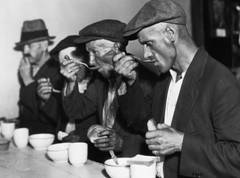
The anger and vitriol directed at OWS protestors by middle class Americans is a misdirected reaction to a quandary they can’t quite comprehend. They know their lives are getting more difficult but aren’t sure why. They are paying more for energy, food, tuition, and real estate taxes, while the price of their houses decline and their wages stagnate. More than a quarter of all homeowners are underwater on their mortgage and many are drowning in credit card and student loan debt. At the same time, government drones tell them the economy is in its second year of recovery and corporate profits are at all-time highs. Government statistics, false storylines, and entitlement programs are designed to confuse the public and obscure the fact we are in the midst of another Depression. Everyone has seen the pictures of the Great Depression breadlines, farmers forced off their land during the dustbowl, and downtrodden Americans in soup kitchens. The economic conditions today are as bad as or worse than the Great Depression. This Depression is hidden from plain view because there are no unemployment lines, bread lines, or soup lines. We are experiencing an electronic Great Depression, as food stamps, unemployment compensation, Social security payments and welfare benefits are electronically delivered to millions of recipients.