Showing posts with label veteran suicides. Show all posts

Friday, December 21, 2012

US lost more troops to suicide than combat in 2012


PressTV


11, the U.S. military lost 165 soldiers to suicide, a record that narrowly beat the 2009 level of 160. This year things have gotten much, much worse, and up to the end of November the suicide deaths are up to 303.

Putting this in perspective, that’s actually quite a bit more than the number of U.S. troops slain in combat so far in 2012. That figure is 212, though the overall U.S. death toll in Afghanistan is 307, including non-combat deaths.

The military has been desperate to get a handle on the rising suicide rate, making several very public efforts, none of which seems to have accomplished much of anything.

The latest on that is a number of Congressmen pushing for a new law allowing the military to ask “unstable” troops whether they own any personal guns, though as with most of the legislative “solutions” to this problem it seems focused more on adding to the stigma of being considered “at risk” than actually encouraging people to seek help. Antiwar
FACTS & FIGURES
The U.S. military has been struggling to deal with the suicide crisis since numbers began rising in 2004. This year, the average is nearly one soldier suicide a day. NPR

Military and medical leaders have been searching for answers to what Defense Secretary Leon Panetta describes as an "epidemic" of suicides ever since the numbers began increasing among soldiers and Marines. USA Today

As many as 12 active-duty soldiers committed suicide in November, pushing the Army above last year’s record number of suicides, military officials said in December. Army Times

The Army has now had 177 suspected suicides among active-duty soldiers this year. Last year’s total of confirmed suicides was 165. Army Times

Earlier this year, a high-ranking army official wrote, “Suicide is the toughest enemy I have faced in my 37 years in the Army.” Secretary of Defense Leon Panetta has described suicide in the army as “one of the most frustrating problems.” Think Progress
AHT/DT

Wednesday, October 10, 2012

Was it worth it? Afghanistan 11 years later


Global Research
Tanya Carlina Hsu

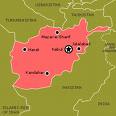
afghanmapOctober 7 marked the eleventh anniversary of the US war in Afghanistan. More than 2,000 American soldiers have now been killed, and as the US presidential candidates debate each other to lead the most dominant power on Earth, perhaps it is time for someone to ask them: Was it worth it?

On September 11th 2001, 2,977 people were killed. Almost 700 people in one firm alone (Cantor-Fitzgerald) died; 343 fire fighters and paramedics were killed, as were 60 police officers. Only 291 bodies were ever found ‘intact’. Over half of the families who lost loved ones that day received not a single piece of remains. Within three months 300 fire-fighters went on leave due to respiratory problems, almost half a million New Yorkers are being treated for post-traumatic stress disorders, and 1,000 first responders have since died from acute illnesses related to clean-up activities.
Wall Street shut down for 6 days, and as a direct result of 9/11 more than 146,100 people lost their jobs. Within the first month New York City alone exceeded $105 billion in economic losses.
Was it worth it?
America then went to war. But not just Iraq and Afghanistan: Pakistan, Yemen and Somalia have also been attacked. So have the citizens of the United States: freedoms, privacy and civil rights once taken for granted are gone, in the name of ‘national security’.
Operation Iraqi Freedom officially lasted for eight years and eight months. By December 2011, 4,486 US and 318 non-US troops had been killed fighting in Iraq, more than 1,800 more than who died on September 11th. However, according to the New York Times, a year after operations ceased US Special Operations units have quietly begun re-entering Iraq at the behest of the Iraqi government.
In Afghanistan, the war that began on October 7th 2002 still marches on. Operation Enduring Freedom is not due to end until 2014, an exact century after the onset of World War One. So far Afghanistan has taken the lives of 3,196 soldiers: 2,130 American, 433 British, and 158 Canadian. Forces killed in Afghanistan also amount to more than all the lives lost on 9/11.
Thus 8,000 troops have been killed for the 2,977 lost on September 11th 2001.
Was it worth it?
It gets worse. Once soldiers return from the theatre of operations the numbers keep climbing. For every single death in Afghanistan or Iraq, twenty-five soldiers commit suicide. During the first six months of 2012 there were 187 Army suicides, 55 Air Force, 32 Marine Corps, 39 Navy and 5 Coast Guard. The cumulative effect of multiple deployments and post-traumatic stress disorders et alia suggest, however, tens of thousands of additional deaths.
Each year, 6,500 veteran suicides are documented at a rate of one every 80 minutes. Only the Army releases figures and it is unclear if this includes active duty personnel or veterans of other wars. Although only 1% of Americans have served in Iraq or Afghanistan, they account for a massive 20% of the total annual rate. The Department of Veterans Affairs claim 18 veteran suicides per day, and for every successful suicide 20 are attempted yet fail. Rates of death were far higher in both World Wars: permanent disabilities now affect veterans today who otherwise would have died on the field. In World War One, an average of 57% of all soldiers mobilised were killed; in World War Two, more than 55 million soldiers and civilians died. In other words, the wounded from the Iraq and Afghanistan wars are a testimony to modern medicine saving lives that in the past would certainly have been lost, but can lead to tragic results nevertheless.
If the lowest suicide rate to assume is one per day by active duty or Iraq/Afghanistan vets, more than 4,000 must be added to the numbers killed above. And if we assume only half of the 6,500 veterans suicides per year are as a result of wars in Iraq and Afghanistan, an additional 36,000 deaths could be included to the totals. Whether suicides account for a further 4,000 or 40,000 deaths, they bring the ratio to between 4:1 to 16:1 deaths in payback for the 2,977 victims of 9/11.
These are just coalition losses of course. The official number of victims in Iraq has been stuck on 100,000 since 2004, not revised upwards since. But, in 2007 the British Opinion Research Businesssurvey calculated that up to 1.5 million Iraqis had been killed in the war. This confirmed an earlier British survey by the Lancet that calculated 655,000 to 1 million Iraqis had died in just three years, from 2003-2006. Although the war continued for a further five years the studies have not been repeated nor revised to account for additional Iraqi casualties, arguably due to intense American criticism.
There are almost no figures for Afghanistan casualties, but Human Rights Watch recorded 1,000 civilian deaths in 2006 and the UN estimates 12,000 deaths since 2007. There are no statistics for the first five years of the war.
Was it worth it?
Let us not omit the secret wars in Pakistan, Yemen and Somalia. Considering the drone programme is covert the numbers are almost certainly low. We do know however, that in Yemen drones have killed up to 1,026 men, women and children (at least 34) since 2002. Somalia is not on most Americans’ radar-screens but it is on the drones’: since 2007, 170 Somalis are dead from these Unmanned Aerial Vehicle strikes. In Pakistan drones have killed a reported 3,341 (at least 176 children) and wounded a minimum of 1,366 people. The ratio of wounded-to-killed indicates how deadly drone are, in part confirming their ‘precision’. They are surgically precise in that they do not wound: they intentionally tear to pieces anyone nearby.
How about the cost of capture, torture and rendition? Housing a single prisoner at Guantánamo Bay in Cuba costs the US taxpayer $800,000 per year. More than 100,000 men were detained in Iraq, many at the notorious Abu Ghraib; thousands more were held at Bagram Airfield or the infamous (CIA funded) ‘Salt Pit’ torture chamber north of Kabul, Afghanistan. Officers forced scores of detainees to physical, psychological and sexual abuse before shipping them off to even worse prisons around the world.
The non-fiscal cost of the consequences of tortures and imprisonment-without-trial cannot be calculated. For every single death or incarceration there is a father, brother, son, nephew, friend or neighbour who will never forget what these wars have wrought. Revenge lives long—generation-to-generation. We already see the first signs of what the wars have bought, exhibited in riots, uprisings, increased anti-American hostilities, destruction of US sovereign life and property, coups, and civil wars.
Was it worth it?
What about the economic cost? In 2003, George W. Bush estimated that the wars would cost $50 to $60 billion. Yet a 2011 study by Brown University’s Watson Institute for International Studiesestimated the final cost of the wars to be $4.4 trillion, not including medical costs for injured veterans or rebuilding aid to Afghanistan. Economist Joseph Stiglitz estimated the war in Iraq alone would cost $2.2 trillion. And all of the costs are funded upon borrowed money, demonstrated by the US debt skyrocketing from $6.4 trillion in March 2003 to over $16 trillion as of October 1st, 2012.
During the Vietnam war, Undersecretary of State George Ball wrote, “[I]n terms of US prestige…we would gain more through enlarging the war.” National Security Advisor McGeorge Bundy opined, “[E]ven if it fails, the policy will be worth it” because of US “prestige”.
If the American public—22.5 million now actually (not officially) unemployed—understood the economic price they would have to pay, would they have agreed to so eagerly support the wars? If the US Congress could have foreseen that a bare-minimum of four times as many soldiers as those who died on 9/11would die, would it have been worth it? If the consequences of anger, revenge, blowback—and stratospheric loss of prestige—were considered, would the US have still gone to war?
Was it worth it?

Sunday, August 19, 2012

The Army Has Issued Anti-Suicide Nasal Spray To Keep Troops From Taking The 'Easy Out'

Business Insider
Geoffrey Ingersoll

The military suicide rate doubled in July. That's one of our troops, almost every day.
To come up with an answer, the Army recently gave 3 million dollars to a university of Indiana research center, and those researchers came back with this: Anti-Suicide Nasal Spray.
Katie Drummond of The Daily reports researchers found a naturally occuring neurochemical called thyrotropin-releasing hormone, or TRH, that has euphoric, calming, anti-depressant effects. News of the nasal spray comes as a relief to some, who had to endure spinal taps for injections of the medicine.
The Pentagon, which tracks military suicides, reported that troops have committed the act at an 18 percent increase over the same period last year. Now, more troops die by their own hands that by the hands of the Taliban in Afghanistan.
The spray is only possible because of advances in "nanotechnology delivery systems." Researchers plan to run a full battery of trials over the next few years, and hopefully put the spray not only in the hands of soldiers, but civilians as well.
The scientists say that applications go beyond anti-depression medications.

Saturday, January 7, 2012

US Marine says Iraq war was one long atrocity

PressTV


Ex-Marine Ross Caputi says American soldiers should take "ownership" of the war in Iraq that was one long atrocity.

It's no wonder, he says, that so many returning soldiers are overwhelmed by guilt at what they have done, with a higher rate of suicides than in any previous American war.

"People do not go home and want to kill themselves because they've been helping Iraqis," says Ross Caputi. "They go home and want to kill themselves because they've committed atrocities."

Ross Caputi now campaigns for justice for the city of Fallujah, which as a Marine he helped to destroy in 2004, when thousands of civilians were killed and 200,000 driven from their homes. stopwar.org.uk

FACTS & FIGURES

According to a "scientific study of violent Iraqi deaths caused by the U.S.-led invasion" conducted by the Just Foreign Policy, nearly 1,500,000 Iraqis have lost their lives to the war. The number is at least 10 times greater than most estimates cited in the U.S. media.

Iraq's anti-corruption board revealed in December 2007 that there were five million Iraqi orphans as reported by official government statistics. Alternet.org

Military suicides have increased since the start of the wars in Iraq and Afghanistan, according to a Center for a New American Security Suicide report. In the fiscal year 2009 alone, 1,868 veterans of these wars have made suicide attempts, according to armytimes.com.

The VA estimates that about 18 veterans commit suicide every day.

In 2010, more than 134,000 people made calls to the National Suicide Prevention Lifeline. Of those callers, 61 percent identified themselves as veterans. News.medill


Tuesday, June 21, 2011

'Each day 18 US war vets commit suicide'

Press TV

 
California-based online columnist, Allen L. Roland, says at least 18 American war veterans commit suicide every day due to psychological symptoms related to wars.

Official reports show that "close to 40 percent" of all vets have some of the symptoms of Post Traumatic Stress Disorder (PTSD), Roland told Press TV's U.S. Desk on Tuesday.

He added that the number of American soldiers suffering from PTSD and Traumatic Brain Injury (TBI), which are the main causes of the suicides, is still increasing.


Help Us Transmit This Story


  Add to Your Blogger Account
  Put it On Facebook
  Tweet this post
  Print it from your printer
  Email and a collection of other outlets
  Try even more services

Wednesday, April 20, 2011

Deconstructing the US Military: America's Global War against Planet Earth

GlobalResearch
By Dana Visalli
While in Kabul in March of this year, I visited the U.S. military base in that city, Camp Eggers . Knowing I would need a pretext to gain entry, I typed up a letter offering to give a presentation on wildlife in Afghanistan , which I had been studying. When approaching the base, one passes through an initial checkpoint, where a Hummer topped with a machine-gun nest stands guard. Then there is a 100-yard walk down a narrow corridor between high concrete blast walls, at which point one arrives at a guarded entry point through the wall. I showed my passport and letter, and was escorted through a second layer of blast walls to a little wooden information booth in this still-peripheral circle of defense. The pimply young lad manning the booth was flustered by my request; he had never seen anything quite like it. He did what all soldiers do when faced with something new; he phoned his superior for orders on how to proceed.

Permission was granted to pass to the next entry level. At hut #2 another friendly young male soldier by the name of Ryan was equally baffled by my written request, and he dialed up his commanding officer for instructions on what to do with me. Then, with Ryan as my escort, I made it into the inner sanctum of the base, where soldiers and military contractors strolled leisurely around the streets of the former Kabul residential area. After being passed around to several more levels of authority, I finally ended up at the office of Morale, Welfare and Recreation. The female officer in charge there was as confused by my presence as everyone else had been, and after reading my proposal asked rather sternly, “How did he get on the base?” She reprimanded Ryan for bringing me to the center of Camp Eggers, then realized that she would have to phone her commanding officer because there was no standardized protocol on how to deal with me. As we retraced our steps, Ryan remarked that he certainly could not be held accountable for letting me on the base because all he had done was follow orders. In fact, the primary concern of everyone I interacted with at Camp Eggers was to follow the directives of their superiors; no one appeared to have the capacity to take responsibility for their actions.


In the mid-1960s, political scientist Hannah Arendt published a book-length study of how some of the great evils of history, such as slavery and the Holocaust, managed to occur. Her book, Eichmann in Jerusalem: A Report on the Banality of Evil, concluded that generally such crimes are not carried out by fanatics or sociopaths, but rather by ordinary people who accepted the premises of their superiors and their state and therefore do what they are told to do, and participate with the view that their actions are normal. The word “banal” is defined as “something that is trite, normal, and commonplace.” The root of the word comes from the Old French word ban, referring to feudal military service, which was compulsory and thus commonly accepted. Thus, military culture is by definition synonymous with banal, which my acquaintances at Camp Eggers demonstrated as they strove to find orders to follow and avoid responsibility for their actions.

Most members of the military establishment receive extensive training in combat techniques, including of course how to kill other human beings. One common drill at boot camp is to have recruits lunge repeatedly at mock human targets with mounted bayonets, shouting “Kill! Kill!” as they stab their imaginary victims. After months of such training, killing itself becomes banal, something normal and commonplace. The military culture of thoughtless submission to authority combined with heavy conditioning to snuff out human life creates a wide path towards the “great evils” that Hannah Arendt addressed.

Examples of what a sane society would call evil acts abound in the annuals of our current wars. For example, in 2010 a group of five American soldiers  murdered a number of Afghan civilians “for sport,” and collected fingers of their victims as trophies. Killing for them had become normal and banal; it was in fact what the soldiers were trained to do.

In March of 2011 two U.S. Army Blackhawk helicopters came upon 10 Afghan children ages 7 to 13 gathering brush to warm their huts and attacked them with heavy machine gun fire. When the parents of the children arrived on the scene, attracted by the gunfire, they could only collect body parts of their children. For the pilots of the helicopters, killing was their job, a normal part of military life.

On March 12, 2006, four U.S. soldiers entered the home of a 14-year old girl in the Iraqi city of Mahmudiya, took her mother, father and sister into a bedroom and shot them, and then gang-raped the girl. Afterwards, they shot her in the head and attempted to burn her body. They then reported the deaths as being the result of an insurgent attack.

On March 25, 2003, Marine Sgt. Eric Schrumpf was participating in the U.S. invasion of Iraq when he spotted an Iraqi soldier in his field of view behind a female Iraqi citizen. He couldn’t get a clear shot with the woman blocking his line of sight, so he shot her to get her out of the line of fire. “I’m sorry, but the chick was in the way,” Schrumpf explained. Later he elaborated, “We had a great day. We killed a lot of people.”

Over the long term, most soldiers committing such murders become victims of their own lack of judgment, unable to live with the profoundly antisocial acts they have committed. Sergeant Schrumpf is himself now debilitated by PTSD, and can scarcely function in civilian society. He has attacked people in movie theaters because he mistakes their cans of Coke for military weapons. "I'll never be the same again," says Schrumpf, who seems somehow mystified by the etiology of his emotional dysfunction.

Similar stories of the fruits of combat duty are limited only by time available to tell them. After serving in the Marines during the 2003 invasion of Iraq , Lance Cpl. Walter Rollo Smith returned home and soon killed his wife, Nicole Marie Speirs, the 22-year-old mother of his twin children.  He drowned her in a bathtub without any evident provocation or reason. In reflecting on his heinous crime, Smith said, “I know for a fact that before I went to Iraq , there’s no way I would have taken somebody else’s life.”

After serving in the Army in Iraq in 2004, Spc. Brandon Bare, 19, of Wilkesboro, N.C, came home and stabbed his wife Nabila Bare, 18, at least 71 times with knives and a meat cleaver. About three dozen of the wounds were on her head and neck. Killing is what he was trained to do.

Mental angst and dysfunction in soldiers returning from combat is commonplace. A recent study indicates that 62% of soldiers returning from the war in Iraq have asked for mental health counseling, with 27% showing dangerous levels of alcohol abuse. Suicide rates among soldiers and vets have increased dramatically in recent years. Over 100,000 Vietnam vets have now killed themselves, far more than died in the Vietnam War. More than 300,000 veterans of the U.S. military are currently homeless, another study reveals.

If war is in fact destroying the youth of America by turning them into trained and traumatized killers, one could at least hope that the wars themselves have some value to American society. 

Objective evidence indicates otherwise. The actual conduct of war bears more resemblance to a circus act than the noble endeavor it is often portrayed to be. To cite one of the many examples of the senselessness of war related in the book Achilles in Vietnam, author and Vietnam vet Jonathan Shay describes how, “During one patrol in the dry season, a U.S. Army squad ran out of water and was not resupplied. They walked for a day and a half in search of water in Vietcong-controlled territory. When men started to collapse from dehydration in the heat, an officer’s plea for emergency resupply was heeded: a helicopter flew over and “bombed” the squad with cases of Tab, seriously injuring one of the men. The major whose helicopter dropped the Tab was recalled to evacuate the casualty. There was no enemy activity. I subsequently read in the division newspaper that the major had put himself in for and had received the Bronze Star for resupplying the troops and evacuating the wounded ‘under fire.’ ” Remember that story the next time you see a soldier’s chest full of medals.

The Vietnam war itself was fought because at the end of World War II, Ho Chi Minh declared Vietnam ’s independence from the colonizing French, reading from the U.S. Declaration of Independence to emphasize his people’s reasonable claim to self-determination. Instead of supporting this universal urge that humanity has for freedom, the U.S. supported the French effort to regain their colony for 10 long years (1945-1954). After the French were defeated, the U.S. fought the Vietnamese for another 22 years (1955-1975). Thus, 32 years of brutal mayhem took place, when all the Vietnamese people were asking for was their independence. The American lives that were ruined—the 58,000 combat deaths, 100,000+ suicides, 300,000 homeless men—were all expended for nothing, as were the 3.4 million Vietnamese who died in that war. To briefly mention another of our recent wars, today the nation of Iraq lies in ruins, the people impoverished, a million dead and 5 million living as refugees, while the entire basis of the U.S. invasion in 2003 is widely acknowledged to have been a complete fabrication.

War itself is not only “a theft from those who hunger and are not fed, those who are cold and are not clothed,” as Dwight Eisenhower noted in a speech in 1953, but war is also destructive to the physical earth, the very source of human life, and indeed of all life. The U.S. has dropped 15 million tons of bombs on the earth’s surface in last 60 years, spread 1 million tons of napalm on fields and forests, and sprayed 20 million gallons of defoliants on some of the most diverse rainforests on the planet. By any measure, the U.S. military is conducting a war against the earth itself. Such an inane effort does not come cheaply. The total cost of all military expenses for 2012 is estimated to be $1.2 trillion dollars, one-third of the total federal budget. It is the U.S. military that is driving the U.S. itself into bankruptcy.

In summary, the U.S. military is destroying the lives of its own young men while at the same time it devastates other human cultures; it threatens the economic survival of the United States while it is fraying the ecological fabric that makes life on earth possible.

Mikhail Gorbachev once noted that the Soviet system was evil and had to be dismantled. The U.S. military is a similarly evil force loosened on the world. As was done to the repugnant Soviet system, the equally repugnant U.S. military should be completely dismantled, with all soldiers and ships and planes and weapons brought home from the vast web of 1000 American military bases spanning the globe. The savings in terms of human lives, human suffering, ecological integrity and American dollars will be immeasurable. We can then begin to rebuild a national defense consisting of a small militia that can guard our borders and “repel invasions,” as called for in the U.S. Constitution, all the while remembering that the best defense is the making of friends.

Dana Visalli is an ecologist, botanist, and market gardener living in Washington state.

Friday, October 1, 2010

Surge in Military Suicides Tops Pentagon's 'Emergency' Issues

U.S. News and World Report

A dramatic surge in troop suicides has become the Pentagon's top "emergency" issue, though the brass doesn't know how to curb the tragedies. Adm. Mike Mullen, the chairman of the Joint Chiefs of Staff, said that while suicides have been on the rise since 2004, the height of the Iraq and Afghanistan wars, they have really jumped recently, forcing he and his top aides to look for a solution.

"The emergency issue for me right now is the suicide issue," he said at a media roundtable breakfast today. Just last week, he added, five Army soldiers took their lives. "It's a very difficult problem. There's not a national solution," he said.

Suicides have always been a problem for the military, but the current war-hardened force is spending more time away from home than ever before and facing mentally stressful situations associated with fighting an urban war and dodging hidden roadside bombs. "I think we're going to see a growth in that before a decline," he said.

What's more, he added, the surge in coming home may encounter troubled families when they arrive back home. "I think we're going to see a significant increase in the challenges that we have in terms of troops and our families because they are going to have some time [together at home] and if things have been pent up or packed in or basically suppressed or sucked up, what ever term you want to use, we're going to see that as well," Mullen said.

Still, he said, his goal is to drop the amount of time the troops spend away from home, returning it to close to a pre-war rate. Over time, he said, that should help lessen the stress troops and military families feel. His goal within a year or two is to "get to a point where we're home twice as long as we are deployed.'

Tuesday, June 8, 2010

No letup in Marine attempted suicides

USA Today

WASHINGTON — Marines are trying to kill themselves at a record pace this year despite a 2009 program aimed at stemming the problem, according to Marine Corps data.

Eighty-nine Marines tried to commit suicide through May, most commonly by overdose or lacerations, according to statistics and the Marine Corps suicide prevention program officer, Navy Cmdr. Aaron Werbel. At that rate, there could be more than 210 attempted suicides this year.

There were a record 164 attempted suicides in 2009.

With 21 confirmed or suspected suicides by Marines this year, the Corps is on track to near last year's record number of 52, Werbel says. The Marine Corps suicide rate in 2009 was 24-per-100,000, the highest in the military, Marine records show. The latest demographically adjusted suicide rate among civilians in 2006 was 20 per 100,000, federal records show.

The Marines introduced a training program for sergeants and corporals last year aimed at suicide education and urging them to become more knowledgeable about the lives of their younger Marines.

"We continue to maintain that this is an issue of leadership and getting our Marines who need help to the care they deserve," says Marine Lt. Gen. Richard Zilmer, deputy commandant of Manpower and Reserve Affairs. "In every case, there is a unique life to understand behind the statistics."

Werbel says there is some hint of progress — the proportion of suicides committed by Marines who are sergeants or lower ranking has declined from a high of 93% to 79% this year.

Recent improvements in tracking suicide attempts may have contributed to more reports, says Werbel, a psychologist. But the Marine Corps has been at the forefront of combat operations in Iraq and Afghanistan for more than seven years and the strain is showing, he says.

"It's been a sustained operational tempo for years … and there's no question but that that causes distress on our Marines, on family members," he says.

Twelve of the 21 confirmed or suspected suicides this year were among Marines who were or had been in combat, statistics show.

Suicides are rising across the military and researchers are struggling to understand why.

The increase may be the result of servicemembers acquiring a "fearlessness" about harming themselves and some of those suffering mental health issues where they feel alienated or useless, says Thomas Joiner, a psychology professor at Florida State University who is working with the Army on ways to identify at-risk soldiers through screening.

Much attention has been focused on the active-duty Army, which is more than twice the size of the Marine Corps. It suffered a record 163 soldier suicides in 2009, Army records show.

But the suicide rate in the Marine Corps eclipsed the Army's 22-per-100,000 rate last year. There are fewer Army suicides this year than at this time last year, Army statistics show.

The Air Force rate of 15.5 suicides per 100,000 is its highest since 1995, Air Force statistics show. The suicide rate among sailors, at 13.3 per 100,000 last year, has been increasing since 2005, Navy record show.

Werbel says there are plans to place civilian suicide prevention coordinators at each Marine installation and to provide a distress hotline. "We keep plugging away. We keep fighting to win this (struggle against suicide) and to figure out how to better arm our Marines with tools, resources they need to help each other," Werbel says.

Monday, May 10, 2010

6000 Veterans Committed Suicide Last Year

Friday, April 23, 2010

18 veterans kill themselves every day: report

Raw Story

By Sahil Kapur

Friday, April 23rd, 2010 -- 10:41 am

The suicide rate among war veterans is extraordinary, new data reveals.

Thirty try to commit suicide each day, on average, reports the Army Times. Eighteen succeed, roughly five of whom receive medical care from Veterans Affairs, rated one of the best health programs in the country.

"Of the more than 30,000 suicides in this country each year, fully 20 percent of them are acts by veterans,'' said VA Secretary Eric Shinseki at a VA-sponsored suicide prevention conference in January, Inter Press Service reported.

The Times noted that "In general, VA officials said, women attempt suicide more often, but men are more likely to succeed in the attempt."

The report cites access to health care and age -- younger veterans are less likely to try -- as two major factors in the suicide rate, and notes that the VA is seeking to strengthen its suicide prevention programs.


According to the National Coalition for Homeless Veterans, "Roughly 56 percent of all homeless veterans are African American or Hispanic, despite only accounting for 12.8 percent and 15.4 percent of the U.S. population respectively."

The struggle among veterans to return to everyday life has been documented over the years.

The Associated Press reported in November 2007 that one in four homeless people across the nation is likely to be a veteran, even though veterans constitute a mere 11 percent of overall adults in the United States.

"And homelessness is not just a problem among middle-age and elderly veterans," AP added. "Younger veterans from Iraq and Afghanistan are trickling into shelters and soup kitchens seeking services, treatment or help with finding a job."

Homelessness among women who served in Afghanistan and Iraq is on the rise.

The Boston Globe reported last year that "number of female service members who have become homeless after leaving the military has jumped dramatically in recent years."

One in ten homeless veterans under 45 years of age is a woman, statistics showed in July of 2009.

"Some of the first homeless vets that walked into our office were single moms," Paul Rieckhoff, Iraq and Afghanistan Veterans of America's executive director and founder, told the Globe.

"When people think of homeless vets, they don’t think of a Hispanic mother and her kids. The new generation of veterans is made up of far more women.’"