Showing posts with label Martin Dempsey. Show all posts

Wednesday, September 19, 2012

“The Innocence of Muslims”: Blasphemy as a Political Tactic

Global Research
Thierry Mason


The circulation on the Internet of the trailer for a film, The Innocence of Muslims, sparked demonstrations across the world and resulted in the killing in Benghazi of the U.S. Ambassador to Libya and members of his entourage.

* * *

At first glance, these events can be located in the long line leading from Salman Rushdie’s Satanic Verses to the burnings of the Koran by Pastor Terry Jones. Nevertheless, this new attack differs from other incidents in that the film was not directed at a Western audience but instead was uniquely conceived as an instrument of provocation directed at Muslims.

In political terms, the affair can be analyzed from two angles: from the tactical perspective as an anti-U.S. manipulation; or from a strategic one, as an anti-Muslim psychological attack.

The film was produced by a Zionist group composed of Jews of double Israeli-American nationality and by an Egyptian Copt. It was completed several months ago but was released at a calculated moment to provoke riots targeting the United States.

Israeli agents were deployed in several large cities with a mission to channel the rage of the crowd against American or Coptic targets (though not Israeli ones). Not surprisingly, their maximum effect was attained in Benghazi, the capital of Libya’s Cyrenaica region.

The population of Benghazi is known to harbor particularly reactionary and racist groups. It is useful to recall that at the time the cartoons of Mohammed appeared in September, 2005, Salafists attacked the Danish Consulate. In keeping with the Vienna Convention on diplomacy, the Libyan government of Muammar al-Gaddafi deployed troops to protect the diplomatic service then under attack. The repression of the riot resulted in numerous deaths. Subsequently, the West, seeking to overthrow the Libyan regime, financed Salafist publications which accused Gaddafi of protecting the Danish Consulate because he had allegedly been behind the cartoon operation.

On February 15, 2011, Salafists organized in Benghazi a demonstration commemorating the massacre during which shooting erupted, an incident that marked the beginning of the Benghazi insurrection that opened the way to the NATO intervention. The Libyan police arrested three members of the Italian Special Forces who confessed to having fired from the rooftops on both demonstrators and the police to sew chaos and confusion. Held prisoner throughout the war that followed, they were released when NATO seized the capital and smuggled them out of the country to Malta in a small fishing boat on which I was also a passenger.

This time, the manipulation of the Benghazi crowd by Israeli agents had as its goal the assassination of the U.S. Ambassador, an act of war not seen since the Israeli bombardment of the USS Liberty by the Israeli Air Force and Navy in 1967. This constitutes the first assassination of an ambassador in the line of duty since 1979. The act is all the more grievous considering that in a country where the current central government is a purely legal fiction, the U.S. Ambassador was not merely a diplomat but was functioning as Governor, as the de facto head of state.

It should be emphasized that in the past few weeks, the highest-ranking U.S. military officers have entered into open conflict with the Israeli government. They have issued declarations signifying their intention to halt the cycle of wars begun after September 11 (Afghanistan, Iraq, Libya and Syria) and which, in light of the informal agreements of 2001, will expand further (Sudan, Somalia and Iran). The first warning shot occurred in Afghanistan, in August 2012, when two missiles were fired at the parked plane of General Martin Dempsey, head of the U.S. Joint Chiefs of Staff. This second warning turned out to be even more brutal.

If, on the other hand, we examine this affair from the viewpoint of social psychology, the release of the film and its aftermath appear to be a frontal attack on the beliefs of Muslims. In this regard, it is similar in nature to the Pussy Riot episode trampling on the freedom of religious practice inside the Orthodox Cathedral of Christ the Saviour in Moscow and the mulitple performances of conceptual pornography the group engaged in afterwards. These are operations geared to violate societies that resist the project of global domination.

In democratic and multicultural societies, the sacred is seen as belonging to and being expressed within the private sphere. But a new collective space of the sacred has been in the process of elaboration. Western European states have passed “historical memory” laws which have transformed a historical event—the Nazi destruction of European Jews—into a religious occurrence: the “Shoa” in Jewish terminology, or the “Holocaust” as expressed in Christian evangelical parlance. Nazi crimes are thereby elevated to the level of a unique event at the expense of the victims of other massacres, including other victims of the Nazis. Questioning the dogma, i.e. this religious interpretation of historical facts, subjects one to criminal penalties, just as blasphemy was punished in the past. Similarly, in 2001, the U.S., the European Union member states and a number of their allies imposed by decree that entire national populations must observe a minute of silence in memory of the victims of the September 11 attacks. This ruling was underpinned by an ideological interpretation of the causes of the massacre. In both cases, having been killed because one was Jewish or because one was American confers a particular status on these victims before whom the rest of humanity must genuflect.

During the Olympic Games in London, both the Israeli and the American delegations attempted to enlarge their sacred space still further by imposing a minute of silence during the opening ceremony of the most-watched televised event in the world, this time on behalf of the hostages seized during the Munich Games of 1972. In the end, the proposal was rejected, with the Olympic Committee holding instead a separate ceremony. This is just a further indication of the effort to create a collective liturgy legitimating the global empire.

The Innocence of Muslims serves both as a device to bring Washington back into line at a moment when it may be stepping back from the Zionist agenda and as a means of pursuing it further by attacking the faith of still others who resist it.

Translated from French at Voltairenet.org by Michele Stoddard


Friday, August 31, 2012

Dempsey Backs Away from Obama’s Threat to Intervene in Syria

Dempsey warned against the viability of creating safe zones and helping bring rebels with terrorist ties to power in Syria

AntiWar
John Glaser

The top general of America’s military on Thursday backed away from President Obama’s threats to intervene militarily in Syria against the Assad regime, warning that the worst-case scenario would be some kind of failed state in the embattled country.
Chairman of the Joint Chief’s of Staff General Martin Dempsey stressed while on a trip to London that direct military action in Syria, even simply no-fly zones, might be beyond the US and NATO’s capabilities and counter to their interests.
Last week President Obama warned that his “calculation” to refrain from direct military intervention in Syria “could change” if Syria’s chemical or biological weapons begin “moving around or being utilized,” describing the WMD issue as a “red line” that would prompt direct military action, like setting up safe zones, no-fly zones, or worse.
But Dempsey explained it wouldn’t be that easy. He said frequent comparison of the Syrian situation with that in Libya, where a “no-fly zone” was imposed following a United Nations resolution, is at best a source of “amusement.”
General Dempsey warned that possible safe zones for refugees were not being considered for inside Syria, cautioning that imposing them could open the path to a breakout of war.
“If you chose to establish [a safe zone/no-fly zone] you would assume the responsibility for protecting it. If you are tasked to protect it you have to look at those who might seek to attack it or to influence it and that could take you, depending on weapons systems, it could take you to a limited no-fly zone it could take you to the point of having to interdict air and ballistic missile systems,” he said.
As far as forcibly ousting the Assad regime, Dempsey said, such a move would be far too destabilizing. He said a failed state in Syria would be the worst-case scenario and warned against allowing armed extreme jihadists and rebels with ties to al-Qaeda to increase their influence and expand control in a post-Assad Syria.

Monday, August 27, 2012

Obama’s Geopolitical China ‘Pivot’: The Pentagon Targets China

Global Research
F. William Engdhal

Since the collapse of the Soviet Union and the nominal end of the Cold War some twenty years back, rather than reducing the size of its mammoth defense spending, the US Congress and all US Presidents have enormously expanded spending for new weapons systems, increased permanent military bases around the world and expansion of NATO not only to former Warsaw Pact countries on Russia’s immediate periphery; it also has expanded NATO and US military presence deep into Asia on the perimeters of China through its conduct of the Afghan war and related campaigns.

Part I The Pentagon Targets China 

On the basis of simple dollar outlays for military spending, the US Pentagon combined budget, leaving aside the huge budgets for such national security and defense-related agencies of US Government as the Department of Energy and US Treasury and other agencies, the US Department of Defense spent some $739 billion in 2011 on its military requirements. Were all other spending that is tied to US defense and national security included, the London-based International Institute for Strategic Studies estimates an annual military spending of over $1 trillion by the United States. That is an amount greater than the total defense-related spending of the next 42 nations combined, and more than the Gross Domestic Product of most nations.

China officially spent barely 10% of the US outlay on its defense, some $90 billions, or, if certain defense-related arms import and other costs are included, perhaps $111 billion a year. Even if the Chinese authorities do not publish complete data on such sensitive areas, it is clear China spends a mere fraction of the USA and is starting from a military-technology base far behind the USA.

China today, because of its dynamic economic growth and its determination to pursue sovereign Chinese national interests, merely because China exists, is becoming the Pentagon new “enemy image,” now replacing the earlier “enemy image” of Islam used after September 2001 by the Bush-Cheney Administration to justify the Pentagon’s global power pursuit, or that of Soviet Communism during the Cold War. The new US military posture against China has nothing to do with any aggressive threat from the side of China. The Pentagon has decided to escalate its aggressive military posture to China merely because China has become a strong vibrant independent pole in world economics and geopolitics. Only vassal states need apply to Washington’s globalized world.

Obama Doctrine: China is the new ‘enemy image’

After almost two decades of neglect of its interests in East Asia, in 2011, the Obama Administration announced that the US would make “a strategic pivot” in its foreign policy to focus its military and political attention on the Asia-Pacific, particularly Southeast Asia, that is, China. The term “strategic pivot” is a page out of the classic textbook from the father of British geopolitics, Sir Halford Mackinder, who spoke at various times of Russia and later China as “pivot powers” whose geographical and geopolitical position posed unique challenges toAnglo-Saxon and after 1945, to American hegemony.
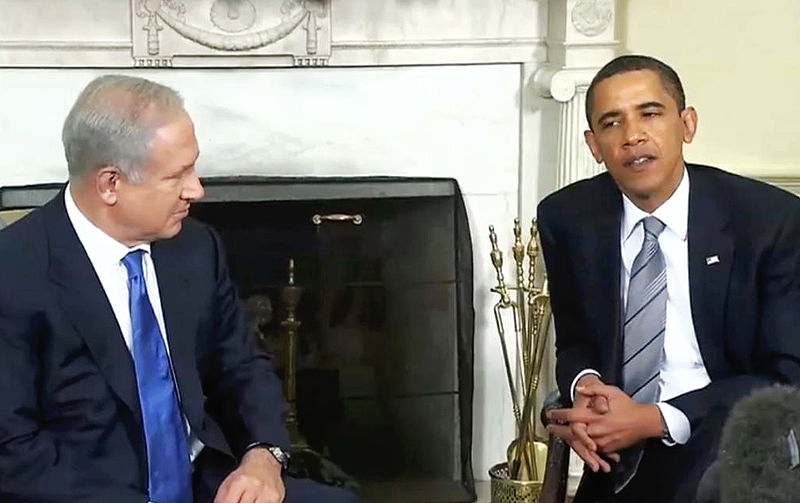
During the final months of 2011 the Obama Administration clearly defined a new public military threat doctrine for US military readiness in the wake of the US military failures in Iraq and Afghanistan. During a Presidential trip to the Far East, while in Australia, the US President unveiled what is being termed the Obama Doctrine.[1]

Obama told the Australians then:

With most of the world’s nuclear power and some half of humanity, Asia will largely define whether the century ahead will be marked by conflict or cooperation...As President, I have, therefore, made a deliberate and strategic decision -- as a Pacific nation, the United States will play a larger and long-term role in shaping this region and its future...I have directed my national security team to make our presence and mission in the Asia Pacific a top priority...As we plan and budget for the future, we will allocate the resources necessary to maintain our strong military presence in this region. We will preserve our unique ability to project power and deter threats to peace...Our enduring interests in the region demand our enduring presence in the region.

The United States is a Pacific power, and we are here to stay. Indeed, we are already modernizing America’s defense posture across the Asia Pacific. It will be more broadly distributed -- maintaining our strong presence in Japan and the Korean Peninsula, while enhancing our presence in Southeast Asia. Our posture will be more flexible -- with new capabilities to ensure that our forces can operate freely .. I believe we can address shared challenges, such as proliferation and maritime security, including cooperation in the South China Sea.[2]

The centerpiece of Obama's visit was the announcement that at least 2,500 elite US Marines will be stationed in Darwin in Australia’s Northern Territory. In addition, in a series of significant parallel agreements, discussions with Washington were underway to fly long-range American surveillance drones from the remote Cocos Islands — an Australian territory in the Indian Ocean. Also the US will gain greater use of Australian Air Force bases for American aircraft and increased ship and submarine visits to the Indian Ocean through a naval base outside Perth, on the country’s west coast.

The Pentagon’s target is China.

To make the point clear to European members of NATO, in remarks to fellow NATO members in Washington in July 2012, Phillip Hammond, the UK Secretary of State for Defense declared explicitly that the new US defense shift to the Asia-Pacific region was aimed squarely at China. Hammond said that, "the rising strategic importance of the Asia-Pacific region requires all countries, but particularly the United States, to reflect in their strategic posture the emergence of China as a global power. Far from being concerned about the tilt to Asia-Pacific, the European NATO powers should welcome the fact that the US is willing to engage in this new strategic challenge on behalf of the alliance." [3]

As with many of its operations, the Pentagon deployment is far deeper than the relatively small number of 2,500 new US soldiers might suggest.

In August 2011 the Pentagon presented its annual report on China’s military. It stated that China had closed key technological gaps. Deputy Assistant Secretary of Defence for East Asia, Michael Schiffer, said that the pace and scope of China's military investments had "allowed China to pursue capabilities that we believe are potentially destabilizing to regional military balances, increase the risk of misunderstanding and miscalculation and may contribute to regional tensions and anxieties." [4] He cited Chinese refurbishing of a Soviet-era aircraft carrier and China’s development of its J20 Stealth Fighter as indications of the new capability requiring a more active US military response. Schiffer also cited China's space and cyber operations, saying it was "developing a multi-dimensional program to improve its capabilities to limit or prevent the use of space-based assets by adversaries during times of crisis or conflict." [5]

Part II: Pentagon’s ‘Air-Sea Battle’

The Pentagon strategy to defeat China in a coming war, details of which have filtered into the US press, is called “Air-Sea Battle.” This calls for an aggressive coordinated US attack. US stealth bombers and submarines would knock out China's long-range surveillance radar and precision missile systems deep inside the country. This initial "blinding campaign" would be followed by a larger air and naval assault on China itself.[6] Crucial to the advanced pentagon strategy, deployment of which has already quietly begun, is US military navy and air presence in Japan, Taiwan, Philippines, Vietnam and across the South China Sea and Indian Ocean. Australian troop and naval deployment is aimed at accessing the strategic Chinese South China Sea as well as the Indian Ocean. The stated motive is to “protect freedom of navigation” in the Malacca Straits and the South China Sea. In reality it is to be positioned to cut China’s strategic oil routes in event of full conflict.

Air-Sea Battle's goal is to help US forces withstand an initial Chinese assault and counterattack to destroy sophisticated Chinese radar and missile systems built to keep US ships away from China's coastline.[7]

US ‘Air-Sea Battle’ against China

In addition to the stationing of the US Marines in the north of Australia, Washington plans to fly long-range American surveillance drones from the remote Cocos Islands — an Australian territory in the strategically vital Indian Ocean. Also it will have use of Australian Air Force bases for American military aircraft and increased ship and submarine visits to the Indian Ocean through a naval base outside Perth, on Australia’s west coast.[8]

The architect of the Pentagon anti-China strategy of Air-Sea battle is Andrew Marshall, the man who has shaped Pentagon advanced warfare strategy for more than 40 years and among whose pupils were Dick Cheney and Donald Rumsfeld. [9] Since the 1980s Marshall has been a promoter of an idea first posited in 1982 by Marshal Nikolai Ogarkov, then chief of the Soviet general staff, called RMA, or 'Revolution in Military Affairs.’ Marshall, today at the ripe age of 91, still holds his desk and evidently very much influence inside the Pentagon.

The best definition of RMA was the one provided by Marshall himself: “A Revolution in Military Affairs (RMA) is a major change in the nature of warfare brought about by the innovative application of new technologies which, combined with dramatic changes in military doctrine and operational and organizational concepts, fundamentally alters the character and conduct of military operations.” [10]

It was also Andrew Marshall who convinced US Defense Secretary Donald Rumsfeld and his successor Robert Gates to deploy the Ballistic Missile “defense” Shield in Poland, the Czech Republic, Turkey and Japan as a strategy to minimize any potential nuclear threat from Russia and, in the case of Japan’s BMD, any potential nuclear threat from China.

PART III: ‘String of Pearls’ Strategy of Pentagon

In January 2005, Andrew Marshall issued a classified internal report to Defense Secretary Donald Rumsfeld titled “Energy Futures in Asia.” The Marshall report, which was leaked in full to a Washington newspaper, invented the term “string of pearls” strategy to describe what it called the growing Chinese military threat to “US strategic interests” in the Asian space.[11]

The internal Pentagon report claimed that “China is building strategic relationships along the sea lanes from the Middle East to the South China Sea in ways that suggest defensive and offensive positioning to protect China’s energy interests, but also to serve broad security objectives.”

In the Pentagon Andrew Marshall report, the term China’s “String of Pearls” Strategy was used for the first time. It is a Pentagon term and not a Chinese term.

The report stated that China was adopting a “string of pearls” strategy of bases and diplomatic ties stretching from the Middle East to southern China that includes a new naval base under construction at the Pakistani port of Gwadar. It claimed that “Beijing already has set up electronic eavesdropping posts at Gwadar in the country’s southwest corner, the part nearest the Persian Gulf. The post is monitoring ship traffic through the Strait of Hormuz and the Arabian Sea.” [12]

The Marshall internal report went on to warn of other “pearls” in the sea-lane strategy of China:

• Bangladesh: China is strengthening its ties to the government and building a container port facility at Chittagong. The Chinese are “seeking much more extensive naval and commercial access” in Bangladesh.

• Burma: China has developed close ties to the military regime in Rangoon and turned a nation wary of China into a “satellite” of Beijing close to the Strait of Malacca, through which 80 percent of China’s imported oil passes. China is building naval bases in Burma and has electronic intelligence gathering facilities on islands in the Bay of Bengal and near the Strait of Malacca. Beijing also supplied Burma with “billions of dollars in military assistance to support a de facto military alliance,” the report said.

• Cambodia: China signed a military agreement in November 2003 to provide training and equipment. Cambodia is helping Beijing build a railway line from southern China to the sea.

• South China Sea: Chinese activities in the region are less about territorial claims than “protecting or denying the transit of tankers through the South China Sea,” the report said. China also is building up its military forces in the region to be able to “project air and sea power” from the mainland and Hainan Island. China recently upgraded a military airstrip on Woody Island and increased its presence through oil drilling platforms and ocean survey ships.

• Thailand: China is considering funding construction of a $20 billion canal across the Kra Isthmus that would allow ships to bypass the Strait of Malacca. The canal project would give China port facilities, warehouses and other infrastructure in Thailand aimed at enhancing Chinese influence in the region, the report said... The U.S. military’s Southern Command produced a similar classified report in the late 1990s that warned that China was seeking to use commercial port facilities around the world to control strategic “chokepoints.” [13]

Breaking the String of Pearls

Significant Pentagon and US actions since that 2005 report have been aimed to counter China’s attempts to defend its energy security via that “String of Pearls.” The US interventions since 2007 into Burma/Myanmar have had two phases.

The first was the so-called Saffron Revolution, a US State Department and CIA-backed destabilization in 2007 aimed at putting the international spotlight on the Myanmar military dictatorship’s human rights practices. The aim was to further isolate the strategically located country internationally from all economic relations, aside from China. The background to the US actions was China’s construction of oil and gas pipelines from Kunming in China’s southwest Yunnan Province, across the old Burma Road across Myanmar to the Bay of Bengal across from India and Bangladesh in the northern Indian Ocean.

Tuesday, August 21, 2012

Israel's Missing Option to Defuse "the Iran Threat"

Global Research
Nicola Nasser

To keep “all options on the table” in the U.S. – Israel plans to change the incumbent Syrian and Iranian regimes and neutralize what both Te;l Aviv and Washington perceive as an imminent “threat” is a formula missing the only feasible option to defuse their perceived threat peacefully, which is obviously much cheaper in money and human souls.

On August 19, Israeli former head of the Operations Directorate of the Israeli military, Maj. Gen. (res.) Uri Saguy, wrote in Haaretz that late Israeli Prime Minister Yitzhak “Rabin strove to achieve agreements with our neighbors before the Iranians got a bomb. If we had peace accords today with the Arab countries and with the Palestinians, what exactly would the Iranians' conflict with us be about?”

Giving priority to making peace with Syria, Lebanon and the Palestinian people on the land – for – peace basis, which is the essence of the Arab Peace Initiative proposed by the 22 – member states of the Arab League in 2002, would disarm Iran of its Arab, Palestinian credentials and create a new regional environment that would in turn render any Arab alliance with Iran unnecessary and would uncover Iranian regional expansion as an endeavor sought per se by Tehran.

Instead, Israel is running away from peace making to warmongering, risking embroilment of the United States in a war on Iran that Washington does not want, at least for now.

Four-star chairman of the US Joint Chiefs of Staff Martin Dempsey said on August 19 that he has been conferring with his Israeli counterpart Benny Gantz on a regular “bi-weekly” basis and “we've admitted to each other that our clocks are turning at different rates.” Israel's envoy to Washington, Michael Oren, acknowledged in a CNN interview the following day that Israel 's clock was ticking faster than Washington 's.

Iran’s Supreme Leader Ayatollah Ali “Khamenei has not [“probably”] given orders to start building a [nuclear] weapon,” according to Israeli defense minister Ehud Barak in a CNN interview on April 20; His Iranian counterpart Ahmad Vahidi this week dismissed Israeli warmongering as “psychological war;” General Martin Dempsey cautioned against an Israeli strike saying it would not destroy Iran's nuclear program; President Shimon Peres last week joined senior security, military and political experts to warn against a unilateral Israeli strike not coordinated with the U.S.

In the RAND Review for spring this year, Ambassador James Dobbins, who directs RAND’s international security and defense policy center, and three expert analysts argued that “an Israeli or American attack on Iranian nuclear facilities would make it more, not less, likely that the Iranian regime would decide to produce and deploy nuclear weapons. Such an attack would also make it more, not less, difficult to contain Iranian influence.”

Nonetheless, Benjamin Netanyahu’s government has been beating the drums of war, linking the Iranian “threat” to a second holocaust (a comparison dismissed by Nobel Laureate and Holocaust survivor Elie Wiesel). His newly appointed home front defense minister, Avi Dichter, says, “ Israel ’s existence is threatened.” Israel ’s top-tier missile defense system was announced upgraded and missile alert system tested. In a nationwide experiment to continue through Thursday, text messages warning of incoming missiles are being sent to cellphone users. Gas mask centers have already distributed more than four million masks.

Israeli warmongering is creating, in Saguy’s words, an “orchestrated and purposely timed hysteria” in Israel as if “someone is lighting a fire, then yelling that it has to put out.”

Financial markets are shivering, foreign investors are on guard, Israeli new shekel is growing increasingly weaker against the dollar and Pnina Grinbaum, a 55-year-old government clerk in Jerusalem , was quoted by the Associated Press on August 16 as saying: “I’m very afraid. I want peace, not war.”

The international stand – off on Iran ’s nuclear program as well as on the Syrian crisis is very tightly linked to the impasse, which saw the Arab and Palestinian – Israeli peace process reach a dead end.

The Syrian crisis in particular is more closely tied to the impasse in the Arab – Israeli conflict. De-linked from this conflict, it would boil down to an internal crisis that could be easily solved by Syrians themselves.

Regional and international involvement in the Syrian crisis has nothing to do with the internal crisis per se, but has exploited the internal crisis because it has a lot to do with the U.S. – Israel plans to isolate and contain what both countries perceive as an Iranian regional threat to their interests.

To this end, Israel and U.S. are now doing all what they can to break the alliance between Iran and Syria and the Syrian bridge linking Iran to Lebanese and Palestinian movements resisting Israeli military occupation, thus cutting off Iran from the Mediterranean, as well as depriving these movements from their Syrian support, by coordinating a ‘regime change” in Damascus.

For four years since Benyamin Netanyahu came to power, Israel risked a confrontation with the U.S. administration of President Barak Obama over his order of priorities in the Middle East, which gave precedence to reaching a negotiated political settlement for the Palestinian – Israeli conflict as a precondition to building up a U.S. , Arab and Israeli front against Iran .

Netanyahu advocated a reversed order of priorities and has succeeded in pushing the Palestinian – Israeli conflict down from the top of the U.S. regional agenda in favor of solving the U.S. – Israeli Iranian debacle first.

This rearrangement of Israel – U.S. priorities has marginalized the Arab – Israeli “peace process” to the extent that both countries feel relaxed enough now to feel free from any serious commitment to resume it.

However, developments prove this rearrangement of priorities counterproductive and playing in Iranian hands, making the regional Iranian alliances stronger, perpetuating the Syrian crisis, around which a new multi-polar world is emerging, and sidelining the Palestinian peace partners, leaving them with no other option but to take their deadlocked peace process to the United Nations, to bring back on track the Palestinian – Israeli conflict to the top of the international agenda in the Middle East, thus creating a fait accompli that will make impossible the Arab – Israeli – U.S. front against Iran that Washington has been trying to build up over the past few years.

Cornering the Palestinians longer in their United Nations option, similarly changing nothing on the ground to end the Israeli military occupation, would in no time see them loosing faith in peace making to be pushed involuntarily to realign regionally to the other side, which would exacerbate the Iran “threat” rather than containing it.

Nicola Nasser is a veteran Arab journalist based in Bir Zeit, West Bank of the Israeli-occupied Palestinian territories. He can be contacted at nassernicola@ymail.com.

Friday, March 16, 2012

US Navy in military build-up to battle Strait of Hormuz 'blockade'

Russia Today


The US Navy has confirmed it is doubling the number of minesweepers in the Persian Gulf in an apparent move to prepare for a possible standoff with Iran over the crucial oil export route.

An additional four minesweeper and four minesweeping helicopters will join the four ships already patrolling the Persian Gulf.

The overall number of US minesweepers in the region will total eight, America’s head of naval operations Admiral Jonathan Greenert reported.

While saying sanctions and political measures are preferable to respond to Iran’s controversial nuclear program, looks like the US is getting ready for plan B.

The US has been working of an array of military measures to counteract Iran, with President Obama saying “no options are off the table.”

The Pentagon has recently asked for an additional $100 million dollars to beef up its military presence in the Persian Gulf.

About one fifth of the world’s oil passes through The Strait of Hormuz.

Earlier Tehran promised to block the primary route of oil exports from the region in retaliation to new US and EU-backed sanctions against the Islamic Republic.

In January, General Martin Dempsey, the Chairman of the US Joint Chiefs of Staff, confirmed Iran indeed has the ability to block the Strait of Hormuz “for a period of time,” and the US must get ready to reopen it in case of a blockade.


Sunday, January 1, 2012

Urging Obama to Stop Rush to Iran War

Consortium News

Exclusive: A torrent of war propaganda against Iran is flooding the American political scene as U.S. neocons and Israeli hardliners see an opening for another war in the Middle East, a momentum that ex-CIA analysts Ray McGovern and Elizabeth Murray urge President Obama to stop.

By Ray McGovern and Elizabeth Murray

President Obama needs to put an abrupt halt to the game of Persian Roulette about to spin out of control in the Persian Gulf. If we were still on active duty at the CIA, this is what we would tell him:
This informal memorandum addresses the escalating game of chicken playing out in the waters off Iran and the more general issue of what can be done to put the exaggerated threat from Iran in some kind of perspective.

In keeping with the informality of this memo and our ethos of speaking truth to power, we may at times be rather blunt. If we bring you up short, consider it a measure of the seriousness with which we view the unfolding of yet another tragic mistake.

The stakes are quite high, and as former intelligence analysts with no axes to grind, we want to make sure you understand how fragile and volatile the situation in the Gulf has become.

We know you are briefed regularly on the play by play, and we will not attempt to replicate that. Your repeated use of the bromide that “everything is on the table,” however, gives us pause and makes us wonder whether you and your advisers fully recognize the implications, if hostilities with Iran spin out of control.

You have the power to stop the madness, and we give you some recommendations on how to lessen the likelihood of a war that would be to the advantage of no one but the arms merchants.

If your advisers have persuaded you that hostilities with Iran would bring benefit to Israel, they are badly mistaken. In our view, war with Iran is just as likely in the longer term to bring the destruction of Israel, as well as vast areas of Iran — not even to mention the disastrous consequences for the world economy, of which you must be aware.

Wednesday, December 21, 2011

Soldiers just back from Iraq get new orders: Afghanistan

CNN
Chelsea J. Carter

Soldiers who just returned from Iraq are among several thousand being ordered to Afghanistan in six months as part of a mission designed to beef up Afghan forces ahead of a planned 2014 U.S. military withdrawal, officials said.


News of the pending Afghanistan deployments came as families at bases across the country were celebrating the return in recent days of troops who turned off the lights at a number of U.S. bases ahead of an end-of-the-year deadline to leave Iraq.

U.S. general brings Baghdad standard home

"We are glad that we have brought all soldiers back home in time for Christmas to spend with loved ones. We do have to put information out about an upcoming mission, though," the 4th Brigade Combat Team, 1st Armored Division, said Tuesday on its Facebook Page.

In the posting, the brigade said it was one of four selected to "support a Security Force Assistance Mission to Afghanistan in early summer."


"We just received initial planning orders so lots of details are unknown," it said. "...The mission is part of the transition from combat operations to advisory mission as we did in Iraq and is a sign of progress."

Analysts: Questions remain as U.S. troops leave Iraq

Maj. Carla Thomas, a brigade spokeswoman, confirmed the validity of the Facebook announcement.
The new mission is part of an overall U.S. military exit strategy from Afghanistan that moves troops from a combat role to advise-and-assist positions that commanders and analysts say will significantly scale back operations ahead of President Barack Obama's self-imposed deadline to leave the country.
Earlier this year, the United States outlined its plan to withdraw its troops, beginning by pulling 33,000 "surge" troops deployed to help quell the violence by the end of 2012. The remaining 68,000 troops would be withdrawn by the end of 2014.

News of the deployments comes as the Obama administration pushes to accelerate the withdrawal of troops from Afghanistan, a plan that many military commanders have said is unreasonable in a country still trying to gain its security footing.