Consortium News
Ray McGovern
Exclusive: The new conventional wisdom, in the wake of angry protests roiling the Middle East, is that Muslims are either way too sensitive or irrational. How else to explain the fury over an offensive anti-Islam video? But the video was just the spark that ignited a long-smoldering fire, says ex-CIA analyst Ray McGovern.
By Ray McGovern
“Why Is the Arab world so easily offended?” asks the headline atop an article by Fouad Ajami, which theWashington Post published online last Friday to give perspective to the recent anti-American violence in Muslim capitals.
While the Post described Ajami simply as a “senior fellow” at Stanford’s conservative Hoover Institution, Wikipedia gives a more instructive perspective on his checkered career and dubious credibility.
The most telling example of this came in Cheney’s VFW address on August 26, 2002, in which the Vice President laid down the terms of reference for the planned attack on Iraq. Attempting to assuage concerns about the upcoming invasion, Cheney cited Ajami’s analysis: “As for the reaction of the Arab ‘street,’ the Middle East expert Professor Fouad Ajami predicts that after liberation, the streets in Basra and Baghdad are ‘sure to erupt in joy in the same way the throngs in Kabul greeted the Americans.’”
In his writings, Ajami did warn, in a condescending way, that one could expect some “road rage … of a thwarted Arab world – the congenital condition of a culture yet to take full responsibility for its self-inflicted wounds.” He then added:
“There is no need to pay excessive deference to the political pieties and givens of the region. Indeed, this is one of those settings where a reforming foreign power’s simpler guidelines offer a better way than the region’s age-old prohibitions and defects.”
No One Better?
Ignoring the albatross of tarnished credentials hanging around Ajami’s neck, the Post apparently saw him as just the right academician to put perspective on the violence of last week in Middle East capitals. As for his record of credibility: Well, who takes the trouble to go to Wikipedia for information on pundits?
Nor were the Post’s editors going to take any chances that its newspaper readers might miss the benefit of Ajami’s wisdom. So the Post gave pride of place to the same article in Sunday’s Outlook section, as well. What the Post and other mainstream media want us to believe comes through clearly in the title given to the article’s jump portion, which dominates page 5: “Why a YouTube trailer ignited Muslim rage.”
Setting off the article were large, scary photos: on page one, a photo of men brandishing steel pipes to hack into the windows of the U.S. embassy in Yemen; the page-5 photo showed a masked protester, as he “ran from a burning vehicle near the U.S. embassy in Cairo.”
So – to recapitulate – the Post’s favored editorial narrative of the Mideast turmoil is that hypersensitive, anti-American Muslims are doing irrational stuff like killing U.S. diplomats and torching our installations. This violence was the result of Arabs all too ready to take offense at a video trailer disrespectful of the Prophet.
Nonetheless, it seems to be true that the trailer did have some immediate impact and will have more. According to an eyewitness, the 30 local guards who were supposed to protect the U.S. consulate in Benghazi simply ran away as the violent crowd approached on Tuesday night.
Wissam Buhmeid, the commander of the Tripoli government-sanctioned Libya’s Shield Brigade, effectively a police force for Benghazi, maintained that it was anger over the video trailer which made the guards abandon their post.
“There were definitely people from the security forces who let the attack happen because they were themselves offended by the film; they would absolutely put their loyalty to the Prophet over the consulate. The deaths are all nothing compared to insulting the Prophet.”
Predictably, Islamophobes and Muslim haters with influence over Western media coverage are citing the violence as the kind of “irrational” over-reaction that “exposes” Islam’s intolerance and incompatibility with democratic values and demonstrates that Islam is on a collision course with the West.
It is no surprise that Ajami gives no attention to the many additional factual reasons explaining popular outrage against the U.S. and its representatives – reasons that go far deeper than a video trailer, offensive though it was. Ajami steers clear of the dismal effects of various U.S. policies over the years on people across the Muslim world – in countries like Iraq, Egypt, Yemen, Bahrain, Tunisia, Libya, Afghanistan. (The list stretches as far as distant Indonesia, the most populous Muslim state.)
Last week’s violence not only reflects the deep anger at and distrust of the U.S. across the Islamic world, but also provides insight into the challenges posed by the power now enjoyed by the forces of extremism long held in check by the dictators toppled by last year’s wave of revolutions.
Cui Bono?
Who are the main beneficiaries of misleading narratives like that of Ajami. He himself concedes, “It is never hard to assemble a crowd of young protesters in the teeming cities of the Muslim world. American embassies and consulates are magnets for the disgruntled.”
So, does that mean the notorious video trailer is best regarded as a catalyst for the angry protests rather than the underlying cause? In other words, if the video served as the spark, who or what laid the kindling? Who profits from the narrative that neocons are trying so hard to embed in American minds?
Broad hints can be seen in the Washington Post’s coverage over recent days – including a long piece by its Editorial Board, “Washington’s role amid the Mideast struggle for power,” published the same day Ajami’s article appeared online.
Ray McGovern
Exclusive: The new conventional wisdom, in the wake of angry protests roiling the Middle East, is that Muslims are either way too sensitive or irrational. How else to explain the fury over an offensive anti-Islam video? But the video was just the spark that ignited a long-smoldering fire, says ex-CIA analyst Ray McGovern.
By Ray McGovern
“Why Is the Arab world so easily offended?” asks the headline atop an article by Fouad Ajami, which theWashington Post published online last Friday to give perspective to the recent anti-American violence in Muslim capitals.
While the Post described Ajami simply as a “senior fellow” at Stanford’s conservative Hoover Institution, Wikipedia gives a more instructive perspective on his checkered career and dubious credibility.
An outspoken supporter of the war on Iraq, Ajami was still calling it a “noble effort” well after it went south. He is a friend and colleague of one of the war’s intellectual authors, neocon Paul Wolfowitz, and also advised Condoleezza Rice. It was apparently Wolfowitz or Rice who fed Ajami’s analyses to then-Vice President Dick Cheney, who cited Ajami’s views repeatedly in speeches.
The most telling example of this came in Cheney’s VFW address on August 26, 2002, in which the Vice President laid down the terms of reference for the planned attack on Iraq. Attempting to assuage concerns about the upcoming invasion, Cheney cited Ajami’s analysis: “As for the reaction of the Arab ‘street,’ the Middle East expert Professor Fouad Ajami predicts that after liberation, the streets in Basra and Baghdad are ‘sure to erupt in joy in the same way the throngs in Kabul greeted the Americans.’”
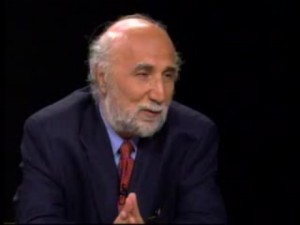 |
| Author and scholar Fouad Ajami. |
“There is no need to pay excessive deference to the political pieties and givens of the region. Indeed, this is one of those settings where a reforming foreign power’s simpler guidelines offer a better way than the region’s age-old prohibitions and defects.”
No One Better?
Ignoring the albatross of tarnished credentials hanging around Ajami’s neck, the Post apparently saw him as just the right academician to put perspective on the violence of last week in Middle East capitals. As for his record of credibility: Well, who takes the trouble to go to Wikipedia for information on pundits?
Nor were the Post’s editors going to take any chances that its newspaper readers might miss the benefit of Ajami’s wisdom. So the Post gave pride of place to the same article in Sunday’s Outlook section, as well. What the Post and other mainstream media want us to believe comes through clearly in the title given to the article’s jump portion, which dominates page 5: “Why a YouTube trailer ignited Muslim rage.”
Setting off the article were large, scary photos: on page one, a photo of men brandishing steel pipes to hack into the windows of the U.S. embassy in Yemen; the page-5 photo showed a masked protester, as he “ran from a burning vehicle near the U.S. embassy in Cairo.”
So – to recapitulate – the Post’s favored editorial narrative of the Mideast turmoil is that hypersensitive, anti-American Muslims are doing irrational stuff like killing U.S. diplomats and torching our installations. This violence was the result of Arabs all too ready to take offense at a video trailer disrespectful of the Prophet.
Nonetheless, it seems to be true that the trailer did have some immediate impact and will have more. According to an eyewitness, the 30 local guards who were supposed to protect the U.S. consulate in Benghazi simply ran away as the violent crowd approached on Tuesday night.
Wissam Buhmeid, the commander of the Tripoli government-sanctioned Libya’s Shield Brigade, effectively a police force for Benghazi, maintained that it was anger over the video trailer which made the guards abandon their post.
“There were definitely people from the security forces who let the attack happen because they were themselves offended by the film; they would absolutely put their loyalty to the Prophet over the consulate. The deaths are all nothing compared to insulting the Prophet.”
Predictably, Islamophobes and Muslim haters with influence over Western media coverage are citing the violence as the kind of “irrational” over-reaction that “exposes” Islam’s intolerance and incompatibility with democratic values and demonstrates that Islam is on a collision course with the West.
It is no surprise that Ajami gives no attention to the many additional factual reasons explaining popular outrage against the U.S. and its representatives – reasons that go far deeper than a video trailer, offensive though it was. Ajami steers clear of the dismal effects of various U.S. policies over the years on people across the Muslim world – in countries like Iraq, Egypt, Yemen, Bahrain, Tunisia, Libya, Afghanistan. (The list stretches as far as distant Indonesia, the most populous Muslim state.)
Last week’s violence not only reflects the deep anger at and distrust of the U.S. across the Islamic world, but also provides insight into the challenges posed by the power now enjoyed by the forces of extremism long held in check by the dictators toppled by last year’s wave of revolutions.
Cui Bono?
Who are the main beneficiaries of misleading narratives like that of Ajami. He himself concedes, “It is never hard to assemble a crowd of young protesters in the teeming cities of the Muslim world. American embassies and consulates are magnets for the disgruntled.”
So, does that mean the notorious video trailer is best regarded as a catalyst for the angry protests rather than the underlying cause? In other words, if the video served as the spark, who or what laid the kindling? Who profits from the narrative that neocons are trying so hard to embed in American minds?
Broad hints can be seen in the Washington Post’s coverage over recent days – including a long piece by its Editorial Board, “Washington’s role amid the Mideast struggle for power,” published the same day Ajami’s article appeared online.


 Posts
Posts