Showing posts with label Richard Perle. Show all posts

Monday, October 29, 2012

Why Is President Obama Sending 12, 000 U.S. Troops To Libya?


Countercurrents
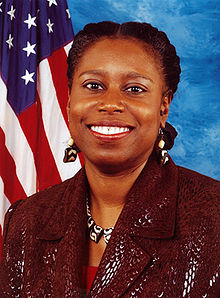
Cynthia McKinney

It is with great disappointment that I receive the news from foreign media publications and Libyan sources that our President now has 12,000 U.S. troops stationed in Malta and they are about to make their descent into Libya.

For those of you who have not followed closely the situation in Libya, the resistance to rule of the National Transitional Council is strong. The National Transitional Council (NTC) cast of characters has about as much support on the ground as did Mahmoud Abbas before the United Nations request for Palestinian statehood or Afghanistan's regal-looking but politically impotent Hamid Karzai or for that matter, George W Bush after eight years. The NTC not only has to contend with a vibrant, well-financed, grassroots-supported resistance, but the various militias of the NTC are now also fighting each other. I believe this “sociocide” of Libyan society, as we previously witnessed in Iraq and Afghanistan before it, is part of a carefully crafted plan of destabilization that ultimately serves U.S. imperial interests and those of a Zionist state and its US agents who are bent on Greater Israel's suzerainty over huge swaths of Arabic-speaking populations. Pakistan is also on the list for neutering in Muslim and world affairs, saddled with its own unpopular civilian leadership that finds itself in the hip pocket of the United States for survival, often getting sat upon by its fiscal guarantor.

The “Arab Spring” has sprung and the indelible fingerprints of malignant foreign financed operations must be erased if the people are to have a chance to truly govern themselves. Unfortunately, these foreign-inspired organizations are present and operating in just about every country in the world. The threat is ever-present like sleeping cells–all that is needed is that the right word to “activate” be given. Both Daniel Ortega and Hugo Chavez can write tomes on the impact of the National Endowment for Democracy in the political life of their countries.

In other words, those who create the chaos have a plan and in the midst of chaos, they usually are the ones who will win. Those who wrote the plan of this chaos were affiliated with the Project for a New American Century–read A Clean Break if you already haven't. General Wesley Clark told us of the plan to invade and destroy the governments of seven countries in five years: Iraq, Syria, Lebanon, Libya, Somalia, Sudan, and Iran. “These people took control of the policy in the United States,” Clark continues. He concludes, “This country was taken over by a group of people with a policy coup: Wolfowitz, Cheney, Rumsfeld, and . . . collaborators from the Project for a New American Century: they wanted us to destabilize the Middle East.” Richard Perle, Bill Kristol publicize these plans and “could hardly wait to finish Iraq so they could go into Syria,” Clark goes on. “The root of the problem is the strategy of the United States in this region. Why are Americans dying in this region? That is the issue,” he finishes.

Now, from Libya, reports are that even while the Misrata rebels (NATO allies responsible for the murder of hundreds of Libyans, including Moatessem Qaddafi) attempted to scale the petroleum platforms in Brega (an important oil town in Libya), they were annihilated by the Apache helicopters of their own NATO allies. A resistance Libyan doctor-become-journalist reported yesterday that all of the petroleum platforms are occupied by NATO and that warships occupy Libya's ports. Photographs show Italian encampments in the desert with an announcement that the French are to follow. Another news outlet reports that Qataris and Emiratees are the engineers now at the oil plants, turning away desperate Libyan workers.

While long lines exist for Libyan drivers to get their gas, foreign troops ensure the black gold's export. Libyans lack enough food and the basics, the country has been turned upside down, and contaminated with uranium while the true number of dead and unaccounted for remains high and unknown. Thousands of young Libyans, supporters of the Jahamiriya, languish under torture and assassination in a Misrata prison where a humanitarian disaster is about to unfold because Misrata rebels want to kill them all and have already attacked the prison once to do so. An urgent appeal to contact the International Red Cross was issued yesterday to help save the lives of the prisoners. And finally, Black Libyans continue to be targeted for harassment and murder in Libya by US/NATO allies on the ground. Teaching hate, given the images of U.S. soldiers in Afghanistan released yesterday, urinating on Afghani dead bodies, is not a difficult thing to do, it would seem. Videos are posted of Black Libyans being beaten, whipped, threatened, harassed, and humiliated. These videos remind me of the antebellum South–reminiscent of the days of slavery and The Confederacy. So, when I use the word “descend” to describe U.S. anticipated actions, I mean just that: U.S. troops are about to descend into the hell on Earth created by their President and the leaders of other countries who approved of, aided, or participated in the death of Libyan-owned society. A report from last night indicates that one militia, fearing other militias even invited foreigners in to protect them.

Friday, August 24, 2012

America's Long-standing Campaign to Destabilize Russia

Global Research
Eric Draitser

The shootings and bombings in Ingushetia and Dagestan this week rekindled a long-standing, brutal campaign of violence and terrorism in Russia’s Caucasus region – one that has seen more than its share of terror stretching back to the Chechen “rebellion” of the 1990s. However, in examining the recent attacks, it becomes clear that there are political and geopolitical interests behind the scenes that are actively working to destabilize Russia, with violence as their most potent weapon. The attacks are not simply isolated terrorist actions, but rather, cynically orchestrated events carried out by well-connected criminal networks whose goal is to foment conflict and carry out the agenda of the US intelligence establishment in its subversion of Russia.

Terrorists, Propagandists and Handlers

The complex network of terrorist organizations that operate under the banners of “separatism” and “independence” for the Caucasus region, has been at the center of the destabilization of Russia for the last two decades. Within hours of the deadly attacks, the Kavkaz Center – an organization known to be the propaganda mouthpiece of terrorist leader Doku Umarov – released an article characterizing the attacks as heroic acts and referring to the dead as “Russian puppets.” Though this would seem to be not in keeping with the Center’s stated mission “to provide reporting of events... and assistance of journalistic work in the Caucasus,” this is, in fact, very much par for the course for an organization that is funded by the US State Department and Finland’s Foreign Ministry.

Kavkaz Center has a long track record of supporting and legitimizing terrorist actions throughout the region, rationalizing atrocities committed in the name of “resistance.” In fact, Kavkaz engages in perpetual upside-down logic, referring to Russians as “terrorists” and terrorists as “heroes.” This type of Goebbles-esque propaganda is the hallmark of Western imperialist projects; most recently in the conflict in Syria, in which the Syrian National Council, Western corporate media and the like refer to terrorism and subversion as “rebellion and freedom-fighting”. Additionally, it is essential to note that Emarat Kavkaz (Umarov’s terrorist organization translated as “Caucasus Emirate”) has been listed by the United Nations as an organization associated with Al-Qaida. Kavkaz Center has been described by Umarov himself as “the official information organ of the Emarat Kavkaz.” This, of course, supports the claims made repeatedly by Moscow of the connection between Chechen and other extremists in the region and Al Qaida, a claim which, until recently, Kavkaz Center continued to deny.

Despite the fact that organs such as Kavkaz Center operate in the service of terrorists who advocate the destruction of Russia, their activity alone is not altogether significant if seen in a vacuum. Rather, it is the association of these types of individuals and organizations with the US State Department and US intelligence that makes them particularly insidious. One such entity that bears scrutiny is the American Committee for Peace in the Caucasus (ACPC), previously known as the American Committee for Peace in Chechnya. As reported by Right Web at the Institute for Policy Studies, “The ACPC was founded in 1999 by Freedom House, a neoconservative organization that has worked closely with the U.S. government, receiving funds from the National Endowment for Democracy and other U.S. democratization initiatives.” This intimate relationship between the ACPC and the US State Department indicates not merely a confluence of interests, but rather a direct relationship wherein the former is an organ of the latter.

The paternalistic role of the US intelligence establishment in the ACPC is made all the more evident when one examines some of the more well known members of the ACPC including former National Security Advisor Zbigniew Brzezinski, former Pentagon advisor Richard Perle and other top neocons such as William Kristol, Elliott Abrams, Kenneth Adelman, and Robert Kagan – the last two being closely associated with the inner circle of the Romney campaign. What becomes apparent in even a cursory analysis of these figures is that, despite the preponderance of neoconservatives, the top members of the ACPC are pulled from both the liberal and conservative establishments. Therefore, one can see how the ACPC represents a bipartisan consensus within the US imperialist ruling class – a consensus of aggression against Russia. What should be even more concerning to political observers is that, given the very real possibility of a Romney victory in November, Russia may see a surge in separatism and violence supported overtly or covertly by the ACPC and a future Romney administration.

The ACPC has taken the lead in championing the cause of separatism and terrorism directed toward Russia, both tacitly and overtly. After having championed the cause of former Chechen Foreign Minister Ilyas Akhmadov in his quest for asylum in the United States – subsequently granted along with a generous taxpayer-funded stipend – ACPC member Zbigniew Brzezinski went so far as to write the foreward to Akhmadov’s book The Chechen Struggle. The alliance between political figures such as Akhmadov and terrorist leaders in the region demonstrates conclusively the partnership between the various terror networks and the imperialist ruling class in the West. Moreover, it shows that, along with oligarchs such as Boris Berezovsky and Roman Abramovich, the US and UK are still the favorite safe havens for criminals fleeing Russian justice.

The Political Context

Thursday, April 7, 2011

Obama’s Libyan Folly: To be or not to be..

By: Richard Falk
RichardFalk

The outcome in Libya remains uncertain, but what seems clear beyond reasonable doubt is that military intervention has not saved the day for either the shadowy opposition known as ‘the rebels,’ and certainly not for the people of the country. It has seemingly plunged Libya into a protracted violent conflict with the domestic balance of forces tipping decisively in favor of the Qaddafi regime despite a major military onslaught managed by the American-led coalition, which in recent days has been supposedly outsourced to NATO. But since when is NATO not an American dominated alliance? The best that can be hoped for at this stage is a face-saving ceasefire that commits the Libyan leadership to a vague power-sharing scheme, but leaves the governing process more or less as it is, possibly replacing Qaddafi with his son who may offer the West the cosmetic trappings of liberal modernity, which may exhibit a genuine interest in reform.

President Barack Obama has chosen Libya as the place to draw a line in the sand, although it is a rather wavering and fuzzy line. It was finally drawn in response to what was being called two weeks ago an imminent atrocity about to be inflicted upon the people of Benghazi, although the evidence of this prospect of dire bloodletting was never present much beyond the bombast of the dictator. Obama stopped what the more ardent interventionist in his camp were derisively calling his ‘dithering.’ Heeding these criticisms Obama on March 28 came out clearly in support of military action, although carefully circumscribed in scope and nature by reference to its supposedly narrow humanitarian undertaking of protecting Libyan civilian.  The futility of preventing a Qaddafi victory on the ground by establishing a No Fly Zone, even as inappropriately expanded to become a No Drive Zone, should have been obvious to anyone conversant with the course of numerous political struggles of recent times being waged for the political control of a sovereign state. What the world actually witnessed was mainly something far different than an effort to protect Libyan civilians. It was rather a an unauthorized attempt to turn the tide of the conflict in favor of the insurrectionary campaign by destroying as many of the military assets possessed by Libya’s armed forces as possible, clearing the path for a rebel advance.

The campaign and character of the opposition has never been clearly established. It is still most accurately described as a motley gathering of opposition forces mysteriously referred to as ‘the rebels.’ In contrast to the seeming failure and ineptness of its military challenge, the public relations campaign of the rebels worked brilliantly. Most of all it mobilized the humanitarian hawks inhabiting the Obama presidential bird nest, most prominently Samantha Power, Hilary Clinton, and Susan Rice, as well as the recently departed former State Department Head of Policy Planning, Anne-Marie Slaughter. Samantha Power particularly has long called upon the United States Government to use its might wherever on the globe severe human rights abuses should occur (unless in a large country beyond interventionary ambitions), apparently analogizing every humanitarian crisis to the totally different circumstances of Rwanda (1994) where a small effort to mitigate major genocide was inappropriately blocked by the Clinton White House. And in the media the celebrants of this intervention have been led by the NY Times pious stalwarts, Nicholas Kristof and Thomas Friedman.  At least Friedman, the patron saint of ‘wars of choice’ was sensible enough on this occasion to acknowledge that Obama would need major help from Lady Luck if his Libyan policy would have any chance of a happy ending, which is welcome contrast with his cheerleading of the Iraq intervention. If lives were not at stake, it might be amusing to note the new cosmic humility of this most arrogant of journalists, who in the past was forever fond of addressing world leaders by their first names in his columns while dishing out his unsolicited guidance, now being reduced to treating the Libyan intervention as the equivalent to a night out in Las Vegas!

The PR full court press by the rebels, aided by that high flying French publicity seeking French enthusiast for intervention Bernard-Henri Lévy, also misleadingly convinced world public opinion and several Western political leaders that the Qaddafi regime was opposed and hated by the entire population of Libya making him extremely vulnerable to intervention. This encouraged the belief that the only alternative to military intervention was for the Western world to sit back and bear witness to genocide against the Libyan people on a massive scale. This entire portrayal of the conflict was at best premature, and likely misleadingly intended to make it appear that the only choices available to the UN and the global community was to intervene militarily or sit back and take the consequences. Among other options, diplomacy and the search for a ceasefire was never seriously embarked upon.

Even without the spurious wisdom of hindsight, the international undertaking could be criticized from another angle as having been designed to fail: a questionable intervention in what appeared increasingly to be an armed insurrection against the established government, yet falling far short of what would be needed to secure the only outcome proclaimed as just and necessary—the fall of the Qaddafi government. How can such a struggle, involving one more paternalistic challenge to the dynamics of self-determination, be won by relying on the bombs and missiles of colonial powers, undertaken without even the willingness to follow the attack with a willingness to engage in peacekeeping on the ground? Had this willingness been present it would have at least connected the dots between the interventionary means adopted and the political mission being proclaimed. Even with this more credible posture the odds of success would still remain small. If we consider the record of the past sixty years very few interventions by colonial or hegemonic actors were successful despite their overwhelming military superiority. The only ‘success’ stories of interventionary politics involve very minor countries such as Grenada and Panama where organized resistance was absent, while the failures were in the big and prolonged struggles that took place in Indochina, Algeria, Indonesia, elsewhere.

In Libya the prospects were further worsened by the incoherence, inexperience, and lack of discipline exhibited by rebel forces. This effort of a weak and unorganized opposition to induce foreign forces to secure for themselves an otherwise unattainable victory is reminiscent of the bill of goods that wily Iraqi exiles sold to neoconservative operatives such as Richard Perle and Paul Wolfowitz during the lead up to the Iraq War (2003). Remember those promises of flowers greeting the American troops arriving in Baghdad or regime change being ‘a cakewalk’ that would be achieved without notable American casualties or costs. As in Libya the case for intervention rested on the false assumption that the foreign occupiers would be welcomed as liberators and that the Saddam Hussein regime lacked any popular base of support. Obama sang this interventionists’ lullaby when he lauded the villager

who thanked an American pilot whose plane crashed accidentally over some rebel held territory.

Such a negative assessment of the Libyan intervention seems clear enough. Such an assessment was offered at the outset of the crisis by the most qualified high official in the Obama inner circle, Robert Gates, the Secretary of Defense. Why did Obama not heed this sensible advice? Unfortunately, every Democratic president, and none more than Obama, struggle to maintain their image as willing to use force in the pursuit of national interests whenever the occasion arises. We must pause to give credit as Obama has pursued a generally militarist foreign policy while still managing to collect a Nobel Peace Prize, something that W’s handlers could never have achieved, and likely didn’t seek. And here in Libya, the risks of inaction must have seemed too great to bear. Instead Obama attempted to have it both ways: lead the diplomatic effort to obtain a mandate from the UN Security Council and then provide most of the military muscle for the initial phase of the operation, and then hastily withdraw to the background while NATO supposedly takes over. This middle path is littered with contradictions: to convince the Security Council, and avoid a Russian or Chinese veto, it was necessary to portray the mission in the most narrow humanitarian terms as being only for the protection of civilians, while to protect the rebels (who are not ‘civilians’ as legally understood) required a much more ambitious scale of attack than is implied by establishing a No Fly Zone; beyond this, if the unconditional goal was the elimination of the Qaddafi regime, then the intervention would have to go far beyond the boundary set by the Security Council decision. It would have to tip the balance in the conflict. As has become clear, the approved military objectives have been dramatically exceeded in the flawed effort to protect the rebels and help them win, but seemingly to no avail.

Of course, the abstainers also have blood on their hands, and share some of the responsibility for what has gone wrong. These abstaining members of the Security Council went along with a mandate to use force that seemed inconsistent with the Charter assurances of refraining from UN intervention in matters essentially within domestic jurisdiction, as this struggle surely was and is. They also allowed the backers of the Securitry Council to twist enough arms to get their mission creep hopes raised by inserting the permissive clause ‘by all necessary means.’ China, Russia, India, Brazil, and South Africa should be ashamed of their posture, criticizing before the vote, abstaining so as to assure that authorization would be provided, and then resuming criticism afterwards to undertakings that should have been anticipated and precluded by much more constricted language in 1973. The vote was 10 in favor, none opposed, and five abstaining.

Such disregard of the limits of the UN Security Council authorization, awkwardly reinforced by the failure of the Security Council to play any subsequent supervisory role to ensure that its approval of force did not go beyond what had been agreed, has once again weakened the UN as a body operating within the constitutional framework of the UN Charter. It makes the UN in the peace and security area appear to be more an agent of geopolitical and neoimperial forces in the West than an objective body seeking to implement the rule of law in relation to the strong and weak alike. We all should remember that when the UN was established in the aftermath of World War II it was assigned the primary responsibility of minimizing the role of war in human affairs.  The inspirational opening words of the Preamble to the UN Charter should be recalled and solemnly reaffirmed: “We the peoples of the United Nations determined to save succeeding generations from the scourge of war.” To allow these words to be selectively overridden by the recently endorsed norm of ‘responsibility to protect’ or R2P is to provide a selective tool that shamelessly exhibits double standards. Where were those humanitarian and paternalistic voices when the civilian population of Gaza was subjected to a murderous attack from land, air, and sea for three weeks by the Israeli Defense Forces (Dec. 27, 2008-January 19, 2009)

Throughout this period of revolutionary ferment in the Arab world, Obama’s paternalism has been pronounced. While intermittingly celebrating these popular risings, Obama has unblushingly felt entitled to pronounce on which leaders should stay and which should go as if he is indeed the first designated global chief executive. And these pronouncements lack even the pretense of coherence and consistency unless measured from an exclusively geopolitical standpoint. The White House was fine with Mubarak until the popular movement made his continued presence untenable, and then he was instructed to leave. In Yemen the leader is told to step down after he failed to quiet the protests, while in Bahrain the Al Khalifa royal family is supported by Washington although governed as an absolute monarchy, which has not only recently relied on extremely violent means to quell unarmed demonstrators, but has even inviting its stronger neighbor, Saudi Arabia, to send military forces across the border to help restore order. Restoring order in Bahrain  is a matter of making further repressive moves to thwart robust popular calls for a new political order based on democracy and human rights.

Obama’s maneuvers in and out of the limelight during the unfolding of events in the Arab world reveals the two sides of the current American dilemma: it is not yet ready to shed the mantle of imperial overseer in the post-colonial regions of the world, but it is faced with the contradictory pressures of imperial decline and overstretch.  This fledgling patriarch can lecture the world, and even manage a military thrust or two, but nothing is sustained, and little achieved. Obama seems to be auditioning to play Hamlet in this unfolding global tragedy.

Richard Falk, Professor Emeritus of International Law at Princeton University is also author of Explorations of the Edge of Time : The Prospects for World Order;Crimes of War: Iraq and The Costs of War: International Law the UN and World Order after Iraq. He is the current UN’s Special Rapporteur for Human Rights in the Occupied Palestinian Territories.

Thursday, February 3, 2011

GIRALDI : HOW ABOUT A CLEAN BREAK – WITH ISRAEL?

My Catbird Seat
Philip Giraldi

That leading policymakers are afraid to challenge the billions of dollars flowing to Tel Aviv while US senators line up to sign on to a letter that opposes their own country’s interests is a tragedy of epic proportions.


Back in 1996, a group of leading neoconservatives led by Richard Perle drafted a memorandum for then (as now) Israeli Prime Minister Benjamin Netanyahu, recommending that Israel adopt a more aggressive and assertive policy towards its neighbors. They called it a “Clean Break” to suggest that it would be a major shift in policy. Today, as American foreign policy looks more like a shipwreck than a victory lap, there is perhaps a need for a Clean Break by Washington. As the relationship with Tel Aviv has an impact far beyond Israel’s size and importance it should, ironically, be the first element in the foreign policy disaster that is examined.

Many Americans who indulge in the mainstream media believe that Israel is a close friend and ally to the United States and that when it is criticized the complaints are often unfair and might even in some cases be motivated by anti-Semitism. Some Americans, mostly evangelical Christians, actually believe that Israel is a special nation either because it is the homeland of the Jewish people or anointed by God and that all other nations of the world should defer to it and protect it. Still other Americans realize that Israel is a nation with good and bad aspects but are intent on using American power and wealth to nurture it because they share either ethnic or religious ties with it.

Some Americans look beyond the bumper sticker definitions to recognize that Israel is indeed like many other countries in most respects but that it is also a special nation in that it has as its protector the most powerful and wealthiest nation on earth. Some think that role to be appropriate because the US has an obligation to guarantee Israeli security, while others would disagree. Those who disagree frequently do so because they find the Israeli influence over the United States to be a dark force, sometimes leading Washington and its elected officials to endorse policies that do not serve the interests of the American people. They would cite examples like the Iraq War, in which supporters of Israel played an enabling role, as well as the ongoing agitation to attack Iran, which would be a replay of Iraq only much much worse.

That Israel is able to control many aspects of America’s relationship with foreign nations is clear and the hubristic Israel Lobby makes virtually no effort to hide what it is doing. On January 18th, Senator Kirsten Gillibrand of the Senate Foreign Relations Committee wrote a letter to Secretary of State Hillary Clinton calling on the United States to veto any resolution in the United Nations condemning the Israeli settlements policy. The settlements are illegal under international law and the pending resolution in the UN carefully uses the precise language previously employed by US administrations to criticize their expansion in an attempt to create an acceptable document and avoid a veto, but the result is not good enough for Gillibrand. Joined by 15 other senators as cosignatories, Gillibrand maintains fatuously and falsely that any criticism of the settlements “hurts the prospects for a peace agreement and is not in the interest of the United States.” In reality, as she well knows, it is US acquiescence in the settlements that damages the US standing in the world.

The past ten days has also provided several other examples of how Israel exerts a strongly negative influence on American foreign policy. President Barack Obama’s State of the Union address urged support for democratic forces in Tunisia. But he did not provide similar support for the democratic forces in Egypt and for the new government in Lebanon, which are both nations currently experiencing political unrest. Why? Because both are frontline states with Israel, meaning that Washington can only consider its relationship to them in terms of whether their political developments are good for Israel or not. This has been excruciatingly clear in the numerous comments by US government spokesmen relating to developments in Cairo: Israel is almost invariably mentioned. The United States prefers to give Cairo billions in aid and covertly support the dictatorial rule of Egyptian President Hosni Mubarak because Egypt has kept the peace with Israel. Washington will likewise oppose any government in Lebanon that is beholden to Hezbollah, even if it does not threaten the US or American interests in any way, because Hezbollah is the enemy of Israel.

Looking at the Middle East region objectively, one has to question Washington’s actions. The US national interest is to have a peaceful resolution of the Israel-Palestine conflict, which would require an end to the Israeli settlement policy. It also mandates non-hostile relations with Lebanon and Egypt, nothing more. The Suez Canal is the only asset controlled by Egypt that has international significance and it is in Cairo’s interest, no matter what kind of government it has, to keep it open and bringing in revenue. Egypt, Palestine, and Lebanon produce nothing that the US needs to have and they are not important markets for American goods. None of them threatens any genuine American vital interest.

In another related development, last Wednesday newly elected senator Rand Paul said that he favors ending all foreign aid, including the aid given to Israel and Egypt, because the United States can no longer afford it. Rather than encouraging anyone to debate the issue on its merits, the Israel Lobby, Democratic politicians, and a representative from Paul’s own Republican Party immediately attacked him, saying the proposal was unthinkable. Well, think again. Israel gets billions of dollars yearly from the US for no good reason beyond its ability to manipulate Congress and the media. Paul’s opening the door to a serious discussion about ending that subsidy is long overdue.

Senator Gillibrand’s excursion into fantasy, Rand Paul’s experience in opening Pandora’s box, and the developing situation in Egypt together illustrate how Israel is a United States national security liability and always has been. The relationship narrows the options that US policymakers can pursue in dealing with problems relating to the Muslim world. Arguments that Israeli and American foreign policies are and need to be identical based on shared opposition to international terrorism and other such “values” are fallacious and are based on constructs that are essentially false.

Israel’s bad relationship with its Muslim neighbors has led to frequent wars and more limited military actions since the founding of the country. In a normal world, the onus would be on Israel to establish a modus vivendi with its neighbors, but it has regularly chosen to use the mailed fist as its first option. Since it is a small country lacking in resources, it has only been able to accomplish this by seeking out what might be described as a force multiplier. To that end it has opted to use its powerful lobby to shift US policy in its favor, relying on America as a source of funds and both political and military protection. Its leading politicians have even bragged about how the United States does its bidding. This has done extreme damage to the United States, which has initiated at least one war as a result, and has been engaged in what must be described as a nearly continuous and escalating conflict with the entire Muslim world on behalf of Israel. This has trashed America’s reputation and has come at a real cost of trillions of dollars and thousands of lives. The benefit to the American people has been zero.

In accomplishing its strategic objective of making the United States its permanent protector, Israel and its lobby have also corrupted both Congress and the White House and have created a permanent distortion in how Washington sees the world and responds to it. Israel’s enemies, even if they do not threaten the United States in any way, have become America’s enemies. This has made the US in the eyes of much of the world the enabler of Israeli actions and has in turn made Americans the targets of international terrorism. Osama bin Laden was very clear on the subject, stating that the United States is a partner in the Israeli oppression of the Palestinians. The Israel relationship is a recruiting tool for those who seek to do harm to the United States. Without the Israeli nexus, there would have been no 9/11 and there would be no hysteria about the danger from terrorists driving growth in government and the development of the anti-libertarian security state.

And the relationship is expensive. Israel seeks to militarily dominate its neighbors. It does so with American-provided weapons and maintains its edge through US coproduction agreements that essentially fund jobs in Israeli defense industries that compete directly with US companies that sell the same products. Even though Israel is one of the richest countries in the world, Washington gives it a vast array of advanced weaponry for free and also hands to it the technologies that enable it to eliminate American jobs. As Israeli companies can bid on defense contracts just as if they were American companies, they frequently also wind up getting the work that would go to Americans. Because of the high level of American direct aid plus unique tax breaks for American citizens who give money to Israel, Israelis have free medical care and university education, benefits that few Americans enjoy.

And, finally, Israel is not afraid to bite the hand that feeds it. It is annually rated by the FBI as the “friendly” country that is most aggressive in spying to obtain US defense secrets and advanced technology. The mainstream media is complicit in not featuring stories that relate to Israeli espionage, but the cases number in the hundreds. Several spies who have been caught in the act have received a slap on the wrist instead of real punishment. One, Ben-Ami Kadish, was even able to continue to receive his government pension after stealing and passing on defense secrets.

Now I will be the first to admit that my narrative presented above reveals my own biases in that I am appalled at what Israel and its supporters have done to my country. But I have to believe that by any objective standard, the relationship with Israel does nothing good for the United States and does, instead, a great deal of damage. That leading policymakers are afraid to challenge the billions of dollars flowing to Tel Aviv while US senators line up to sign on to a letter that opposes their own country’s interests is a tragedy of epic proportions. That Washington will define its own interests in the Middle East largely in terms of whether they are compatible with those of Israel is nothing short of betrayal of the Constitution, which established a national government that would benefit the American people and make them both safe and prosperous. One hesitates to borrow rhetoric from the neoconservatives, but sometimes even they get something right. It is indeed time for a clean break, but this time with Israel.