Showing posts with label Hugo Chavez. Show all posts

Wednesday, January 9, 2013

Nicolas Sarkozy ordered the assassination of Hugo Chavez


Voltaire


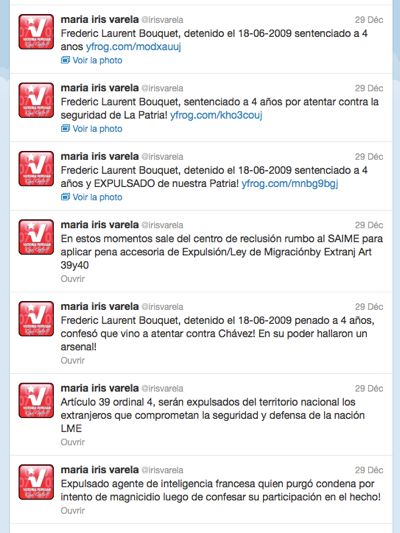
The Venezuelan Minister of Correctional Services, Iris Varela, has announced on her Twitter account the expulsion of a French citizen known as Frédéric Laurent Bouquet, December 29, 2012

Mr. Bouquet (photo) had been arrested in Caracas on June 18, 2009, with three Dominican nationals in possession of an arsenal. In the apartment he had acquired, forensic police seized 500 grams of C4 explosives, 14 assault rifles including 5 with telescopic lenses, 5 with laser sighting and one with a silencer, special cables, 11 electronic detonators, 19,721 cartridges of different calibers, 3 machine guns, 4 hand guns of different calibers, 11 radios, 3 walkie talkies and a radio base, five 12-gauge shotguns, 2 bulletproof vests, 7 military uniforms, 8 grenades, one gas mask, one combat knife and 9 bottles of gunpowder.

During his trial, Mr. Bouquet admitted he had been trained in Israel and was an agent of French military intelligence service (DGSE). He admitted planning an attack to assassinate Constitutional President Hugo Chavez.

Mr. Bouquet had been sentenced to four years in prison for "illegal possession of weapons." He served his sentence. He was taken from his cell by Ordinance No. 096-12 of trial judge Yulismar Jaime, then was expelled for "undermining national security" under Article 39 paragraph 4 of the Migration and Foreigners Act.
JPEG - 51.9 kb
Venezuelan authorities had so far refrained from communicating on this subject. The facts were confirmed by the spokesman of the Quai d’Orsay, Philippe Lalliot. The French Embassy in Caracas declined to comment.

From our investigation we can conclude that:

- (1) President Nicolas Sarkozy had ordered the assassination of his counterpart Hugo Chavez;

- (2) the operation was a fiasco;

- (3) France granted substantial compensation to stifle this matter during Mr Sarkozy’s term in office.

Monday, October 29, 2012

Why Is President Obama Sending 12, 000 U.S. Troops To Libya?


Countercurrents
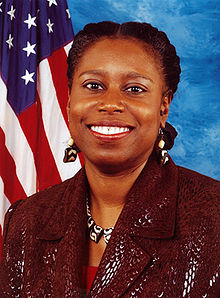
Cynthia McKinney

It is with great disappointment that I receive the news from foreign media publications and Libyan sources that our President now has 12,000 U.S. troops stationed in Malta and they are about to make their descent into Libya.

For those of you who have not followed closely the situation in Libya, the resistance to rule of the National Transitional Council is strong. The National Transitional Council (NTC) cast of characters has about as much support on the ground as did Mahmoud Abbas before the United Nations request for Palestinian statehood or Afghanistan's regal-looking but politically impotent Hamid Karzai or for that matter, George W Bush after eight years. The NTC not only has to contend with a vibrant, well-financed, grassroots-supported resistance, but the various militias of the NTC are now also fighting each other. I believe this “sociocide” of Libyan society, as we previously witnessed in Iraq and Afghanistan before it, is part of a carefully crafted plan of destabilization that ultimately serves U.S. imperial interests and those of a Zionist state and its US agents who are bent on Greater Israel's suzerainty over huge swaths of Arabic-speaking populations. Pakistan is also on the list for neutering in Muslim and world affairs, saddled with its own unpopular civilian leadership that finds itself in the hip pocket of the United States for survival, often getting sat upon by its fiscal guarantor.

The “Arab Spring” has sprung and the indelible fingerprints of malignant foreign financed operations must be erased if the people are to have a chance to truly govern themselves. Unfortunately, these foreign-inspired organizations are present and operating in just about every country in the world. The threat is ever-present like sleeping cells–all that is needed is that the right word to “activate” be given. Both Daniel Ortega and Hugo Chavez can write tomes on the impact of the National Endowment for Democracy in the political life of their countries.

In other words, those who create the chaos have a plan and in the midst of chaos, they usually are the ones who will win. Those who wrote the plan of this chaos were affiliated with the Project for a New American Century–read A Clean Break if you already haven't. General Wesley Clark told us of the plan to invade and destroy the governments of seven countries in five years: Iraq, Syria, Lebanon, Libya, Somalia, Sudan, and Iran. “These people took control of the policy in the United States,” Clark continues. He concludes, “This country was taken over by a group of people with a policy coup: Wolfowitz, Cheney, Rumsfeld, and . . . collaborators from the Project for a New American Century: they wanted us to destabilize the Middle East.” Richard Perle, Bill Kristol publicize these plans and “could hardly wait to finish Iraq so they could go into Syria,” Clark goes on. “The root of the problem is the strategy of the United States in this region. Why are Americans dying in this region? That is the issue,” he finishes.

Now, from Libya, reports are that even while the Misrata rebels (NATO allies responsible for the murder of hundreds of Libyans, including Moatessem Qaddafi) attempted to scale the petroleum platforms in Brega (an important oil town in Libya), they were annihilated by the Apache helicopters of their own NATO allies. A resistance Libyan doctor-become-journalist reported yesterday that all of the petroleum platforms are occupied by NATO and that warships occupy Libya's ports. Photographs show Italian encampments in the desert with an announcement that the French are to follow. Another news outlet reports that Qataris and Emiratees are the engineers now at the oil plants, turning away desperate Libyan workers.

While long lines exist for Libyan drivers to get their gas, foreign troops ensure the black gold's export. Libyans lack enough food and the basics, the country has been turned upside down, and contaminated with uranium while the true number of dead and unaccounted for remains high and unknown. Thousands of young Libyans, supporters of the Jahamiriya, languish under torture and assassination in a Misrata prison where a humanitarian disaster is about to unfold because Misrata rebels want to kill them all and have already attacked the prison once to do so. An urgent appeal to contact the International Red Cross was issued yesterday to help save the lives of the prisoners. And finally, Black Libyans continue to be targeted for harassment and murder in Libya by US/NATO allies on the ground. Teaching hate, given the images of U.S. soldiers in Afghanistan released yesterday, urinating on Afghani dead bodies, is not a difficult thing to do, it would seem. Videos are posted of Black Libyans being beaten, whipped, threatened, harassed, and humiliated. These videos remind me of the antebellum South–reminiscent of the days of slavery and The Confederacy. So, when I use the word “descend” to describe U.S. anticipated actions, I mean just that: U.S. troops are about to descend into the hell on Earth created by their President and the leaders of other countries who approved of, aided, or participated in the death of Libyan-owned society. A report from last night indicates that one militia, fearing other militias even invited foreigners in to protect them.

Wednesday, October 24, 2012

About that Voting Machine Company Tied to Mitt Romney and Bain Capital…


Global Research
Brad Friedman

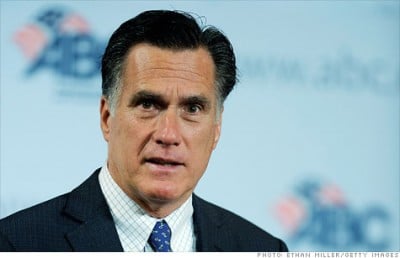
romney-phoenix_gi_topLate last month, Gerry Bello and Bob Fitrakis at FreePress.org broke the story of the Mitt Romney/Bain Capital investment team involved in H.I.G. Capital which, in July of 2011, completed a “strategic investment” to take over a fair share of the Austin-based e-voting machine company Hart Intercivic.


“Several tanker trucks full of political ink have been spilled on Mitt Romney’s tenure as a vulture capitalist at Bain Capital,” Bello and Fitrakis wrote. “A more important story, however, is the fact that Bain alumni, now raising big money as Romney bundlers are also in the electronic voting machine business. This appears to be a repeat of the infamous former CEO of Diebold Wally O’Dell, who raised money for Bush while his company supplied voting machines and election management software in the 2004 election.”

Lee Fang at The Nation recently confirmed the FreePress reporting in a story of his own on the “crony capitalism” of Tagg Romney, whose father’s money and high-profile connections present a number of troubling corporate conflicts of interest should Mitt Romney become President. The Daily Dolt also followed up with a very well-documented article on the H.I.G. group, their connections to Bain, and their takeover of Hart Intercivic.

Hart’s announcement of the deal describes H.I.G.’s role as as “co-investors”, though the financial services firm which brokered the deal described it in their own announcement as a full-fledged acquisition: “Hart Intercivic was acquired by HIG Capital late last week. The deal caps off a 2+ year relationship with Hart! Congrats to both Hart and the HIG team….its going to be a great partnership!”

Also this week, in a video that has gone a bit viral, The David Pakman Show expressed understandable concerns about Romney’s close business partners having this type of corporate control over a large e-voting company whose, extremely vulnerable and insecure [PDF] — and often 100% unverifiable — voting and tabulation systems are now used, according to VerifiedVoting.org’s database, in all or parts of California, Colorado, Hawaii, Illinois, Indiana, Kentucky, Ohio, Oklahoma, Oregon, Pennsylvania, Texas, Virginia and Washington. [Pakman's video is embedded below.]

When the story initially broke, I spoke about it on the radio with Fitrakis, but didn’t comment on it at The BRAD BLOG for a number of reasons. One being the time we’ve been spending, during the same period, consumed by the continuing breaking story of the RNC/Romney consultant Nathan Sproul and his companies at the center of the national GOP Voter Registration Fraud Scandal which we’ve been covering in detail since it first broke several weeks ago. Secondly, and not to downplay this story, because it’s a very good and important one, the fact is that, though the names of the corporate titans and companies are different, it is essentially the same story that we have been telling here, over and over again — and warning about with hair afire — at The BRAD BLOG for nearly a decade.

Moreover, I’ve been on the road all this week for a conference, with much less time online than usual. But since so many folks have picked up on the Romney/Bain/H.I.G./Hart Intercivic stories and have sent email and Twitter queries to me about it, allow me to very quickly share a few thoughts, on this, some of which I sent to a reporter who also raised this issue with me late this week…

First, my statement that I sent to the reporter about this story…

Once again, we’re reminded of the dangers of the privatization of our once-public electoral system. The company’s ties to Romney aren’t the only disturbing ones we’ve seen with similar companies over the years. The fact is, that nobody other than the public should have any sort of control of our elections. The proprietary voting systems now in use in all 50 states, whether owned by Romney associates, a George W. Bush associate (as with Diebold in 2004) or even a company tied to Venezuela’s Hugo Chavez (as with Sequoia Voting Systems which blatantly lied about that tie to public officials, and the Canadian firm Dominion which purchased Sequoia and also immediately lied about the fact that Intellectual Property of their voting systems used all across the U.S. is still owned by the Venezuelan firm), continue to be a grave threat to American democracy and confidence in U.S. Elections.

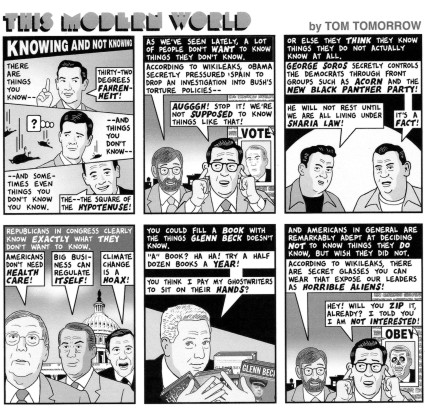
One other point I should add, for now, particularly since I suspect folks from the Right are also likely to ask about it. There has been a false Rightwing story that’s been bubbling around this cycle, charging, inaccurately, that perennial Republican target George Soros owns or controls a company which will count 25% of U.S. votes in this year’s election. While the story, spread first by public airwaves clown and radio host Michael Savage and, naturally, Fox “News,” is completely false, the general concern at the heart of it is not. Indeed, it underscores, yet again, the very point we’ve been making on this topic here for years.

Wednesday, October 17, 2012

Great Paper. Great Propaganda Organ.


ZCommunications
Edward S. Herman

news1
On  October 11, 2011, Paul Krugman asserted on his blog that he had the privilege of writing two columns a week for “the world’s greatest newspaper,” the New York Times (NYT). The NYT is surely an outstanding paper, with exceptionally wide scope, many good journalists on board and publishing many interesting and enlightening articles. But if the standard by which we judge greatness is the quality of its service to the public interest, to the 99 percent who don’t own or advertise in newspapers or TV networks, or control or benefit directly and heavily from other corporate and financial entities, and/or exercise substantial influence on governments, the paper’s greatness is debatable.
In fact, a case can be made that the NYT is the world’s greatest—or at least most important—organ of state propaganda. Because of its great prestige, its being pegged as a “liberal” newspaper, and the paper’s allowing just enough dissent to give the appearance of balance and to make its most serious apologetics seem credible, the general public is not aware of how often and how effectively the paper serves the imperial state, normalizing U.S. imperial ventures and putting them in a favorable light—and providing systematic apologetics for abuses by it favored clients. The editors even belatedly admitted their war-supportive bias in the run-up to the UN Charter-violating and lie-based Iraq war. They are clearly doing the same in the case of Iran, where the paper has had almost daily accounts of Iran’s alleged moves toward nuclear weapons capability, while working on the premise that Israel’s (and the U.S.’s) actual nuclear weapons, and almost daily and credible threats, are perfectly acceptable and understandable and don’t even constitute essential context in discussing the Iran menace.
The paper has preserved its high reputation even as it has been repeatedly guilty of serious failures in its basic newspaper function, at huge social cost. The classic illustration is provided in their own editorial “The Lie That Wasn’t Shot Down” (ed., June 18, 1988), which acknowledged that their earlier furious news-editorial-propaganda barrage of 1983 claiming a deliberate and knowing Soviet destruction of the civilian Korean airliner 007 was based on a lie. Significantly, the counter-evidence cited in the five-years-late editorial was not uncovered by the paper’s own staff, but by a congressperson’s inquiry. So they swallowed an official lie that served the official party-line and the ongoing process of demonization of the “evil empire,” but despite all their resources never got around to examining whether it was valid.
When this great newspaper is in a propaganda mode, which is often, and especially where foreign policy and “national security” matters are at issue, their biases are frequently blatant and even amusing. This can often be read in their word usage and headline policy which discloses their bias at a glance. For example, their party-line hostility to Hugo Chavez has been steadfast, and even led them to editorialize in favor of the soon to be aborted 2002 coup d’etat, with the editors claiming that “Venezuelan democracy is no longer threatened by a would-be dictator. Mr. Chavez, a ruinous demagogue, [who] stepped down after the military intervened and handed power to a respected business leader, Pedro Carmona” (ed., “Hugo Chavez Departs,” April 13, 2002).
The editors quickly changed their minds as the coup was reversed and the editors were subjected to sharp criticism for unprincipled behavior, acknowledging that Chavez’s “forced departure last week drew applause at home and in Washington…which we shared, [but] overlooked the undemocratic manner in which he was removed. Forcibly unseating a democratically elected leader, no matter how badly he has performed, is never something to cheer” (ed., “Venezuela’s Political Turbulence,” April 16, 2002). But the editors had cheered it, and had misrepresented the facts: the “ruinous demagogue” didn’t “step down,” his performance had not been “ruinous” as had been, for example, Yeltsin’s in Russia, lauded by the editors, and ending democracy does not terminate a threat to democracy, either in Venezuela in 2002 or Chile on 9/11/73.
The incident revealed that the establishment party-line bias of NYT editors runs deeper than their commitment to democracy. More recently, William Neuman’s “Chavez, After Treatment for Cancer, Gets His Bluster Back and Flaunts It” (January 22, 2012) is a simple and easily replicable illustration of the institutionalized presence of an anti-Chavez bias. “Bluster” and “flaunts” are snarl words that the paper wouldn’t use for high-level U.S. or UK politicians, but are standard for Chavez.

Friday, September 7, 2012

Destabilizing Venezuela Pre-Election

Global Research
Stephen Lendman

Venezuelans get to choose between Bolivarianism under Chavez and Henrique Capriles Radonski’s corporatism they rejected resoundingly in 1998.

Polls show they’ll do it again. IVAD late August results show Chavez ahead 55% to 34%. Only 10% of Venezuelans are undecided.

Eight major July polls showed Chavez leading by 15 – 27%. Subsequent ones weeks later revealed his support remains strong. Few doubt October’s outcome. At issue is only by how much. On December 16, regional elections follow.

In late August, Chavez warned that opposition forces plan to declare victory before electoral results are announced. They’ll say they won, reject National Electoral Council (CNE) totals, and claim fraud.

They’ll call for violence, destabilization and US help. “They are gearing up….with some allies in the world, some media, some social organizations to claim victory,” said Chavez. “We know they are capable of anything.”

He urged respect for official results, adding:

“We will support the National Electoral Council. We call on all sectors to respect the referee, the Constitution, the laws.”

Capriles’ economic advisor, Ricardo Hausmann, said his campaign will announce its own results independently of official ones.

Ultimas Noticias editor Eleazar Diza Rangel said they’ll “claim fraud (and won’t) recognize the people’s will.”

Since Chavez took office in February 1999, 15 national and regional elections were held. Independent observers declared them open, free and fair. America’s Carter Center calls Venezuela’s electoral system one of the world’s most reliable.

Around 200 or more international observers will monitor October 7 voting. Expect confirmation of another exemplary democratic process. It puts America’s to shame and then some. US federal and many regional ones lack legitimacy. Big money controls them. Ordinary people have no say.

Venezuelans get the real thing. They’re not about to accept pre-Chavez harshness. They want no part of corporatism at their expense.

The Venezuela Solidarity Campaign published a report saying a leaked internal right wing document revealed plans to roll back public services if elected.

It calls for reducing state funding. Health care, education, food subsidies, housing assistance, communal council projects, and other programs Venezuelans rely on will be affected.

The document titled “First Ideas for Economic Actions of the National Unity Government” calls for “concrete steps to decrease, in the medium and long term, the heavy load of goods and services” by slashing overall social spending.

Privatizations and neoliberal harshness are planned. What Venezuelans rejected years ago they want reinstated. They plan presidential diktat authority to enforce it. They want to “dismantle the socialized and collectivized state model.” Their plan replicates IMF financial terrorism.

It mandates mass layoffs, deregulation, deep social spending cuts, wage freezes or cuts, corporate-friendly tax cuts, prioritizing the divine right of capital, crushing trade unionism, and harsh crackdowns against non-believers.

Ahead of October 7, destabilization began. Expect more. Washington’s dirty hands bear full responsibility. Chavez is relentlessly targeted. Bush policy was vicious. Obama promised better but lied.

He wants corporatism replacing Bolivarianism. He failed but won’t stop trying. Chavez knows the stakes and what he faces. Hegemons demand unchallenged dominance. No holds barred tactics go all out.

Weeks ahead of October 7, a suspicious oil refinery fire occurred. A gas explosion ignited it pre-dawn. An immediate investigation was launched. Venezuela’s Amuay facilitity was hit.

It’s the nation’s largest. It’s part of state owned PDVSA’s Paraguana Refining Complex (PRC). It produces 645,000 barrels of oil per day. Extensive damage halted production. Vital revenues were lost. Reports said operational areas weren’t affected.

On August 31, production resumed. PRC head Jesus Luongo said strong winds complicated firefighting. PRC vice president Asdrubal Chavez said shipments resumed on September 2.

He also explained that contingency plans were implemented during down time. Regular distribution continued. “If the whole network of refineries were stopped,” he added, “we’d be able to supply fuel for more than 10 days.”

The incident took 48 lives. Plant workers and National Guard forces died. Over 100 others were injured. Hundreds of homes and businesses were destroyed or damaged.

It’s one of Venezuela’s deadliest incidents. Earlier Tacoa and Las Tejerias refinery accidents killed 260 and 48 respectively. Around 160 died from a Ricardo Zuluaga electric power plant explosion.

Amuay’s fire burned for days and spread. Damage caused was extensive. Chavez declared three days of mourning, saying:

“At this time of great pain, and from the bottom of my soldier’s heart, may you and all of our comrades in arms from the National Bolivarian Guard receive a huge embrace in solidarity for the painful loss of such brave lives in the tragedy in Amuay.”

“As the Son of Bolivar that I am, today my mourning is the same mourning as that of the entire country.”

Following the incident, opposition forces and media scoundrels accused authorities of “gross negligence,” “under-investment,” and poor maintenance.

Chavez called it “very regrettable if some Venezuelans tried to use the pain of the victims to take advantage of the situation” and use it for political advantage.

“I know who is saying this,” he said, “but I will not stoop to their level.” Energy Minister Rafael Ramirez said the plant received around $4.3 billion in 2012.

At the time of the explosion, reports said government web sites were hacked. Corporate-owned Globovision broadcast exclusive footage. Someone unnamed was positioned outside the plant at 2AM to film it. Suspicions followed that Amuay was no accident.

On September 3, Press TV headlined “Sabotage more probably than mishap in Venezuela refinery blast,” saying:

Responding to spurious charges of government negligence and other accusations, Chavez said:

“You can’t exclude any hypothesis….It’s practically impossible that here in an installation like this which is fully automated everywhere and that has thousands of responsible workers night and day, civilian and military, and that there is a gas leak for 3 or 4 days and nobody responds. This is impossible.”

On September 6, Press TV headlined “US-backed opposition devises plots to destabilize Venezuela,” saying:

Chavez supporters accused them of spreading fear and terror ahead of October’s election. Amuay’s incident was Exhibit A. Political activist Hindu Anderi said:

“Our principal is to always be mobilized, to be on alert against anyone attempting to sabotage the election on October 7.”

“They will do this to create an environment in which Venezuela will be looked upon as an outlaw state.”

“This will make it easier for military intervention or at least sanctions against Venezuela.”

He and others accused Washington of plotting against Chavez, his allies and Bolivarianism. Chavez said America and opposition forces want his government destabilized.

On August 28, he showed how Bolivarianism differs from neoliberal harshness. He allocated millions of aid dollars for victims and family members.

Spouses of victims got lifetime pensions. Their children get educational scholarships. Damaged and destroyed properties will be rebuilt. Interim housing was provided. One victim said state help came quickly. No one needing it is excluded.

Chavez congratulated everyone who pitched in to help. “The spirit of patriotism, national unity, and the battle for life is being financed,” he said.

Vice minister Hugo Carvajal of Venezuela’s Integrated System of Crime Investigation said:

“The Bolivarian government has organized a multidisciplinary team of the best disaster investigators of the Investigation Division of Disasters of the CICPC and the Board of the Technical Scientific and Investigation Consultancy of the Attorney General’s office to work out the precise actions that lead to the fire.”

Evidence is being examined. Satellite and ground photos were taken. Witnesses were questioned. Information is being carefully analyzed. Findings will be released when available.

Industrial accidents aren’t uncommon. Amuay’s timing and extensive damage raised suspicious red flags. Latin American expert James Petras agrees.

The incident, he believes, “was an act of sabotage, planned and executed by a clandestine group of terrorist specialists acting on behalf of the US government.” Convincing arguments back this reasoning.

Cui bono is most obvious. Washington, Capriles, and corporate fascists hoped to benefit. They planned taking full advantage. Chavez was blamed. Venezuelans hear it ad nauseam. It wore thin long ago.

Nonetheless, dark forces never quit. Washington funds opposition forces. It’s gone on throughout Chavez’s tenure. CIA operatives infest the country. All independent governments are targeted. Chavez is Latin America’s prime target. Its oil riches alone explain why.

Several times he said Washington wants him assassinated. Regional US bases threaten him. He’s a marked man. He’s also resilient.

He’s not about to let threats roll him over. He pulls no punches. He condemns imperial US policies. Few anywhere match his outspokenness. Most Venezuelans support him for good reason.

Reelection next month looks certain. Imagine if America had leadership like his. He doesn’t seek regional or global hegemony. He endorses peace, not war. He engages other nations cooperatively. He seeks unity and world solidarity. He heads the kind of democracy Americans can’t even imagine.

His policies are socially progressive. State resources provide vital services. He champions civil and human rights. Ordinary Venezuelans are helped, not denied or persecuted.

No secret prisons exist. He doesn’t target neighbors or practice torture. His elections are judged open, free and fair.

The contrast with Washington is stark. Leadership in both countries is mirror opposite. Venezuelans have choice when they vote. Americans get two sides of the same coin. It’s corrupted, dysfunctional, tyrannical, and too broken to fix. Bolivarianism shames it.

Stephen Lendman lives in Chicago and can be reached at lendmanstephen@sbcglobal.net.

His new book is titled “How Wall Street Fleeces America: Privatized Banking, Government Collusion and Class War”

http://www.claritypress.com/Lendman.html

Visit his blog site at sjlendman.blogspot.com and listen to cutting-edge discussions with distinguished guests on the Progressive Radio News Hour on the Progressive Radio Network Thursdays at 10AM US Central time and Saturdays and Sundays at noon. All programs are archived for easy listening.


Tuesday, August 21, 2012

Assange Fracas: All About Establishing Legitimacy of International Criminal Court?

Daily Bell

Ecuador might take the case to the International Court of Justice, but would first try to convince London that it should allow Assange to travel to the South American country or give him guarantees he would not be extradited to the United States. "We're states with responsible governments that can negotiate directly about this problem. We have always been open to negotiations with the British and Swedish governments," Correa told state-run television on Monday night. Correa's government, however, says there have been no talks since August 15. – Reuters

Dominant Social Theme: It's a new era of globalization, and these delicate matters should be decided at the highest international levels.

Free-Market Analysis: Is the Julian Assange extradition standoff nothing more than a way of further establishing the legitimacy of the International Criminal Court?

This could make sense. We've been puzzled with the way things have played out regarding Assange but now we believe we may have the key.

If one accepts that Assange and WikiLeaks are at the highest level connected to representatives of a global power elite, then what's going on becomes clear.

This elite seeks to run the world and has been challenged in this effort by what we call the Internet Reformation that has exposed the globalist conspiracy for those who wish to see. As they did long ago when attempting to combat the information made available by the Gutenberg Press, the powers-that-be are once again trying to muddy the proverbial waters, or so it seems to us.

WikiLeaks is perhaps just one of a number of so-called false flag projects that have been developed to confuse people about what is really going on. Anonymous is another one, apparently. So is Occupy Wall Street, which is reportedly funded at least in part by elitist apparatchik George Soros.

All of these entities and many more seek to combat the free-market thinking and disciplined philosophical anarchy that was making it impossible to justify elitist mercantilism.

The elite conspiracy is based on control of government. No government, no conspiracy. So when one studies false-flag events, one must look to see if the individual or group is mouthing radical or fashionable rhetoric while still suggesting public solutions to private problems.

This is one of the dividing lines between elite dominant social themes and the reality of credible and sincere change making.

Occupy Wall Street utilizes much of the rhetoric of "rebellion" and proposes seemingly anti-establishment points of view. But when one unpacks the rhetoric one begins to see that almost all the solutions are government oriented.

The hacker group Anonymous claims to be motivated by Internet anarchism but their targets are often corporate and rarely government oriented. They have surely not taken aim at the West's military-industrial complex.
The elites understand this and only turn to violence as a last resort, preferring to motivate people via fear-based propaganda. But because of the Internet, these scarcity-based memes have become obvious and increasingly transparent.

This does not mean the elites have ceased to try to regenerate these approaches. Julian Assange would seem to be a case in point.

As a young man, Assange went to work for the government after losing a hacking case. Eventually, he wrote for the power-elite controlled Economist magazine and won several prizes.

Somehow, later, in the first decade of the 21st century, he burst full-blown onto the alternative journalism scene with something called WikiLeaks.

We've chronicled, as have many others, the idea that WikiLeaks is a triumph of style over substance. Having a supposedly radical "news" outlet controlled by Western Intel agencies allows the powers-that-be to leak information to the media in a credible way.

And who are Assange's partners in all of this? Why, the traditional mainstream media including such names as theNew York Times and the Washington Post.

Assange is providing credibility to facilities of elite information. The mainstream media, bought and paid for by the power elite, is foundering around the world, but these are the instruments that Assange chooses to work with nonetheless.

We won't go on about this. It's fairly evident at this point who Assange is and how he is being positioned, in our view anyway. For more on Assange, just search the Internet for Assange and the Daily Bell. Or search for Assange and "false flag." There's plenty of information out there.

Again, exposure in multiple times and ways hasn't slowed the Assange promotion. He is tall, blond, handsome and arrogant. He continues to be useful to the power elite in numerous ways. And now it would seem he's going to be used to provide credibility to the International Criminal Court.

A friend of the Daily Bell's pointed this out to us yesterday and it makes a lot of sense. The Soros-funded ICC has not met with a rapturous reception and even many developing country leaders are wary of it.

But if Ecuador can draw in the ICC as a protector of Ecuador against the big British bully that is standing in the way of Assange's legal extradition, it would be a tremendous way of positioning the Court as a friend of the developing world.

Already the Assange extradition is being seen as a struggle between North and South. People have not been able to explain the bad behavior of British officials but it all becomes clear if one looks on it as an elaborate psy-op.

Saturday, June 23, 2012

Paraguayan Senate impeaches leftist president, causing international uproar

RussiaToday


Thousands have been protesting the impeachment of leftist Paraguayan President Fernando Lugo, many clashing with police. A number of Latin American countries called the impeachment illegitimate.

The the Senate of Paraguay voted to impeach President Fernando Lugo with 39 legislators in favor and four against. Lugo was immediately succeeded by his vice president, Federico Franco, who was sworn in in Congress.

News of Lugo’s impeachment sparked anger amongst thousands of his supporters who had gathered outside the Congress building in the country’s capital, Asuncion. Some of them reacted by tearing down fences, while police tried to disperse the crowd with tear gas and water cannons.
Lugo said he was submitting to Congress' decision, but added that the history of Paraguay and its democracy had been “wounded.”

“Today I retire as president, but not as Paraguayan citizen,” he stated.
Latin America's resounding reaction

Paraguay's neighbors responded by calling the motion illegitimate.
Venezuelan President Hugo Chavez responded by saying his country does not recognize Paraguay's new, “illegitimate government.” He told reporters that his ally Fernando Lugo "preferred the sacrifice" of stepping aside, and said the trial was a setup.

Ecuadoran President Rafael Correa also said his country would not recognize any government in Paraguay other than Lugo's.

"This goes beyond This goes beyond Fernando Lugo. It goes beyond Paraguay. It's about true democracy for all of our America," Correa said on television," Correa said on television.

Tuesday, June 19, 2012

Why is Obama winking at the military coup in Egypt?

MondoWiess
James North

U.S. Secretary of Defense Leon Panetta and
Egyptian Field Marshal Mohamed Hussein Tantawi
A first sign that the Obama administration will accept the military coup in Egypt was a mealy-mouthed statement from Defense Secretary Leon Panetta last Friday, June 16. Panetta said he had called Egypt’s real ruler, Field Marshall Tantawi, and “highlighted the need to move forward expeditiously with Egypt’s political transition, including conducting new legislative elections as soon as possible.”

Panetta did not even make a veiled warning about cutting off the $1.3 billion the U.S. gives the Egyptian military every year. What’s more, Egypt does not need “new legislative elections;” it already has a working parliament – I watched lines of Egyptians voting for it in Cairo last December – which was doing just fine until the Supreme Court, a military tool, dissolved it.

The Obama administration could have demanded that this already-elected Parliament be restored. But, no. Once the military saw it could get away with this first stage of its coup, it seized even more power. So even though Mohamed Morsi, the Muslim Brotherhood’s candidate, almost certainly won the just-completed presidential balloting, the Egyptian journalist Sara Khorshad writes in today’s New York Times that, “Mr. Morsi will be a toothless figurehead under the thumb of an authoritarian military council that doesn’t seem likely to relinquish power anytime soon.”

The U.S. government had already gone along with earlier anti-democratic moves to keep the Muslim Brotherhood from power. The Brotherhood’s first candidate for the presidency, Khairat El-Shater, was a prominent businessman with recognized broad appeal. But back in April, the ruling armed forces council barred El-Shater on the grounds that election rules require that candidates must be released from prison for 6 years before they can run.

How do you say Catch-22 in Arabic? The Mubarak regime had imprisoned El-Shater for 4 years, until 2011, even though he, like the Brotherhood itself, had never used or advocated violence. So his reward for being a nonviolent political prisoner under the old regime --  in all, he was jailed for 12 years -- was that he was disqualified from running, and the Brotherhood had to replace him with the colorless Morsi. Washington made no noise about this injustice. Contrast this non-reaction with, say, how the State Department would pipe up if someone it doesn’t like, such as Hugo Chavez in Venezuela, used a similar maneuver to sideline a popular potential opponent.

What’s ironic here is that the Muslim Brotherhood is no threat to American interests at all. The movement is a conservative advocate of capitalism. What’s more, the Brotherhood is on the front line in the battle against Al-Qaeda and other violent extremists.

The Brotherhood has suggested that it would review the Mubarak regime’s close collaboration with Israel, even though it says it will maintain the peace treaty. Could the Israel lobby explain why the Obama administration is letting the Egyptian generals overturn a peaceful, democratic revolution?


Monday, April 16, 2012

Cuba split leaves summit without declaration

CARTAGENA, Colombia (AP) — A summit of nearly 30 Western Hemisphere leaders has ended without a joint declaration due to divisions over Cuba and Argentine claims to the Falkland Islands.

“There is no declaration because there is no consensus,” said Colombian President Juan Manuel Santos as the summit’s closing news conference.

Washington, backed by Canada, stood fast against widespread demands to include in the meeting’s final declaration language specifying that Cuba be included in future hemispheric summits.

They had also balked at backing Argentina’s claims to the British-held Falkland Islands.

“All the countries here in Latin American and the Caribbean want Cuba to be present. But the United States won’t accept,” President Evo Morales of Bolivia told reporters late Saturday. “It’s like a dictatorship.”

Morales and other leftist leaders have been insistent that this weekend’s meeting in this Caribbean colonial port, which wrapped up at midday yesterday, will be the last regional summit under Organisation of American States auspices unless Cuba is invited in the future.

But Santos said the leaders agreed to meet again in 2015 in Panama.

“Hopefully within three years we can have Cuba” at the summit, Santos said.

US President Barack Obama’s peers lectured him Saturday over his unflagging opposition to Cuban participation due to US objections to the communist-governed Caribbean island’s lack of democracy.

Sunday, January 29, 2012

Gold Reserves Now A National Security Issue For The World's Governments

WorldofWallStreet
Monty High

I've been feeling that the "India buys Iran's oil with gold" story (e.g. click here) was quite important for understanding the world geopolitical situation and for gold investing, but I wasn't sure exactly how. Just last night the reasoning to support the feeling came to me.
Let's review the major, recent geopolitical gold-related news stories:
  • Libya's Ghadafi pays his mercenaries with gold as he attempts to fend off the Bankster Empire attack masquerading as an Air Campaign to protect citizens from slaughter.

  • Venezuela's Chavez demands the return of Venezuela's gold from London. He realizes that Venezuela is definitely on the Bankster's list of "regimes that need changing".

  • Iran relies on gold to maintain international trade using gold as the Bankster Empire cuts it off from the dollar system and escalates its increasingly violent (bombs, assinations, etc.) campaign for regime change.

  • India relies on gold to maintain its supply of Iranian oil.

  • China and Russian, still not under the control of the Bankster Empire, eschew dollars for gold, beefing up their gold reserves as fast as they can without driving the price of gold too high, too fast.
Gold is what a nation (regime) relies on should the Bankster Empire turn against that nation.

The first thing the Bankster Empire does when its turning the screws on a regime is to freeze its assets. After that comes the kind of things happening to Iran (funding and supplying internal opponents, preventing them from doing trade by locking them out of the banking system, assinations, bombings, etc.). Throughout, gold reserves held within that nation allow the nation to continue to function and trade with other nations.

So, to any nation that is not fully integrated into the Bankster Empire (a non-aligned nation), gold reserves aren't a nice investment, they are an integral part of National Security (survival). As we know in the USA, national security trumps all other political priorities.

Here's my quick estimate of those nations which constitute the core of the Bankster Empire (dark green) and those nations that are clearly either close allies or vassals of the Empire (light green). Dark yellow constitutes those nations which are clearly outside of the control of the Bankster Empire with light yellow nations constituting those that I deem to be mostly outside of Bankster Empire control. Countries which are white are countries that I just don't know enough about to categorize. Please leave me a comment if you think I have a country misclassified.
Worldmapbankstercoreandalliesandvassalsandnonaligned

As a result of the pattern formed from the Libya, Venezuela, Iran, China, Russia (all non-aligned), I'm expecting that every nation in the world (beginning with the non-aligned nations, but continuing to fully aligned nations like Germany) are going to making the accumulation a significant, no-kidding physical gold bullion reserve located on their own soil as a matter of national security, a top priority.

This major geopolitical shift is an unexpected consequence of the Banker Empire's squeezing of the Iranians that has enormous long-term bullish implications for the price of gold.

It seems Saddam Hussein's decision to sell oil in something other than the US dollar (Euros) was the final straw that drove the Bankster Empire to attack Iraq. I think that the Bankster Empire is not at all amused by the Iranian Gold For Oil deal and that they will be escalating their attack on Iran. Jim Rickards and Ron Paul are right. In my view, sanctions are a prelude to war and war with Iran is already underway and that will become more apparent as time goes by. That seems bullish for oil and gold for the short and medium-term.
MontyHigh, www.worldofwallstreet.us


Monday, January 9, 2012

Chavez Says Venezuela Won’t Accept World Bank Arbitration

BusinessWeek
Nathan Crooks and Jose Orozco

Hugo Chavez
Jan. 9 (Bloomberg) -- Venezuela will pull out of a World Bank-affiliated arbitration panel and won’t accept any of its rulings, including a multi-billion claim for a nationalized oil project by Exxon Mobil Corp., President Hugo Chavez said.

The Washington-based International Centre for Settlement of Investment Disputes, or ICSID, is considering Exxon’s claim in one of about 20 suits filed there against the Venezuelan government. Wichita, Kansas-based Koch Industries Inc. and Owens-Illinois, Inc., the world’s largest maker of glass containers, are among other companies seeking compensation.

“We won’t recognize any decisions from the ICSID,” Chavez, who has seized assets in the energy, mining and telecommunications industry during his 12-year rule, said yesterday on state television. Exxon is “seeking the impossible, that we pay what we will never pay.”

Exxon, the world’s largest oil company by market value, was the first to abandon Venezuela after Chavez expropriated industry assets in 2007. The self-declared socialist revolutionary forced foreign oil producers into joint ventures as minority partners that year and is also in arbitration at the World Bank with ConocoPhillips, which rejected the terms.

“We’ve got to get out of that ICSID,” Chavez, 57, said during a six-hour Alo Presidente talk show yesterday, which he resumed for the first time since being diagnosed with cancer in June. The South American leader on Jan. 4 said that Exxon had been “arrogant” for demanding as much as $12 billion in compensation for its stake in the Cerro Negro project that produced and processed heavy crude oil.

Exxon had no comment on Chavez’s statement, spokesman Patrick McGinn said yesterday in an e-mail.

Pulling Out

Chavez has threatened to withdraw Venezuela from ICSID as early as 2007. If he follows through this time, it’s unlikely to affect arbitrations already underway, said Michael Nolan, a partner in the Washington office of Milbank, Tweed, Hadley & McCloy.

“Chavez is not going to solve Venezuela’s very serious international legal problems with either speeches or even a formal denunciation of the ICSID convention,” Nolan, who has represented clients in arbitration with Venezuela, said today in an e-mailed response to questions.

Exiting the arbitration panel would also require Venezuela withdraw from some 20 bilateral investment treaties with various countries, a process that would still give companies “many years” to initiate claims against the government, he added.

Enforcement Measures

In a separate case, the New York-based International Chamber of Commerce, an arbitration court, ruled last month that state oil company Petroleos de Venezuela SA must pay Exxon a net $746.9 million for the Cerro Negro nationalization.

Exxon in 2010 reduced its claim to $7 billion from $12 billion, according to PDVSA, as the Caracas-based company is known. Chavez said yesterday that the country would only reimburse Exxon for what it had actually invested in the country.

PDVSA said on Jan. 2 that it would pay $255 million in cash for the ICC judgment, after accounting for about $300 million in a frozen New York bank account and $191 million of Exxon debt that it will cancel. The total amount of the International Chamber of Commerce ruling was for $907.6 million, minus a $161 million counterclaim by PDVSA.
A decision favoring Exxon at the ICSID would be more easily-enforced because it gives a successful claimant the right to enforce against assets in third party states, Nolan said.
“If Exxon gets an award in the ICSID, the enforcement mechanisms are strong,” said Nolan.

Owens-Illinois in September filed for arbitration at the ICSID for compensation for two bottling plants nationalized by Chavez’s government in 2010. Other companies with claims against Venezuela at the ICSID include Tenaris SA, the world’s biggest maker of seamless steel tubes, and The Williams Companies, Inc., a natural gas services supplier located in Tulsa, Oklahoma.

--Editors: Stephen Merelman, Joshua Goodman

To contact the reporters on this story: Jose Orozco in Caracas at jorozco8@bloomberg.net; Nathan Crooks in Caracas at ncrooks@bloomberg.net

To contact the editor responsible for this story: Joshua Goodman at jgoodman19@bloomberg.net

Saturday, August 20, 2011

Hugo Chavez Nationalizes Venezuelan Gold Industry, Demands 211 Tons Be Returned From Abroad - JPMorgan, Bank Of England & ETFs Scramble For Physical Metal

Daily Bail

 
Anyone holding gold miner Rusoro is panicking.

Details from Reuters

Toronto-listed Rusoro, owned by Russia's Agapov family, is the only large gold miner operating in Venezuela.  It produced 100,000 ounces last year.

The gold industry will be just the latest part of the economy to be put under state control by the socialist leader, who said he would issue the necessary decree in the coming days and called on the military to help control the sector.

"I have here the laws allowing the state to exploit gold and all related activities ... we are going to nationalize the gold and we are going to convert it, among other things, into international reserves because gold continues to increase in value," Chavez said in a phone call to state television.
---

WSJ

CARACAS—Venezuela plans to transfer billions of dollars in cash reserves from abroad to banks in Russia, China and Brazil and tons of gold from European banks to its central bank vaults, according to documents reviewed Tuesday by The Wall Street Journal.

The planned moves would include transferring $6.3 billion in cash reserves, most of which Venezuela now keeps in banks such as the Bank for International Settlements in Basel, Switzerland, and Barclays Bank in London to unnamed Russian, Chinese and Brazilian banks, one document said.
Venezuela also plans to move 211 tons of gold it keeps abroad.
---

The problem for Jamie Dimon and JPMorgan is that they hold only 10.6 tonnes of gold, and all of it belongs to Venezuela, though they have pledged approximately 100 times that amount in various paper markets.

ETF News

While Venezuela is a relatively minor player on the world stage, this could be a big game changer here in the United States because one of the banks that holds 10.6 tons of Venezuela’s gold is none other than JP Morgan.  In a recent audit of JP Morgan’s holdings it was reported that they held 338,303 ounces of gold or roughly 10.6 tons.  While this is a modest size deposit it is sure to cause some jitters at JP Morgan as they scramble to find the replacement gold which has already been pledged about 100 times across various paper markets to ETF’s like the SPDR Gold ETF (NYSE:GLD).
---

Bloomberg

Venezuelan President Hugo Chavez ordered his government to repatriate $11 billion in gold held in banks abroad to safeguard the country from the economic crisis and said he’ll nationalize the local gold industry.

Venezuela has about 211 tons of its 365 tons of gold reserves held abroad at institutions including the Bank of England, JPMorgan Chase & Co. (JPM), Barclays Plc (BARC), Standard Chartered Plc (STAN)and the Bank of Nova Scotia (BNS), according to a government document.

“We’ve held 99 tons of gold at the Bank of England since 1980. I agree with bringing that home,” Chavez said today on state television. “It’s a healthy decision.”

Chavez, who has said he wants to eliminate the “dictatorship” of the U.S. dollar, has called on Venezuela’s central bank to diversify its $28.7 billion in reserves away from U.S. institutions. Some cash reserves, which total $6.3 billion, will be shifted into currencies from emerging markets including China, Russia, Brazil and India, central bank President Nelson Merentes said today at a news conference.


Help Us Transmit This Story


  Add to Your Blogger Account
  Put it On Facebook
  Tweet this post
  Print it from your printer
  Email and a collection of other outlets
  Try even more services

Wednesday, July 20, 2011

Venezuela tops world oil reserves

Miami Herald
Jim Wyss

Venezuela surpassed Saudi Arabia in oil reserves, OPEC reported. But analysts say the quality of those reserves is an issue.

Venezuela’s proven oil reserves have surpassed Saudi Arabia’s for the first time, making it the most oil-rich nation in the world, according to the Organization of Petroleum Exporting Countries.
In its 2010-2011 Annual Statistical Bulletin, OPEC said Venezuela’s proven oil reserves spiked 40 percent in 2010 to reach 297 billion barrels. Saudi Arabia, the long-time leader in the category, had 265 billion barrels of proven reserves, according to the online report, which will be published in November.

During his 12 years in office, President Hugo Chávez has used the nation’s oil wealth and the state run PDVSA oil company to finance his “21st Century Socialism” and bankroll projects in allied countries such as Cuba, Haiti, Bolivia and Nicaragua.

The new reserves are being fueled by finds in the existing fields of Barcelona, Maracaibo and Barinas, as well as off-shore projects and in the Orinoco, Venezuela’s Ministry of Communication and Information said in a release Tuesday.

But the figures are also a matter of debate. About one-third of Venezuela’s reserves are extra heavy crude, which is difficult to extract and only economically feasible to recover when the long-term price of oil is above about $70 a barrel, said Jorge Piñon, a research fellow at Florida International University and the former President of Amoco Latin America.

The cash-strapped PDVSA may have trouble raising the funds to tap that oil, he said.

“You can be sitting on the largest reserves in the world but if you do not have capital and technology to recover them…they are worthless,” he said.

Despite Venezuela’s oil wealth, its economy is struggling. Venezuela was the only OPEC nation to see its economy shrink between 2009 and 2010. And it’s seeing annual inflation of 24 percent — the hemisphere’s highest.

The oil sector itself is also facing problems. Venezuela’s oil production has fallen steadily over the last five years, and dipped 0.8 percent from 2009 to 2010 to 2.85 million barrels per day, according to OPEC. That comes while neighboring Colombia and Brazil saw crude production rise 17 percent and 5.3 percent respectively.

Monday, June 6, 2011

Peru election: Early results suggest Humala victory


First results in Peru's presidential election run-off suggest leftist Ollanta Humala has a narrow lead over right-wing candidate Keiko Fujimori. 

Peruvian presidential candidates, (from left) Ollanta Humala and Keiko Fujimori
On the left and right of the political spectrum -
presidential hopefuls Ollanta Humala and Keiko Fujimori
The polls indicated a lead of about 2% for Mr Humala, a one-time ally of Venezuela's Hugo Chavez.

Ms Fujimori is the daughter of jailed ex-president Alberto Fujimori.

The two candidates are at opposite ends of the political spectrum - a fact that worried some Peruvians who said they would not vote for either of them.

Preliminary results from three separate polling companies indicated Mr Humala had won around 51% of the vote, with Ms Fujimori trailing at around 49%.

Mr Humala and Ms Fujimori led the field after the first round on 10 April, which saw the defeat of three centrist candidates.

No candidate gained more than the 50% needed to win the election outright.

Reluctant voters
 
If Mr Humala is confirmed as the winner, he will succeed Alan Garcia, who could not stand for a second term.

Ollanta Humala, 48, comes from a left-wing tradition of greater state intervention. He staged a short-lived rebellion against Alberto Fujimori in 2000 and narrowly lost to Mr Garcia in the last presidential election in 2006.

He campaigned on a promise to increase the state's role in the economy and redistribute wealth to Peru's poor majority.

His critics fear he will embark on interventionist policies similar to those of Hugo Chavez in Venezuela, although Mr Humala says he is more in sympathy with Brazil's moderate left-wing approach.

He has also denied allegations that he committed human rights abuses during the fight against Shining Path rebels in the 1990s when he was an army captain.

Keiko Fujimori, 36, appeals to Peruvians who still admire her father, president for a decade from 1990. He is now serving a 25-year jail sentence for corruption and organising death squads.

She has defended his record, saying by taming hyper-inflation and defeating Marxist Shining Path rebels, he laid the basis for Peru's current economic boom.

She supports free-market economic policies, advocates a tough approach to crime and has promised to improve social programmes and infrastructure in poor areas. 

Critics say her main aim is to secure a pardon for her father, a claim she denies.

If the final result differs from the preliminary polls and she wins the election, she would become Peru's first woman president.

Voting is compulsory in Peru but surveys before the election suggested that around 10% of voters could abstain or spoil their ballots, Reuters news agency said.

Sunday, June 5, 2011

Opinion: Is the U.S. Neutral in Peru’s Elections?

Living In Peru

By Coletta A. Youngers
Washington Office for Latin America

Keiko Fujimori has found in former U.S. Assistant Secretary
of State for Western Hemisphere Affairs,
Roger Noriega, and U.S. Amabassador to Peru,
Rose Likins, two enthusiast supporters, according to Youngers.
With less than a week to go before Sunday’s vote, former U.S. Assistant Secretary of State for Western Hemisphere Affairs, Roger Noriega, presented a report to the Peruvian government purporting to document Venezuelan government support for the campaign of presidential contender Ollanta Humala. 

According to Noriega, “We have a very sensitive source in Venezuela who says that Humala receives money, possibly from the Venezuelan Embassy in Lima, where cash is sent by military plane from La Paz (Bolivia), and from there across the border that is controlled by military attaches of the Venezuelan embassy in Lima.” 

In an interview with Univision, Noriega claims that “sources” in Venezuela have told him that Venezuelan military officers delivered cash for the campaign, but that he won’t release the report or the names of his sources so as to not put them in jeopardy.  A high-level Peruvian government official told Univision that the report provided no proof of the allegations.
 
That Noriega sees Venezuelan President Hugo Chávez as a threatening enemy is no secret.  (Assistant Secretary from 2003 to 2005, Noriega was replaced by a career diplomat in large part for having driven U.S.-Venezuelan relations to the breaking point.) Yet somehow, despite his obvious enmity for Chávez, Noriega claims to have internal sources that have provided him with this information. 

Also highly questionable is his timing, which certainly appears to be intended to give Humala’s opponent, Keiko Fujimori, a boost before Sunday’s vote.  Ironically, Noriega was given an award by the government of former President Alejandro Toledo for his work (then as a top aide to then-U.S. Senator Jesse Helms) for his efforts to bring an end to the Fujimori dictatorship of the 1990s.  (Now that he is working to put another Fujimori back in the presidential palace, he should have the decency to return the award.)
 
Such meddling in the electoral politics of Latin American countries was commonplace during previous administrations, though it sometimes backfired.  In 2002, Evo Morales came very close to winning the presidency (which he then assumed in 2006) after statements against him by the U.S. Ambassador, Manual Rocha, caused his popularity to jump significantly.  To its credit, since assuming office, the Obama administration has refrained from public interventions in electoral politics. 

According to a spokesperson for the U.S. State Department’s Bureau of Western Hemisphere Affairs, “The United States supports the democratic process, including elections that are free, fair, and transparent, and looks forward to learning the outcome of Peru’s presidential race.  The Peruvian people will choose the next president of Peru.  Regardless of who is elected, the United States looks forward to continuing its strong bilateral relationship with Peru.”

Behind the scenes, however, the U.S. Ambassador to Peru, Rose Likins, is evidently playing a very different role.  As reported in a previous blog, she has openly expressed support for Keiko Fujimori’s candidacy in private meetings, including with a group of human rights activists where she actually attempted to defend Keiko Fujimori’s human rights credentials. 

According to journalist Gustavo Gorriti, “The U.S. Embassy strongly opposes Humala’s candidacy.”  Like Noriega, Ambassador Likins no doubt fears another progressive government in South America joining the ranks of Argentina, Bolivia, Brazil, Ecuador, Paraguay, Uruguay and Venezuela – all countries more willing to stand up to entrenched economic interests and the United States.

It is certainly true that Peruvian President Alan García is now one the few consistent U.S. allies in the region.  If Keiko Fujimori wins the elections on Sunday, it would be logical to assume that she would continue to play that role.  However, it would be a mistake for the U.S. government to simply put Humala in the Chávez box.  As reported previously – and despite Noriega’s claims to the contrary – Humala has sought to distance himself from Chávez, presenting himself instead as a more moderate candidate in the mold of the highly popular Lula in Brazil.  Moreover, during the second round Humala has broadened his political support to include a range of progressive and moderate Peruvians.  In short, if Humala were to win Sunday’s elections, it would behoove the U.S. government to reach out and try to work with him, rather than ending up in yet another situation of tense bilateral relations.

As is often the case in Washington, the official memory is short-lived.  In the 1990s, the U.S. government was a key international actor in responding to human rights violations and the steady dismantling of democratic institutions in Peru.

Developments there were seen as a direct threat to the democratic advances across the region and hence a threat to the U.S. government’s interest in promoting stable, democratic governments.  Since then the U.S. voice has largely subsided.  But a return to Fujimorismo in Peru would necessitate far more attention from the U.S. Congress and the Obama administration.  Whoever wins Sunday’s vote, the U.S. government should be vigilant with regards to issues related to democracy, the rule of law and human rights in Peru and should work with its Latin American neighbors to ensure that the hard-fought gains of the last decade are not rolled back.

Finally, U.S. officials should not overlook the fact that a significant percentage of the population supports Humala – particularly in the southern and central parts of the country – which underscores the need address the countries’ real and deep inequities.  While Peru has had impressive economic growth over the last decade, the levels of inequality have only improved slightly. 

Clearly, far too many Peruvians continue to suffer from poverty, extreme poverty, lack of opportunities for meaningful employment and a poor quality of life overall.  If measures are not taken to address these issues – measures that go beyond food handouts – then the problems that Peru faces today will continue to grow larger, including social conflict and violence.  Rejecting Humala as the “Chávez candidate” may be politically expedient for some, but negates the important role he has played in bringing the issue of inequality and poverty into the political debate.


Coletta Youngers is a senior associate with the Washington Office on Latin America (WOLA), and an analyst of human rights and U.S. foreign policy toward the Andean region.

Saturday, June 4, 2011

Venezuela under attack from the empire once again

Axis of Logic
By JOAQUÍN RIVERY TUR 

WITH imperial arrogance, the government of Barack Obama has undertaken a new offensive, unilaterally imposing economic sanctions, completely unsubstantiated, on the company which provides the Venezuelan people a significant portion of its resources: Petróleos de Venezuela S.A. (PDVSA).

The issue is the danger that these sanctions represent, that the U.S. government is unleashing new attacks on the Bolivarian Revolution precisely when Latin American and Caribbean countries have reached a new level of unity and integration.

The sanctions issued by the Obama administration presume to punish PDVSA for its trade relations with the Islamic Republic of Iran. At this rate, all countries will have to ask permission of the U.S. State Department when they carry out these kinds of activities with any nation not to the liking of Washington. This is clearly a violation of the international free trade agreement for oil and other minerals, which the government of Venezuela has taken upon itself to reject with the unconditional support of the member countries of the Bolivarian Alliance for the Peoples of Our America (ALBA).

The sanctions which the U.S. intends to impose state that PDVSA is not allowed to sign contracts with the U.S. government, or receive any financing from the country for its operations.

This is laughable, since the document itself indicates that this is no way affects the delivery of Venezuelan oil to the U.S. As far as financing goes, the body in charge of such transactions within that country is the governmental Export-Import bank, an entity to which Venezuela owes not a single cent and which Venezuela can do without. Clearly the decree doesn’t carry much weight, but does reveal the true U.S. concerns in opposition to the process unfolding in Venezuela led by Hugo Chávez.

The sanctions are an indication that the objective, established by the United States, is the control of all areas rich in energy resources and Venezuela has vast oil reserves in the Orinoco Belt.

In any event, the Venezuelan oil company can easily do without its U.S. customers, although Caracas is interested in maintaining the best possible relationship with the people of the United States and continuing its traditional supply, given that it even owns refineries within U.S. territory, under the name of CITGO.

There are already numerous transnational corporations based in a variety of countries which have accepted the conditions set forth by the Bolivarian government in contracts for oil exploration, extraction and sales. The principal emerging powers in the world, such as China, Brazil and India, whose developing economies are large consumers of oil, and others less strong, are drawn to Venezuela’s energy resources, now a key component of the global energy market.

For example, on September 16, 2010, the Venezuelan official gazette published Law 39.511 which ratified a long-term trade agreement between the governments of China and Venezuela, including a credit of 20 billion dollars to finance 19 development projects. The payment of this line of credit will be effected through the sale of oil to the Asian country, of no less than 250,000 barrels daily in 2011 and 300,000 in 2012. Oil tankers are already leaving Venezuelan shores with half a million barrels of oil for China a day.

Making the announcement, Chávez clarified that it is not just about the amount, but also, "It must be read as a political, geopolitical document, one of confidence."

Within a few years, more than a million barrels of oil will depart every 24 hours headed for China, the same amount sold to the United States. This cannot be much to the liking of Washington, as fuel available at a minimal distance which U.S. transnationals have always aspired to controlling.

Nevertheless, it must be repeated, the major concern of the United States is the Latin American current committed to unity and integration led by Bolivarian Venezuela. It will be extremely difficult for the U.S. to dominate the rest of the world without control of Latin America and the Caribbean, with their extensive energy, water, mineral and land resources, as well as their biological diversity.

It is no accident that the United States is trying to develop a neoliberal economic block along the Pacific coast of South America which it hopes to counterpoise to Mercosur and the Bolivarian Alliance, ALBA.

Wednesday, May 25, 2011

Venezuela threatens to interrupt US oil supply

Christian Science Monitor
Venezuela's Foreign Minister Nicolas Maduro (l.)
and Venezuela's Oil Minister and
President of Petroleos de Venezuela SA (PDVSA),
Rafael Ramirez attend a joint press conference in
Caracas, Venezuela, on Tuesday, May 24.
Maduro threatened to interrupt US
oil supply after Washington placed sanctions on
the Venezuelan state oil company, this week.

The threat came in response to new US sanctions on Venezuela's state oil company, which currently provides about 10 percent of American oil imports.

Venezuela's foreign minister warned late Tuesday that it could no longer guarantee regular oil shipments to the United States after Washington placed sanctions on the Venezuelan state oil company,

Petroleos de Venezuela SA (PDVSA), this week. The spat underscores long-running tensions over what Venezuelan President Hugo Chávez sees as America's disproportionate, unjust exercise of power on the world stage.

“There are several proposals that are being evaluated by President [Hugo] Chávez to respond to the United States’ imperialist pretensions,” said Foreign Minister Nicolás Maduro, according to the Miami Herald. A close associate of Chávez accused the US of trying to be "the world's policeman as it steps on the sovereignty of the people."

But for now, the almost 1 million barrels of oil a day that Venezuela sells to the US – 10 percent of US oil imports, more than 40 percent of Venezuela's oil exports – remain on track. Reuters reports that past threats to interrupt the US oil supply never materialized.

The sanctions, a response to Venezuela's continued assistance to Iran's energy industry, do not ban oil exports to the US and shouldn't affect the operations of the US branch of PDVSA. A decrease in supply to the US would be intentional, not a result of the sanctions.

The US is targeting PDVSA because it believes that Venezuela delivered $50 million worth of reformate, a "gasoline blending component," to Iran in the past year. The US hopes that the sanctions, which also target six oil and shipping in other countries, will cramp Iran's fuel supply. The Christian Science Monitor reports that although Iran has ample oil, its refinery capacity is inadequate and it imports 40 percent of its gasoline.

The newest round of sanctions mark the first attempt by the US to go beyond Iran in its attempts to halt its nuclear program, which it suspects of being geared toward nuclear weapon production. Past sanctions have targeted Iranian companies and banks.

The sanctions came a day after President Obama signed an executive order giving the State and Treasury Departments more leeway to target companies involved with Iran's energy industry, The Wall Street Journal reported. The new sanctions prevent PDVSA from competing for US government contracts, getting licenses for US exports, and receiving financing from the US Export-Import Bank.
The ramped-up sanctions were announced the same day that the International Atomic Energy Association said in a report that it believes that Iran continues to make progress with its nuclear program. While Iran claims its program is only for energy purposes, much of the world believes that Iran aims to produce nuclear weapons.

Iran was supposed to halt any weapon-oriented work in 2004, but the IAEA found evidence of such work as recently as 2010. On Wednesday, an Iranian official scoffed at the IAEA claims, calling them "repetitive and boring" and dismissing the allegations, Agence France-Presse reports.

The IAEA report also cited evidence that in 2003 that Iran was working on a nuclear trigger device, which would likely only be utilized in a nuclear weapon, The New York Times reported. The US estimates that Iran is at least a year, but more likely several years, away from being able to produce a nuclear bomb.